
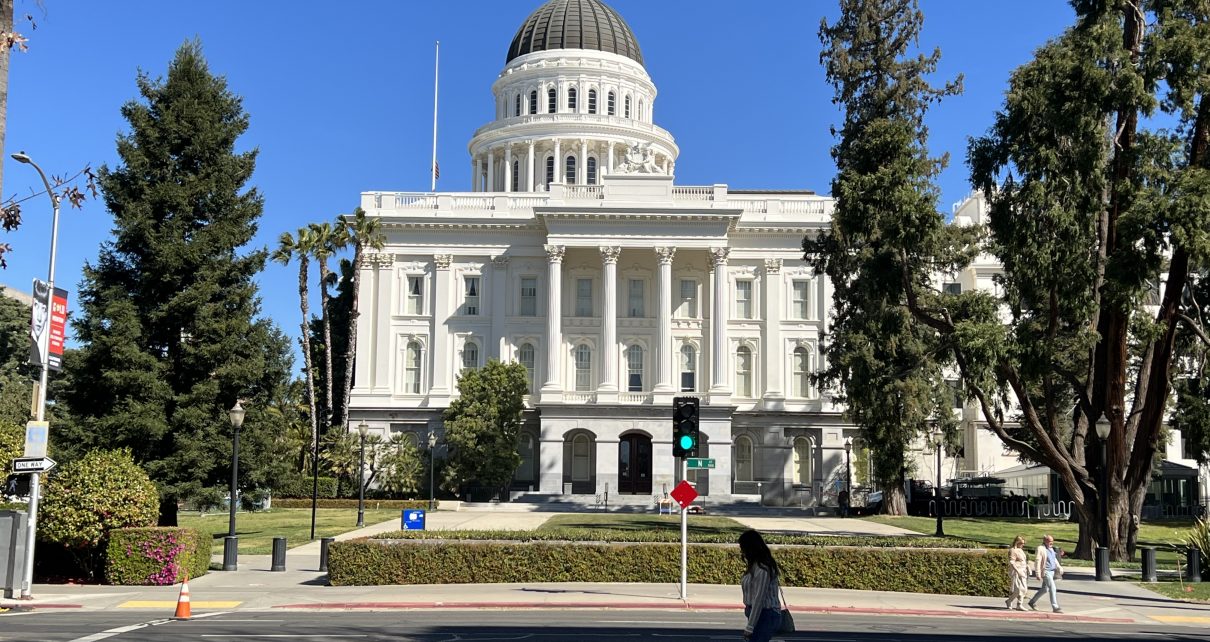
California State Capitol on March 11, 2022. (Photo: Kevin Sanders for California Globe).
Protective and Restraining Orders in Family Law Cases
The summons must contain a temporary restraining order restraining both parties from doing four specified actions
By Chris Micheli, August 24, 2025 2:30 am
California’s Family Code, in Division 6, Part 1, Chapter 4, deals with protective and restraining orders in cases of nullity, dissolution, and legal separation. Article 1 deals with orders in summons.
Section 2040 provides that, in addition to the contents required, the summons must contain a temporary restraining order restraining both parties from doing four specified actions.
The restraining order cannot preclude a party from using community property, quasi-community property, or the party’s own separate property to pay reasonable attorney’s fees and costs in order to retain legal counsel in the proceeding. A party who uses community property or quasi-community property to pay the party’s attorney’s retainer for fees and costs under this provision must account to the community for the use of the property.
This section does not restrain five specified legal actions. The summons has to contain a specified notice. The terms “nonprobate transfer” and “nonprobate transfer.”
Section 2041 provides that nothing above adversely affects the rights, title, and interest of a purchaser for value, encumbrancer for value, or lessee for value who is without actual knowledge of the restraining order.
Article 2 deals with ex parte orders. Section 2045 provides that, during the pendency of the proceeding, on application of a party in the manner provided, the court may issue ex parte either or two specified orders.
Article 3 deals with orders after notice and hearing. Section 2047 allows the court to issue, after notice and a hearing, to issue a protective order and any other restraining order. However, the court cannot issue a mutual protective order unless it meets specified requirements.


- Deficiency Determinations - September 6, 2026
- California’s Workers’ Compensation Death Benefits - September 6, 2026
- Suits for Refund - September 5, 2026
RELATED ARTICLES
-
 May 15, 2025
 -
 May 31, 2025
 -
 June 12, 2025