
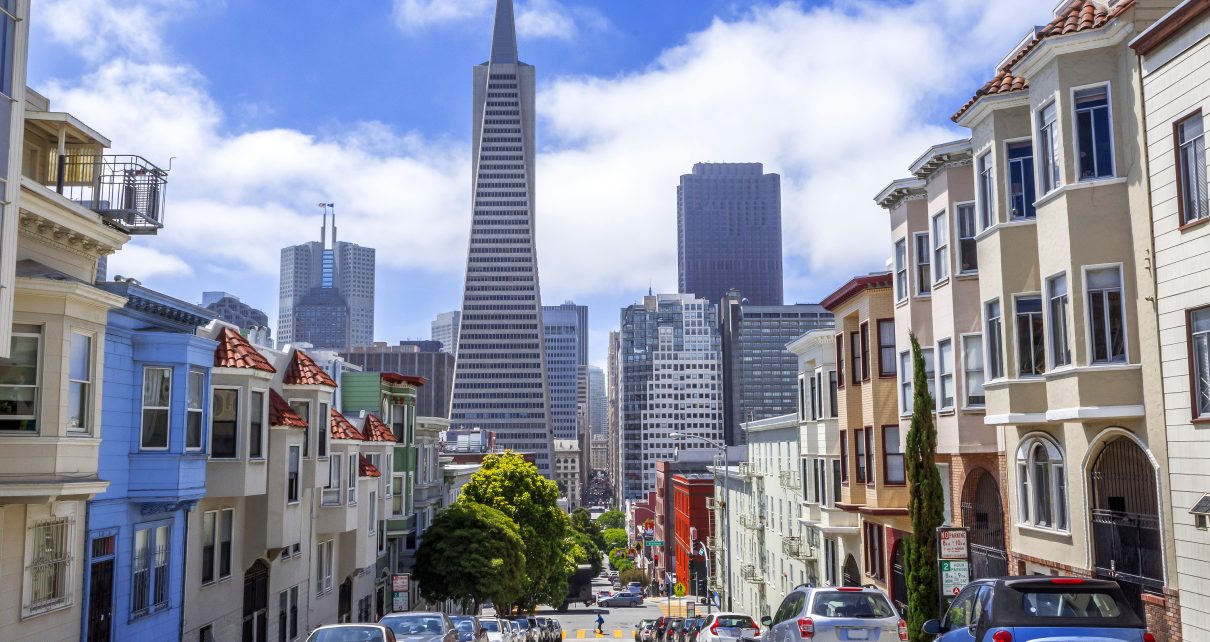
Montgomery St. and Skyline of Downtown areas of San Francisco, CA. (Photo: Randy Andy/ Shutterstock)
Mayor Lurie’s State of the City: A Critical Examination
Scrutiny reveals his claims of a ‘bull run’ are grossly exaggerated
By Richie Greenberg, January 16, 2026 3:00 am
San Francisco’s Mayor Daniel Lurie, in this morning’s State of the City address, painted a picture of a city on the cusp of a triumphant economic resurgence, touting 2025 as a pivotal year for our recovery in the retail and office sectors. He highlighted declining crime, cleaner streets, and a “roaring back” economy, positioning his administration as the architect of this turnaround. A closer look reveals his claims of a “bull run” in these sectors are grossly exaggerated.
Far from a robust revival, the data points to an uneven, fragile stabilization at best, plagued by persistent high office and retail vacancies, economic disparities, external dependencies, and unresolved issues like open-air drug markets that continue to deter foot traffic and investment. Lurie’s eagerness to claim credit ignores the foundational work of his predecessor (London Breed) and downplays ongoing structural challenges, including a refusal to cooperate with the federal Trump Administration on key issues, risking complacency in our city still grappling with post-pandemic scars.
The office sector, often heralded as the engine of San Francisco’s recovery, exemplifies Lurie’s over-hyped narrative. He points to 2025’s leasing highs (around 10.2 million square feet, the strongest since 2019), as evidence of a bull market. However, this surge is narrowly confined specifically to what’s called prime Class A properties, fueled by AI-driven demand from just a handful of tech firms. Citywide vacancy rates however remain stubbornly high at 33.5% by year-end, one of the nation’s worst figures. Office occupancy has stabilized at less than half of pre-pandemic levels, with visits in July 2025 still 44-51% below 2019 levels. This “recovery” leaves most San Francisco buildings, especially older, non-trophy stock, mired in distress, with rising foreclosures and drastically discounted sales continuing well into late 2025. Analysts warn that while institutional investors are slowly creeping back in, the market’s bargain repricing masks deeper issues like permanent hybrid work models and a sustained weakening labor market, with unemployment climbing up to 4.2% by September. Far from a touted bull run, this is a selective rebound, vulnerable to tech layoffs and national trends. This is not a sustainable boom.
Looking at retail’s purported revival by Lurie fares no better under simple examination; data reveals a sector still battered by closures, crime, and shifting consumer habits. While citywide retail vacancy dropped to nearly 7% in 2025, this masks stark market disparities. Downtown’s major districts like Union Square endure 20-23% emptiness, while the San Francisco Centre (formerly Westfield) with former flagship Nordstrom, Bloomingdale’s and others entirely empty, totaling over $558 million in lost value. Two giant malls stand as glaring symbols of abject failure: the San Francisco Centre, the city’s largest at 1.4 million square feet, is now 98% vacant and just sold at auction by creditors for a fraction of its value after plunging a whopping $1 billion, while other major retail hubs like the west side’s Stonestown Galleria still struggling to hang on by a thread.
Retail spending remains below 2019 levels in most neighborhoods, dragged down by population loss, remote work reducing foot traffic, and a 28% drop in sales tax revenue from 2019-2023.
Tourism, a key economic driver, has rebounded modestly but hovers at 69% occupancy through August 2025, hampered by San Francisco’s “reputational challenges” around safety and cleanliness, amid persistent open-air drug markets in areas like the Tenderloin and Hyde Street that occasional and half-hearted raids have failed to fully eradicate. Neighborhood retail and cafe strips like Hayes Valley and Fillmore show pockets of strength with near-full occupancy, but this “tale of two cities” underscores economic inequality: sporadic thriving outer districts versus a struggling and depressed core. Ongoing theft issues and high costs prompted 20 major retailers to abandon downtown.
Mayor Lurie’s propensity to take credit for this patchy progress further undermines the recovery narrative. In speeches, TV appearances and op-eds, he frames 2025’s gains (his first year in office) as a direct result of his administration’s focus on safety and business-friendly policies, declaring San Francisco “resilient” and “headed in the right direction.” Yet, many trends, like declining vacancies, AI-driven office leasing spikes, and initial tourism upticks, predate his January 2025 inauguration one year ago, building on actual efforts from the prior Breed administration. Lurie’s policies, like business permit reforms and the dubious “fentanyl emergency” ordinance, have accelerated some momentum, but he overstates his role while ignoring fiscal pitfalls and ongoing scandals in homelessness and city hall payments to drug addiction NGOs.
San Francisco is facing a $936 million two-year deficit projected to swell to nearly $1 billion and beyond by 2029. Lurie ordered $400 million in cuts, blaming federal changes under Trump, yet city expenses have ballooned 30% in the last 10 years with an actual flat population growth. Corruption and fraud plague the sector, with nonprofits caught issuing fraudulent invoices, wage theft, trafficking, assaults, and misuse of funds in shelters, all issues a federal Homelessness Fraud and Corruption Task Force is now probing statewide.
Lurie signed a reparations fund ordinance on December 23, 2025, quietly and without public announcement two days before Christmas, is divisive, legally questionable, and tone-deaf. Additionally, Lurie’s adherence to sanctuary policies, refusing to cooperate with federal immigration authorities, risks withholding of billions in funds amid Trump’s recent threats. Public skepticism abounds: online forums question whether Lurie’s “SF is back” mantra, repeated ad nauseam, reflects reality or spin, with some actually crediting tech billionaires’ influence over Lurie’s intervention. Labor unions and nonprofits protested his demanded budget reductions, highlighting how his “recovery-first” rhetoric masks service reductions that could hinder long-term growth.
The city’s broader economic reality exposes the bull run myth. San Francisco’s rebound relies heavily on external factors: national office trends toward amenity-rich spaces, AI hype, and a post-pandemic tourism thaw. But with a weakening job market and no full return-to-office mandate (for both government and private offices), the downtown’s revenue base remains very fragile at best.


- SHOCKER: SF Dem Party Rejects Billionaire Tax - August 28, 2026
- Newsom’s Energy Wrecking Crew - August 20, 2026
- Mangione and His Cold-Blooded Cult - August 16, 2026
RELATED ARTICLES
-
 November 19, 2024
 -
 January 9, 2025
 -
 December 3, 2024
Their Precious public transportation systems facing massive deficits – ridership has not returned. . BART bailed out by stare funds? Muni the bus system property tax increase coming to a ballot near you.
Mr Greenberg should have and by now concluded the major cities of California are intentionally cultivating and fostering the developing homeless subculture.
The Republicans and Democrats are running interference intending to buffer the Californians from the realities of developing paradigm.
Eyeinthesky is once again delusional and is trying to blame Republicans for the homeless mess in California when it has been going on for years under Democrat Gov. Hair-gel Hitler Newsom and the criminal Democrat thug mafia that mostly controls the state.
Excellent Rich. Historically, the city started taxing businesses out of the city in the late 60’s. My dad owned a corner market. When I was at Lincoln High, he came He came home one day cussing, I said what happened. He said the Gd dam city is trying to tax business out of the city. He wasn’t kidding. Then the commie apparatchiks started the mantra “we only want clean businesses”. so they eliminated all the blue collar jobs in the city over the next 50 years. In fact Standard Roofing was on 9th ave for almost 50 years untll they got kicked out. Mission Bay is now a medical complex. Is it any wonder there are NO jobs for high school kids. No need for shop courses anymore or teaching kids how to enter the job market with any skills…….just ship them off to college to be brain washed.