
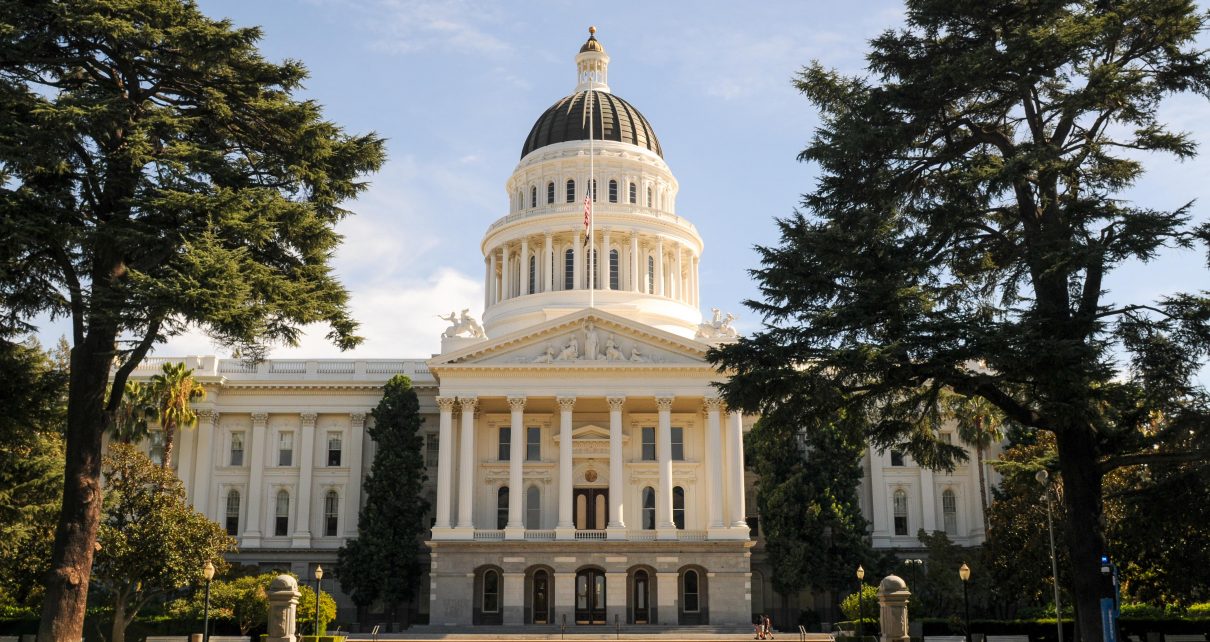
California State Capitol. (Photo: Kevin Sanders for California Globe)
Private Writings
Deals with private writings as kinds of evidence in civil actions.
By Chris Micheli, January 24, 2026 2:00 pm
Code of Civil Procedure Part 4, Title 2, Chapter 3, Article 3 deals with private writings as kinds of evidence in civil actions.
Section 1929 provides that private writings are either sealed or unsealed.
Section 1930 states that a seal is a particular sign, made to attest, in the most formal manner, the execution of an instrument.
Section 1931 provides that a public seal in this State is a stamp or impression made by a public officer with an instrument provided by law, to attest the execution of an official or public document, upon the paper, or upon any substance attached to the paper, which is capable of receiving a visible impression.
Section 1932 states that there is not a difference in this State between sealed and unsealed writings. A writing under seal may be changed, or altogether discharged by a writing not under seal.
Section 1933 specifies that the execution of an instrument is the subscribing and delivering it, with or without affixing a seal.
Section 1934 says that a written agreement, without a seal, for the compromise or settlement of a debt, is as obligatory as if a seal were affixed.
Section 1935 states that a subscribing witness is one who sees a writing executed or hears it acknowledged, and at the request of the party signs his or her name as a witness.
Section 1950 provides that the record of a conveyance of real property must not be removed from the office where it is kept, except upon the order of a Court, in cases where the inspection of the record is shown to be essential to the just determination of the cause or proceeding pending.
Section 1952 requires the clerk to retain in his or her custody any exhibit, deposition, or administrative record introduced in the trial of a civil action or proceeding or filed in the action or proceeding until the final determination thereof or the dismissal of the action or proceeding, except that the court may order the exhibit, deposition, or administrative record returned to the respective party or parties at any time upon oral stipulation in open court or by written stipulation by the parties or for good cause shown.
Upon the conclusion of the trial of a civil action or proceeding at which any exhibit or deposition has been introduced, the court is required to order that the exhibit or deposition be destroyed or otherwise disposed of by the clerk. Upon the conclusion of any posttrial hearing at which any exhibit, deposition, or administrative record has been introduced, the court is to order that the exhibit or deposition be destroyed or otherwise disposed of by the clerk.
Section 1952.2 specifies that, upon a judgment becoming final, at the expiration of the appeal period, unless an appeal is pending, the court may order the clerk to return all of the exhibits, depositions, and administrative records introduced or filed in the trial of a civil action or proceeding to the attorneys for the parties introducing or filing the same.
Section 1952.3 authorizes the court to order the destruction or other disposition of any exhibit, deposition, or administrative record introduced in the trial or posttrial hearing of a civil action or proceeding or filed in the action or proceeding that, if appeal has not been taken from the decision of the court in the action or proceeding, remains in the custody of the court or clerk five years after time for appeal has expired.
In addition, the court on its own motion, may order the destruction or other disposition of any exhibit, deposition, or administrative record that remains in the custody of the court or clerk for a period of 10 years after the introduction or filing of the action or proceeding if, in the discretion of the court, the exhibit, deposition, or administrative record should be disposed of or destroyed.


- Which California Legislative Process Rules Can Be Waived or Suspended? - September 25, 2026
- Why Defining Words by Cross-Reference Should Cease - September 25, 2026
- Should Sunset Dates Be Required for All New Laws? - September 24, 2026
RELATED ARTICLES
-
 December 13, 2019
 -
 February 11, 2021
 -
 August 22, 2024