
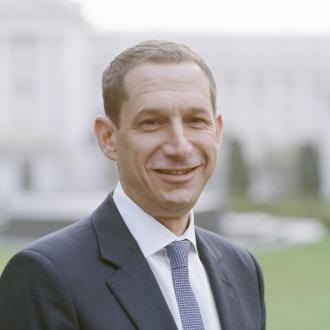
San Francisco Mayor Daniel Lurie (Photo: https://www.sf.gov/profile/daniel-lurie)
Mayor Lurie’s Hollow Victory: Optics Over Substance in San Francisco’s Homelessness Numbers
Celebrating a four percent overall drop and a methodology-altered unsheltered tally as ‘lowest in 15 years’ is a rhetorical sleight of hand
By Richie Greenberg, May 15, 2026 6:00 am
San Francisco Mayor Daniel Lurie stood before cameras this week at the city’s first sober shelter, Hope House, and declared victory. Preliminary results from the 2026 Point-in-Time (PIT) Count, he announced, showed “incredible progress”: unsheltered homelessness had plummeted 22 percent to 3,400 people – the lowest level in 15 years. Tents were down 85 percent. Overall homelessness had fallen 4 percent to 7,973. Roughly 1,000 fewer people were “on the street.”
These gains, Lurie insists, proved his “Breaking the Cycle” plan – aggressive outreach, shelter expansion, treatment centers, and encampment sweeps – was working. “More people are coming inside to get shelter and treatment,” he said, “and we’re moving in the right direction.”
His rhetoric was polished and politically potent.
The reality paints a different picture.
Lurie’s approval ratings are high, and visible street improvements have delighted residents weary of tents and chaos. Yet the celebration is more rhetorical flourish than a meaningful turning point. The numbers mask a modest reality, a flawed counting method, and a stubborn truth: San Francisco has not reduced homelessness so much as relocated it indoors and out of sight, while open drug dealing, overdoses, and public disorder continue largely unabated.
SF Drug Market 6:45am today. Let’s be absolutely clear: Mayor Lurie shuns discussing what’s happening in parts of our city. It’s bad PR. It’s bad for his approval polls. Yet this persists, City Hall ignores it, taxpayers subsidize it. pic.twitter.com/PfsDs5kVVd
— Richie Greenberg (@greenbergnation) May 14, 2026
Begin with the data itself. The headline “22 percent drop in unsheltered counts” sounds transformative, until one examines the total picture. Overall homelessness declined by just four percent – from 8,323 in 2024 to 7,973 now. That’s 350 less counted.
That is not a reversal of the crisis; it is incremental movement within a stubbornly large population that has hovered between roughly 7,000 and 9,000 for years.
Family homelessness actually rose 15 percent. Youth numbers fell, but the broader system still churns thousands through shelters and streets annually without stemming new entries. Lurie’s claim of the “lowest level in 15 years” applies only to the unsheltered subset, and even that rests on shaky ground.
The ground is shaky because the city deliberately changed how it counts people.
Previous PIT counts were conducted overnight, typically from 8 p.m. to midnight, when unsheltered individuals were more likely to be settled in visible encampments. The 2026 count shifted to early morning – roughly 5 a.m. to 10:30 a.m. – and, for the first time, required outreach teams to engage every person they tallied in direct conversation rather than relying on visual observation alone.
City officials praised the change for improving accuracy and daylight visibility. Homeless advocates and some journalists called it political theater likely to produce an undercount.
People who are homeless often disperse at dawn for services or to avoid sweeps; many vehicle-dwellers or those in hidden spots become harder to find. The new, slower, conversational process also reduced the number of people counters could cover. The result: apples-to-oranges comparison.
Even the SF Chronicle noted the methodology “complicates the picture.” Lurie’s team acknowledges the shift but glosses over its impact when touting “historic lows.” Because this story is great PR.
What the count truly captured was not fewer people experiencing homelessness but more people indoors on the night (or morning) of the snapshot. Sheltered numbers actually hit a record 57 percent of the total, up from about 48 percent in 2024.
Encampment clearances paired with shelter placements and new facilities like Crisis Stabilization and the controversial RESET Center have moved thousands off sidewalks and into beds, hotels, or transitional housing. That is operational progress on public disorder, and many San Franciscans welcome fewer tents. But it is not a solution to homelessness; it is a relocation.
The same individuals with severe addiction and mental illness who once occupied sidewalks now occupy shelter beds, often continuing the same behaviors behind closed doors. Overdoses inside shelters and former hotel programs have been documented for years.
The “housing first” model that long dominated city policy explicitly avoided sobriety requirements; newer sober options like Hope House are promising but still represent a tiny fraction of capacity.
The problem has not vanished. It has simply been pushed indoors, out of the tourist photos and downtown sightlines that matter most to political optics like Lurie’s.
Nowhere is this clearer than in the drug crisis that remains intertwined with street and indoor homelessness alike. Fentanyl and methamphetamine still kill San Franciscans at horrifying rates. In 2025 the city recorded 624 overdose deaths, slightly below 2024’s 635 but still averaging nearly two per day and ranking second-highest per capita among large U.S. counties, more than three times the national average.
Early 2026 data show no reprieve: 148 deaths in the first three months, including 49 in March alone. Many involve fentanyl. These deaths occur both on streets and inside shelters, SROs, and supportive housing.
Meanwhile, open-air drug markets operate with brazen impunity. In the Tenderloin, SoMa, and Mid-Market – precisely the neighborhoods targeted by sweeps – drug dealers continue to hawk fentanyl and meth on sidewalks and in plazas, especially at night.
Police have increased arrests (one to two dealers daily in hotspots, with occasional large seizures), yet the markets adapt rather than disappear. Daytime enforcement has pushed much of the trade into nighttime hours, when arrests drop sharply.
Problems have spilled into the Mission District, where residents now report open use and dealing on residential blocks. The same networks supplying the streets supply the shelters. Moving people indoors has not broken the cycle of addiction; it has often subsidized it with taxpayer-funded roofs over heads still actively using.
Lurie deserves credit for shifting policy toward enforcement and treatment after years of unchecked decline. Visible tents are down, and some people are indeed getting help. But celebrating a four percent overall drop and a methodology-altered unsheltered tally as “lowest in 15 years” is a rhetorical sleight of hand. It substitutes short-term optics for the harder, costlier work of mandating treatment, expanding proven recovery programs, tackling fentanyl supply, and building enough permanent housing with accountability.
Until San Francisco confronts addiction as the primary driver – not merely a symptom – the daily overdoses, nighttime drug markets, and human misery will persist, whether the tents are visible on the sidewalk or hidden behind shelter walls. And our taxpayer money will continue funding this in perpetuity.
The city is not “on the rise” in any meaningful sense. It is simply learning new ways to look away.


- SHOCKER: SF Dem Party Rejects Billionaire Tax - August 28, 2026
- Newsom’s Energy Wrecking Crew - August 20, 2026
- Mangione and His Cold-Blooded Cult - August 16, 2026


“Homelessness” will never end as long as “Government” refuses to take responsibility, and shifts it off to NGO’s. NGO’s will never end any problem, because if they did they would be out of business. So they perpetuate the problem by “putting lipstick on the pig” so it’s less visible,but it’s still there. Unless we stop this madness the amount we spend will go up and up and the “Homeless” problem will never end. Time for some “Tough Love”.