
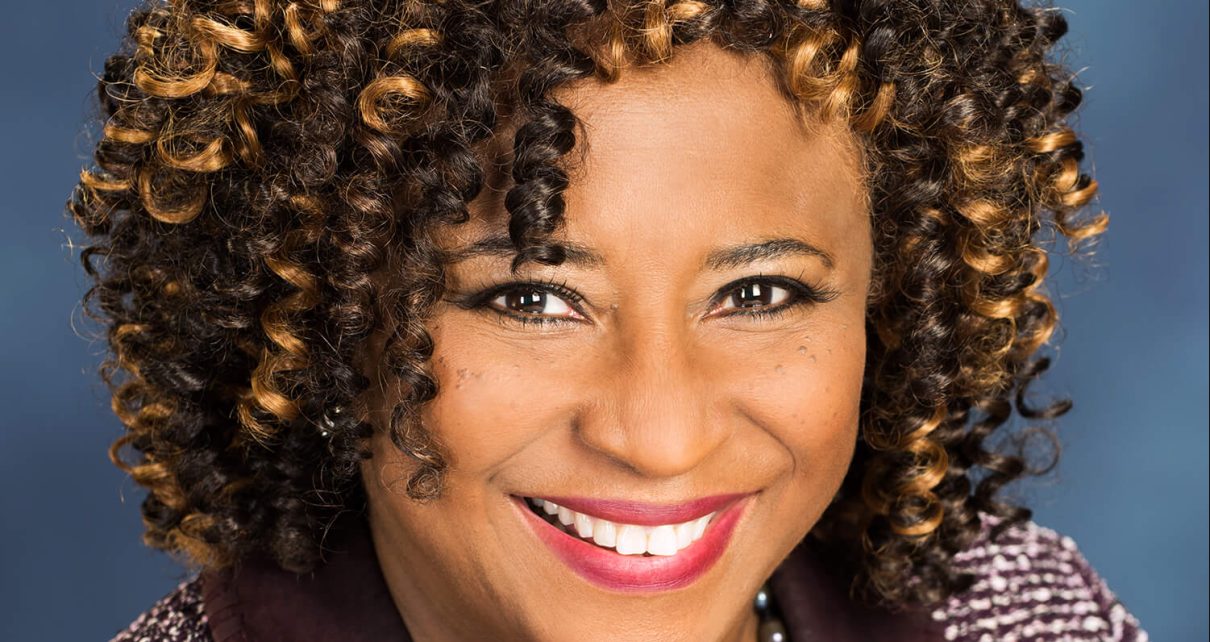
Alameda County DA Pamela Price (Photo: alcoda.org)
Pamela Price Is Wrong: County Voters Don’t Want Recalled DA Back
Voter patience for rehashing failed experiments has grown remarkably thin
By Richie Greenberg, June 8, 2026 6:30 am
In last week’s special primary election for Alameda County District Attorney, voters delivered a resounding verdict that underscored a continuing rejection of progressive criminal justice reforms, yet apparently, some lessons require multiple reminders.
Incumbent DA Ursula Jones Dickson, appointed after the 2024 recall of Pamela Price, cruised to victory with approximately 66% of the vote.
Price, shockingly attempting a comeback to reclaim the office she was thrown out of, scraped together barely 23%.
With all precincts reporting shortly after Election night last week, this was not a competitive race, but a firm door-slam on Price’s second act.
Price’s tenure and serial electoral disappointments offer a case study in the gap between reformist theory and street-level results.
Elected in 2022 as the first Black woman in the county’s DA role, Price arrived armed with the standard progressive rhetoric playbook: restorative justice, lighter touch on incarceration for select crimes, aggressive police oversight, and creative alternatives to prosecution.
To her fans, she was a visionary fixing a broken system. To residents, business owners, commuters dodging catalytic converter thieves, tourists, and parents worried about open-air drug markets, Price presided over a noticeable uptick in property crimes and the frustrating spectacle of repeat offenders cycling through with minimal to no consequences.
High-profile leniency cases became nightly local and national news fodder, powering a successful recall drive that ousted her in November 2024 by roughly 63%, a margin that should have been hard to misread, yet here we are again in 2026.
Undeterred, Price treated this 2026 election as her redemption tour.
She rallied a dedicated but narrow coalition of progressive activists and justice reform advocates, leaning heavily on endorsements that highlighted her ideological base rather than broad appeal.
Price’s prominent backers included Angela Davis, the veteran activist and professor; Elaine Brown, former chairwoman of the Black Panther Party; Philadelphia District Attorney Larry Krasner, a national face of progressive prosecution; civil rights attorney John Burris; and Melina Abdullah of Black Lives Matter Los Angeles.
Organizations throwing their weight behind Price included the Alameda County Green Party, Black Lives Voter Guide, Our Revolution East Bay, and Democrats for Palestinian Rights – Bay Area.
These endorsements painted a vivid picture of Price’s campaign: a principled stand for equity and dismantling what she called the carceral state. She framed the contest as a noble battle against a regressive return to “mass incarceration,” with her surrogates warning that DA Jones Dickson’s approach would harm marginalized communities.
Yet the very nature of this support, concentrated among national progressives, activist circles, and smaller left-leaning clubs, also revealed its limitations.
While inspiring to the base, it failed to translate into wider voter enthusiasm in a county still grappling with the practical fallout of her earlier radical policies.
In contrast, Jones Dickson assembled a formidable establishment coalition: the Alameda County Democratic Party, former DA Nancy O’Malley, Sheriff Yesenia Sanchez, Oakland Mayor Barbara Lee, California Attorney General Rob Bonta, and major local newspapers. She ran on the refreshingly straightforward platform of prosecuting crimes, centering victims’ rights, and restoring basic competence and trust to the DA’s office.
The electorate, it turned out, preferred the adult in the room.
Price’s share barely cracked the mid-20s, a humbling result for a recalled incumbent trying to stage a revival in what was supposed to be friendly progressive territory. In a county that once embraced bold experiments, the appetite for revisiting that particular experiment had clearly evaporated.
This Alameda story plays like a rerun of San Francisco’s famous Chesa Boudin saga, right down to the plot twists, disappointing sequels, and familiar cast of progressive endorsers.
Boudin swept into the DA’s office in 2019 on the same decarceral reformist wave, complete with public-defender credentials and his family legacy of radical activism. He vowed to shrink the justice system’s footprint, skip prosecuting minor stuff, and tackle “root causes” instead of handing out punishments.
For a while, it felt like San Francisco’s future, until the future showed up as smash-and-grabs, catalytic converter theft rings, fentanyl overdoses, and mass lootings.
Much like Price, Boudin watched his support quickly erode as voters connected the policy dots to visible disorder. In June 2022, we San Franciscans recalled him by 55%, a clear enough signal that even one of America’s bluest cities had hit its limit.
SF Mayor London Breed then installed Brooke Jenkins, an actual prosecutor who had worked under Boudin but publicly rejected his hands-off approach in favor of something radical: enforcing laws and protecting victims.
Months later, to retain her position, Jenkins faced John Hamasaki, a defense attorney cut from the same rabid and radical progressive cloth as Boudin, in the November 2022 special election.
Jenkins won by a 54-46 margin. Far from a one-off, Jenkins repeated the feat in 2024, dispatching another reform challenger with a commanding 66% of the vote.
We San Francisco’s voters, it seemed, were not kidding the first time.
The parallels between Price’s repeated comeuppances and Boudin’s extended farewell tour are almost too uncanny.
Both embodied the post-2010s national flirtation with progressive prosecution in deep-blue enclaves. Both discovered that elegant theories about equity tend to wilt when confronted with stolen cars, open drug markets, and frustrated constituents who just want to walk down the street without incident.
In Alameda or San Francisco, recalls driven by quality-of-life grievances led to appointed moderates who emphasized actual enforcement and competence.
And in both cases, the comeback attempts, buoyed by the same, tired activist endorsements and ideological fervor, learned that voter patience for rehashing failed experiments has grown remarkably thin.


- AI Kill-Switch Folly - September 20, 2026
- SHOCKER: SF Dem Party Rejects Billionaire Tax - August 28, 2026
- Newsom’s Energy Wrecking Crew - August 20, 2026
RELATED ARTICLES
-
-

-
 March 13, 2020