
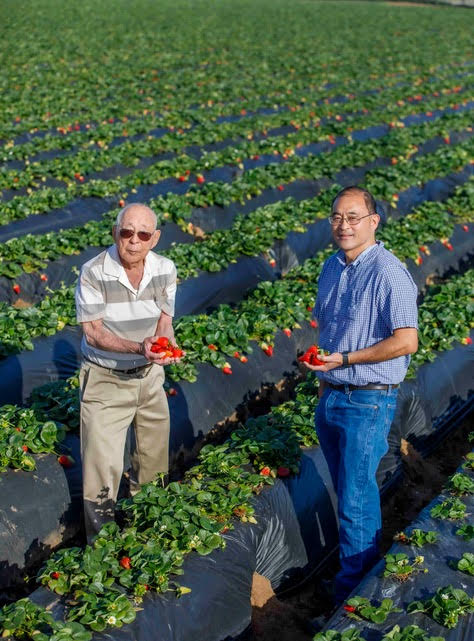
Neil Nagata and his father George, now 102. (Photo: Neil Nagata)
The Older I Get, The More I Understand My Father
Our family farm survived because previous generations endured discomfort to create opportunities for the next generation
By Neil Nagata, June 19, 2026 2:48 pm
When I was young, my father often spoke about responsibility and would demonstrate its importance by following through on his actions.
He would gently remind me to arrive early, finish what I started, think of others before myself, and appreciate what had been provided for our family. In our Japanese American family, these values were rarely stated as strict rules or demands. More often, they were quiet examples, repeated through everyday life and small conversations.
At the time, I did not always understand why those reminders mattered so much. Like many children, I simply wanted to make my father proud and to avoid disappointing him.
As I grew older, I began to understand what he was truly trying to pass down. I recognized the care in his words and the meaning behind his example.
As children, we often misunderstand fathers. We see caution instead of concern. We notice quietness before we understand the worry behind it. We sometimes feel pressure to do well before we recognize it came from love, sacrifice, and a hope that we would have a better life than they did.
Only later do we understand what they were carrying.
My father, George, just turned 102. Even now, when he looks out over the strawberry fields, you can see that quiet attention and appreciation. Those fields hold more than crops for our family. They hold memory, hardship, survival, and purpose.
I grew up living and breathing strawberries in Oceanside. Farming was never just a profession in our family. It was our identity. My grandfather immigrated from Japan to the United States in 1902, seeking opportunity. By 1920, he was growing strawberries in California and building a future for his family, season by season.
Then came World War II.
Like thousands of Japanese American families, my family was uprooted and sent to internment camps. My family lost everything. Land. Stability. Security. The life my grandfather spent decades building disappeared overnight.
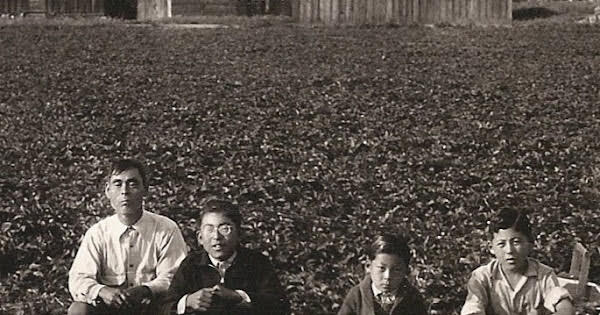
Many families never recovered from that experience.
But my family came back determined to rebuild.
What I understand now, and what I couldn’t fully understand as a child, is how much strength it takes to begin again after losing nearly everything.
My father rarely spoke of hardship in dramatic terms. That generation often carried pain in silence. But you could see it in how he approached work, family, and responsibility. Nothing was taken for granted. Every season mattered. Every opportunity mattered.
He taught me stewardship before I even knew the word.
To him, farming was never only about production or profit. It was about leaving something behind that was better than what he had inherited. It meant respecting the land, taking care of workers, protecting the soil, conserving water, and understanding that his decisions affect future generations he may never meet.
Through our family stories and by working alongside my father, I came to understand how fragile stability can be.
The older I get, the more I realize love often looks like exhaustion.
It looked like my father waking before sunrise, year after year. It looked like my mother and grandmother working hard late into the evening. It looked like sacrifice without complaint. It looked like stress carried in silence so the family could keep moving forward.
Our family farm survived because previous generations endured discomfort to create opportunities for the next generation.
That lesson stays with me every day.
For more than 30 years, I have worked to carry on our family’s farming legacy. Agriculture has changed dramatically over that time. California farmers face rising costs, water challenges, labor shortages, regulations, pests, disease, and constant uncertainty. Yet farmers continue to adapt because resilience is part of who they are.
In strawberries, sustainability is not a slogan. It is survival. We use drip irrigation to conserve water, invest in research, improve soil health, and work closely with universities and scientists to continually improve how we farm. Yet beneath all the technology and innovation remains something deeply human: responsibility.
Responsibility to the land.
Responsibility to workers.
Responsibility to consumers.
Responsibility to the generations that come after us.
That understanding came from my father and his father before him.
Fathers pass things down, intentionally and unintentionally. Habits. Discipline. Humor. Silence. Toughness. Faith. Regret. Sometimes they pass down wounds. Sometimes they pass down wisdom. Often, they pass down both.
As a young man, I thought strength meant never slowing down.
Now I think strength may simply mean showing up, especially when life gives you every reason not to.
My father taught me that.
This Father’s Day, I find myself thinking less about what my father said and more about what he modeled. Resilience without bitterness. Responsibility without recognition. Love expressed in work, sacrifice, and consistency.
As children, we rarely see the full picture.
But the older I get, the more I understand him.
And the more grateful I become that he kept going.
Neil Nagata is the President of Nagata Bros. Farms, Inc. and a third-generation farmer in Oceanside.


- The Older I Get, The More I Understand My Father - June 19, 2026
RELATED ARTICLES
-
 October 15, 2025
 -
 November 1, 2025
 -
November 24, 2025
Your dad sounds like a wise man. My dad was born in Berlin in 1928…ended up in an anti-aircraft “high school” for two years and in the battle of Berlin by 17. His dad died in a bombing raid and there was nothing left of Berlin to go back to. He immigrated in the 1950s and became an American. He had that same quiet nature where you just soldier on.
Thank you for your family’s perseverance and character (and delicious strawberries!)!
Happy Father’s Day to your Father and you!