
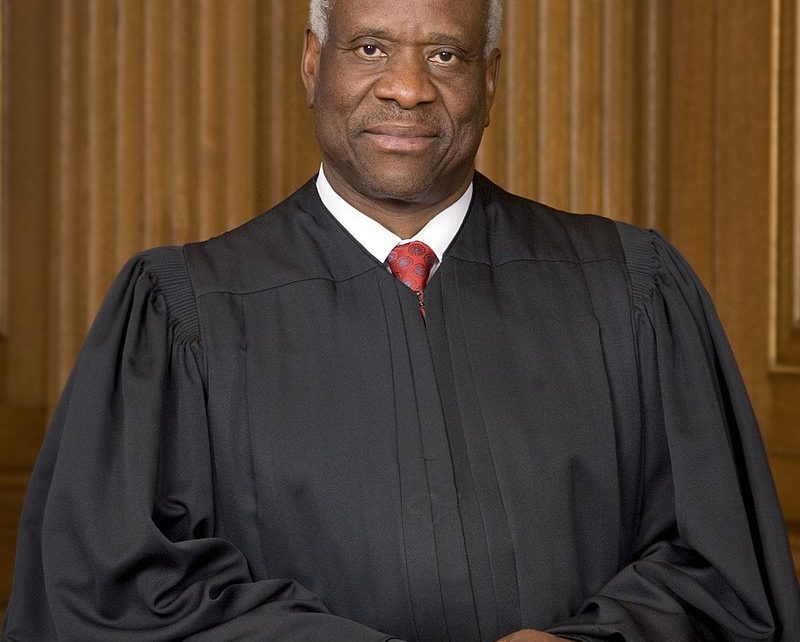
Clarence Thomas, Associate Justice of the Supreme Court of the United States. (Photo: SCOTUS)
Justice Thomas Feels Unwelcome at Institutions Like Stanford Law School
When young activists are taught that opposing ideas constitute ‘fascism,’ disruption becomes a moral duty rather than a breach of norms
By J. Mitchell Sances, August 25, 2026 6:25 am
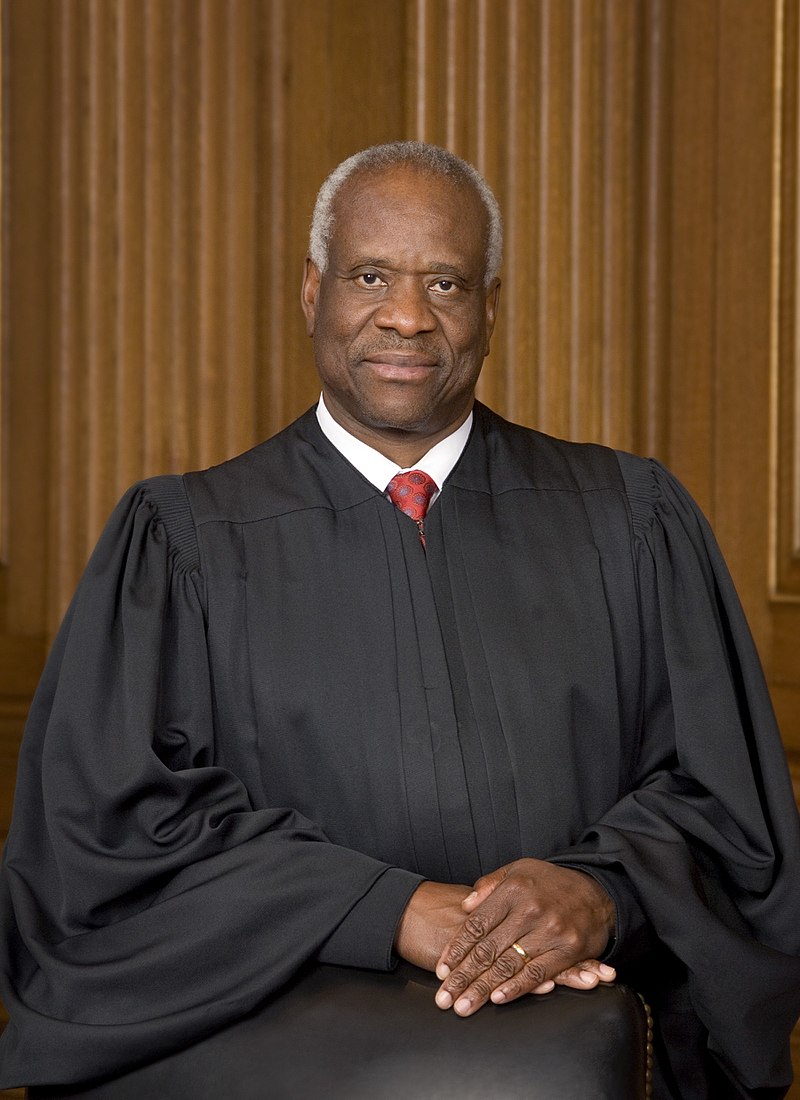
Supreme Court Justice Clarence Thomas recently stated the obvious at a Hoover Institution forum: places like Stanford Law School are effectively “off limits”to conservatives like him. He has never set foot there. “That’s the reality. That’s the world we’re in. Because there’s certain places that are just presumptively off limits. This is the way it works.” Stanford’s response was the expected public-relations pivot. A spokesperson declared the school would be “honored” to host him, noted that its Constitutional Law Center regularly invites judges, and insisted students and faculty would “welcome the opportunity” to engage with his views.
Let’s be honest. The invitation is paper. The climate is not. Thomas is describing the lived experience of conservative speakers on elite campuses, not abstract policy statements. In March 2023, Stanford Law’s Federalist Society invited Fifth Circuit Judge Kyle Duncan. Roughly 90 students shouted him down, disrupted the event, and prevented him from delivering his remarks. An associate dean for diversity, equity, and inclusion joined the fray with a prepared lecture against the invited speaker. The university later apologized and imposed mandatory free-speech training, but the message was already delivered: certain viewpoints will be met with organized hostility.
That incident was not an outlier. Data compiled by the Foundation for Individual Rights and Expression (FIRE) and campus reports document repeated efforts to deplatform or disrupt conservative and even moderate speakers. At Stanford and peer institutions, protests have escalated into walkouts, blockades, and threats that force cancellations or create security nightmares. When young activists are taught that opposing ideas constitute “fascism,” disruption becomes a moral duty rather than a breach of norms. Polls capture the underlying attitude. FIRE’s surveys of college students have shown that roughly one-third nationally say it can be acceptable to use violence to stop a campus speaker; this figure has risen sharply in recent years. At Stanford specifically, more than a third of students have indicated that physical violence to silence speech can be acceptable in some circumstances. Broader polling of young Americans and self-identified Democrats finds non-trivial minorities who say political violence is sometimes justified to achieve political goals or protect favored causes, figures that remain elevated among the highly educated and left-leaning.
These numbers do not describe a fringe. They describe a cohort shaped by institutions that have spent years framing disagreement as existential threat. Higher education did not invent political passion, but it has systematically elevated an activist class that treats conservative ideas and the people who hold them as illegitimate. When students are indoctrinated to believe they are dismantling fascism, the next logical step is the belief that they possess a moral right to silence, intimidate, or “exterminate” it.
Stanford’s official welcome to Justice Thomas is polite theater. The actual environment Thomas described is the one produced by years of administrative indulgence of the heckler’s veto, of DEI offices that treat viewpoint diversity as a problem to be managed, and of a campus culture that rewards performative outrage over open inquiry. Conservative justices, scholars, and students who notice this pattern are not inventing a conspiracy. They are reading the room. Thomas is simply saying out loud what the record already shows. Elite campuses have made themselves inhospitable to half the country’s intellectual tradition. Until that changes in practice rather than press releases, the “off limits” designation remains accurate.

- WGA East Partners With Cloak to Keep AI Script Summaries Off the Table - October 22, 2026
- Netflix’s ‘14th’ Filmmakers Urge Americans to ‘Fight’ While Lecturing on Autocracy - October 19, 2026
- Private Initiative Steps Up While Sacramento and City Hall Stall: Caruso, Skydance, and the Bay Theater’s Return to the Palisades - October 15, 2026
RELATED ARTICLES
-

-
-
 October 15, 2019
“Polls capture the underlying attitude. FIRE’s surveys of college students have shown that roughly one-third nationally say it can be acceptable to use violence to stop a campus speaker; this figure has risen sharply in recent years.”
Don’t be surprised then if in the future, it can be acceptable to use violence to stop the opposition to free speech. Goose/gander stuff here…