

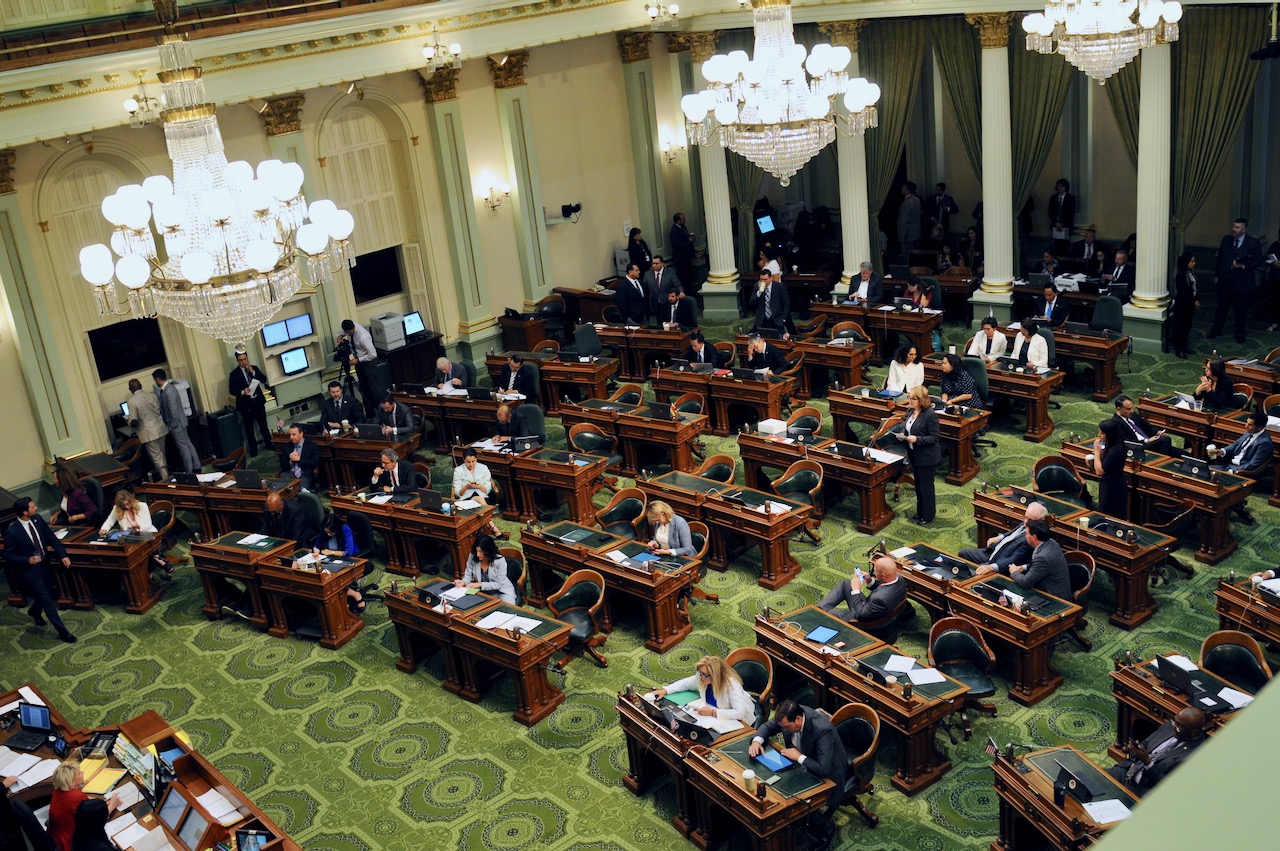
California State Capitol. (Photo: Katy Grimes for California Globe)
Understanding Implied Versus Express Rulemaking Authority in California
Express delegation obviously occurs when the Legislature clearly sets forth its delegated authority to an agency
By Chris Micheli, September 18, 2026 5:39 pm
The general understanding is that the executive branch (i.e., state agencies, departments, boards, commissions, and bureaus) can only exercise the “legislative power” (i.e., their quasi-legislative authority), that has been expressly delegated to it by a statute enacted by the legislative branch.
As a general rule, the agency gets it power to adopt regulations by a statute that authorizes it to do so (discretionary) or requires it to do so (mandatory). This statutory authority to adopt regulations in this state is defined as being express or implied. Express delegation obviously occurs when the Legislature clearly sets forth its delegated authority to an agency.
Implied rulemaking authority comes from the need for the agency to engage in rulemaking necessary to accomplish its assigned tasks or duties. In other words, the state agency has authority to adopt regulations that are sufficient to allow it to complete its required work. State statutes recognize this implied authority as well.
Specifically, Government Code Section 11342.2 provides that, whenever by the express or implied terms of any statute a state agency has authority to adopt regulations to implement, interpret, make specific or otherwise carry out the provisions of the statute, no regulation adopted is valid or effective unless consistent and not in conflict with the statute and reasonably necessary to effectuate the purpose of the statute.
Again, express rulemaking authority means there is an explicit grant of power from the legislature telling an agency it can or must write rules on a specific subject. In these cases, the legislature outlines the exact topic, objective, or program the agency is allowed to regulate. Courts readily recognize express authority, though they still check whether the agency’s final rule stays within the boundaries set by the statute.
For implied rulemaking authority, that power is not set forth in the statute, but is reasonably necessary for the state agency or department to carry out an express duty or legislative purpose. This implied authority is derived from the general mission and assigned tasks given to the agency or department by the legislature.
The regulations that can be adopted by the executive branch entity under its implied rulemaking authority is limited to filling in the operational details, setting internal procedures, or defining classifications needed to make a statutory program work.
In implied rulemaking, the state’s courts scrutinize implied authority much more strictly. An implied rule will be struck down if it creates new policy out of nowhere, expands the agency’s power beyond its original mandate, or contradicts existing state laws.


- Understanding Implied Versus Express Rulemaking Authority in California - September 18, 2026
- Can a Tax Levy Be in a Non-Tax Bill? - September 18, 2026
- 2026 Letters to the Assembly Daily Journal - September 17, 2026
RELATED ARTICLES
-
 November 12, 2022
 -
 February 14, 2023
 -
 April 28, 2022