

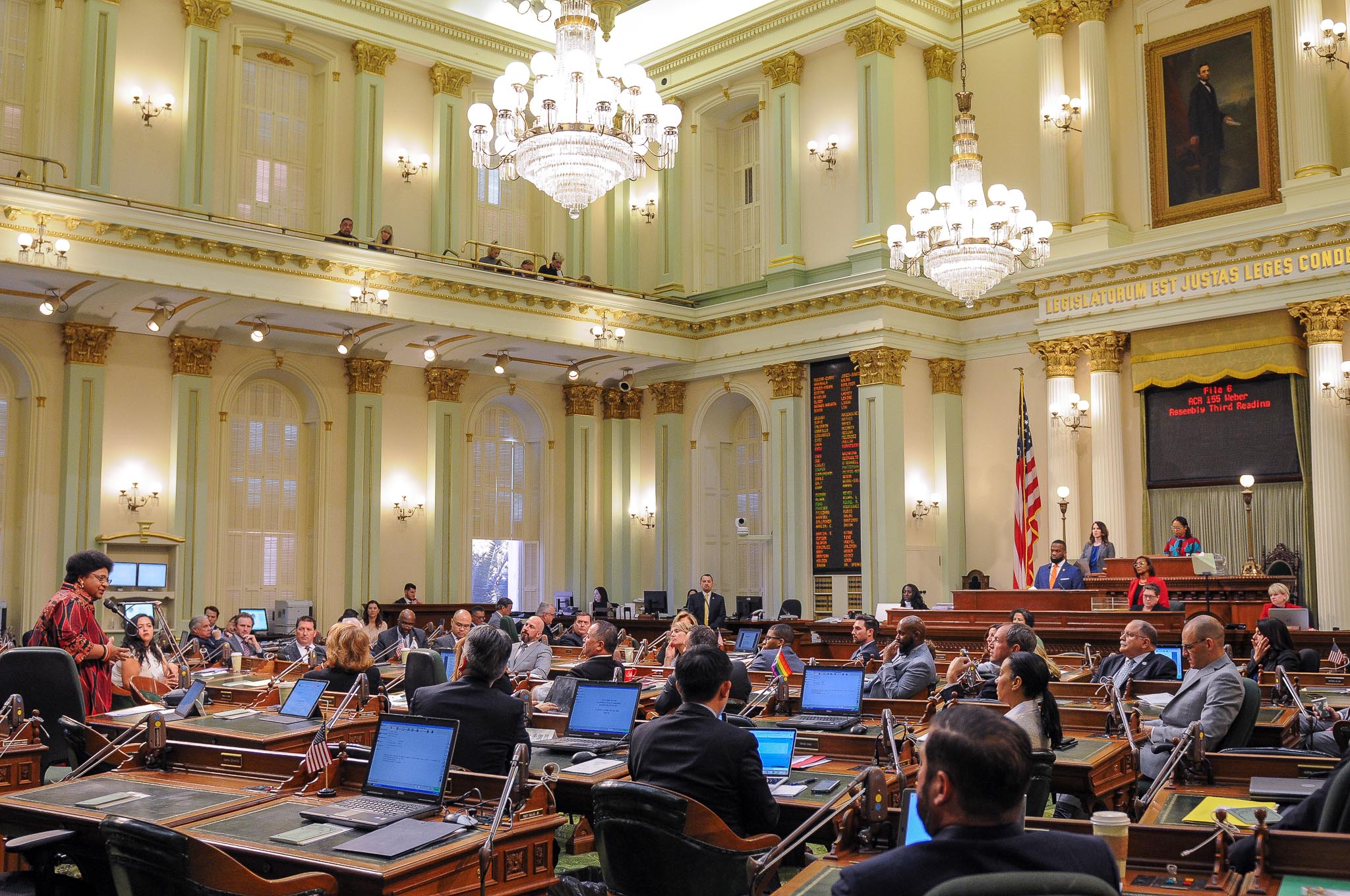
California State Capitol. (Photo: Katy Grimes for California Globe)
Drafting Statutory Enforcement in California
To establish an enforceable right, the Legislature’s intent must be ‘clear, understandable, and unmistakable’
By Chris Micheli, November 15, 2026 8:34 am
In California statutory drafting, the enforcement mechanism is where policy intent either succeeds or collapses. The California Supreme Court has made it clear that violating a state statute does not automatically grant private citizens the right to sue. To establish an enforceable right, the Legislature’s intent must be “clear, understandable, and unmistakable” (Lu v. Hawaiian Gardens Casino, Inc.).
Without precise drafting of an enforcement mechanism, the bill drafter can risk two major litigation pitfalls. The first is intending to bar private lawsuits, only to have plaintiffs route violations through the “back door” of the Unfair Competition Law (UCL). The second is accidental statutory formatting that allows “dual-track” private class actions to proceed alongside, or completely derail, structured government settlements.
As a result, the bill drafter should cleanly create an explicit private right of action if that is desired. In other words, if your goal is to authorize private enforcement, you must build explicit parameters regarding standing, remedies, and pre-suit procedural hurdles to prevent predatory “shakedown” volume litigation.
The bill should state unambiguously who can file a lawsuit, what court handles it, and against whom. Avoid open-ended “any person” framing, unless you intentionally want non-injured parties to sue. Narrow it to something else, such as “aggrieved consumers” or “persons suffering economic injury”. And, explicitly choose between actual damages, statutory damages (fixed amounts per violation), and injunctive relief.
Model Statutory Text
SEC. ___. Section ______ is added to the [Business and Professions / Civil] Code, to read:
(a) Any person who suffers an economic injury or actual damages as a direct result of a violation of this Chapter may bring a civil action in any court of competent jurisdiction against the person or entity responsible for the violation.
(b) In an action brought pursuant to subdivision (a), a prevailing plaintiff may recover any of the following:
(1) Actual compensatory damages.
(2) Injunctive or declaratory relief.
(3) Reasonable attorney’s fees and litigation costs, subject to the court’s determination that the action achieved a public benefit.
(c) No action may be commenced under this section unless the plaintiff has provided the defendant with 30 days’ prior written notice detailing the specific violations. If, within 30 days, the defendant cures the noticed violation and provides a certified statement that the violation has been corrected, no civil action for damages may be maintained.
The bill drafter should also include a “Notice and Opportunity to Cure” provision (subdivision c in the above example) is one of the most effective strategies to protect small businesses from predatory mass-filings while achieving swift compliance without filling court dockets.
In a similar manner, the bill drafter can explicitly bar a private right of action. Simply omitting an enforcement clause is not enough in California. Under the state’s expansive Unfair Competition Law (Cal. Bus. & Prof. Code § 17200), any violation of a state statute can be adopted as an “unlawful prong” business practice, allowing private plaintiffs to sue for restitution and injunctions anyway.
As a result, in order to cleanly block a private right of action, the bill drafter must explicitly strip away both direct and indirect UCL standing.
Model Statutory Text
SEC. ___. Section ______ is added to the [Code Name] Code, to read:
(a) The enforcement of this [Chapter/Division] is vested exclusively in the Attorney General, district attorneys, county counsel, or city attorneys as provided herein.
(b) Nothing in this [Chapter/Division] shall be construed to create, imply, or authorize a private right of action, either at law or in equity, for any violation of its provisions.
(c) A violation of this [Chapter/Division] shall not serve as the basis for a private cause of action under Chapter 5 (commencing with Section 17200) of Part 2 of Division 7 of the Business and Professions Code, nor shall it be utilized by a private litigant to establish an “unlawful” act or business practice under any other state or common law claim.
Use code with caution.
In addition, a significant drafting failure occurs when a state agency painstakingly negotiates a sweeping public enforcement settlement with a company, only for a private plaintiffs’ class-action firm to file a copycat lawsuit the next day using the exact same statutory violation. This “dual-track” vulnerability stems from overlapping statutory enforcement mechanisms.
As a result, in order to establish clear public enforcement priority and prevent these disruptive litigation loops, build an explicit statutory off-ramp.
Model Statutory Text
SEC. ___. Section ______ is added to the [Code Name] Code, to read:
(a) Prior to initiating any private civil action authorized under Section [X], the plaintiff shall submit a comprehensive written notice of the alleged violation to the [Enforcing Agency] and the Attorney General.
(b) No private civil action under this Section may be commenced or maintained if either of the following occurs:
(1) The Attorney General or a local public prosecutor commences a civil or criminal action to enforce the provisions of this Chapter within 60 days of the notice provided in subdivision (a).
(2) The [Enforcing Agency] or Attorney General executes a binding administrative or judicial settlement with the defendant addressing the noticed violations, provided that the settlement requires prospective compliance or public restitution.
(c) Any judicial or administrative settlement executed by the Attorney General or [Enforcing Agency] shall have complete res judicata and collateral estoppel preclusive effect over any subsequent or pending private civil action brought by any person alleging the same operational facts or statutory violations.


- Drafting Statutory Enforcement in California - November 15, 2026
- Corporate Distributions - November 15, 2026
- Imposition of Corporate Tax - November 14, 2026
RELATED ARTICLES
-
 November 8, 2026
-
 November 18, 2024
-
 December 13, 2025