
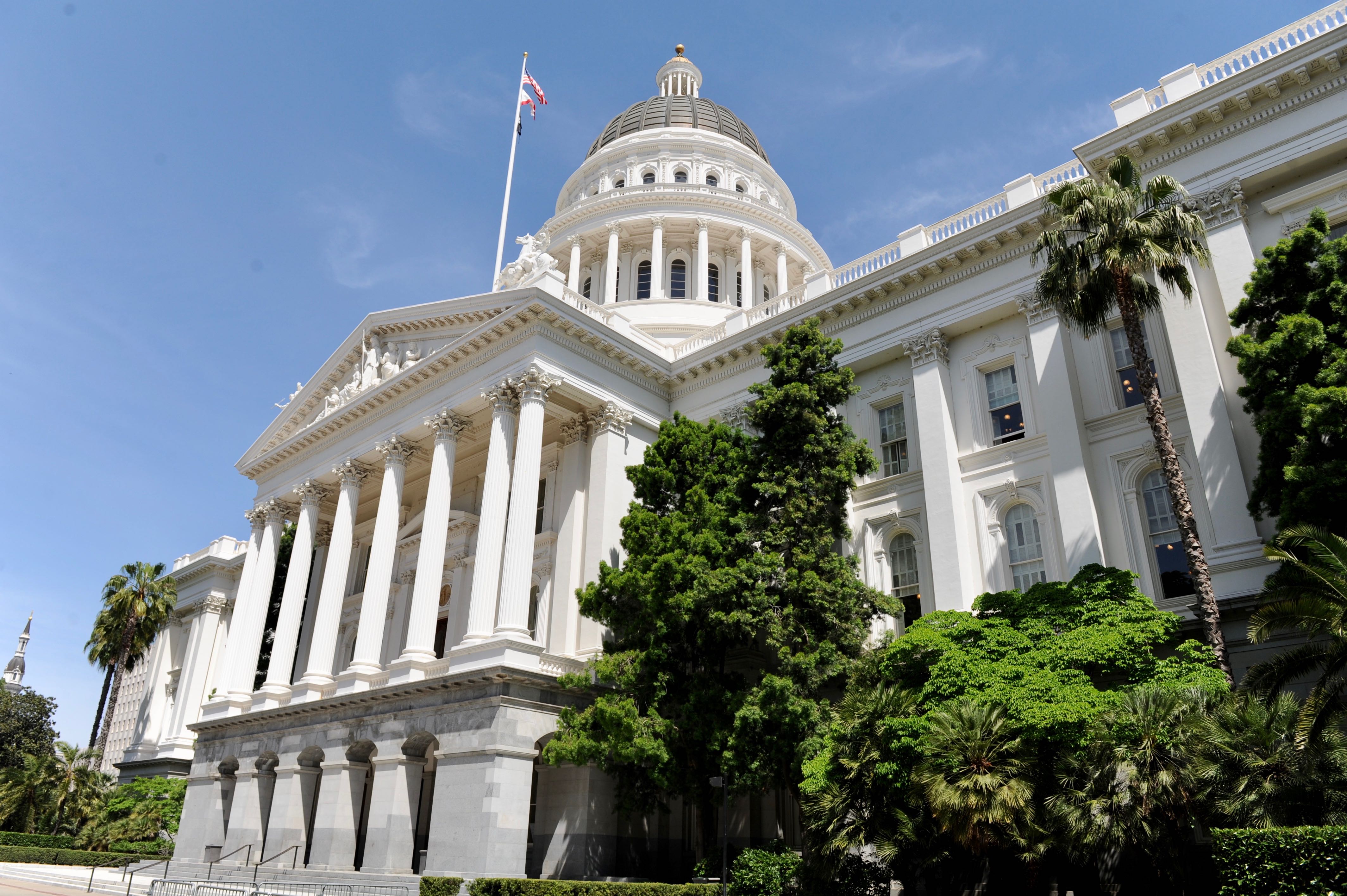
California State Capitol. (Photo: Kevin Sanders for California Globe)
Issuance of Orders in Domestic Violence Cases
Allows the court to make appropriate custody and visitation orders pursuant to the Uniform Parentage Act
By Chris Micheli, October 4, 2025 2:30 am
Division 10, Part 4, Chapter 2, Article 2 of the Family Code deals with orders issuable after notice and hearing for protective orders and other domestic violence prevention orders.
Section 6340 authorizes the court to issue specified orders after notice and a hearing. When determining whether to make any orders under this subdivision, the court must consider whether failure to make any of these orders may jeopardize the safety of the petitioner and the children for whom the custody or visitation orders are sought. If the court makes any order for custody, visitation, or support, that order survives the termination of any protective order.
If at the time of a hearing with respect to an order issued pursuant to this part based on an ex parte temporary restraining order, the court determines that the petitioner has been unable to accomplish personal service, and that there is reason to believe that the restrained party is evading service, the court may permit an alternative method of service designed to give reasonable notice of the action to the respondent. Alternative methods of service include two specified means.
Section 6341 provides that, if the parties are married to each other and no other child support order exists or if there is a presumption that the respondent is the natural father of a minor child and the child is in the custody of the petitioner, after notice and a hearing, the court may, if requested by the petitioner, order a party to pay an amount necessary for the support and maintenance of the child if the order would otherwise be authorized in an action.
If the parties are married to each other and no spousal support order exists, after notice and a hearing, the court may order the respondent to pay spousal support in an amount, if any, that would otherwise be authorized in an action.
Section 6342 specifies that, after notice and a hearing, the court may issue any of the four specified orders. An order for restitution under this section does not include damages for pain and suffering.
Section 6342.5 states that, after notice and a hearing, the court may issue an order determining the use, possession, and control of real or personal property of the parties during the period the order is in effect and the payment of any liens or encumbrances coming due during that period. This order may include findings related to specific debts.
Section 6343 says that, after notice and a hearing, the court may issue an order requiring the restrained party to participate in a batterer’s program approved by the probation department. If the court orders a restrained party to participate in a batterer’s program, the restrained party is required to do three specified tasks. And the courts, in consultation with local domestic violence shelters and programs, develop a resource list of referrals to appropriate community domestic violence programs and services to be provided to each applicant for an order under this section.
Section 6344 provides that, after notice and a hearing, a court, upon request, is required to issue an order for the payment of attorney’s fees and costs for a prevailing petitioner. A prevailing respondent must establish by a preponderance of the evidence that the petition or request is frivolous or solely intended to abuse, intimidate, or cause unnecessary delay.
Section 6345 states that, in the discretion of the court, the personal conduct, stay-away, and residence exclusion orders contained in a court order issued after notice and a hearing under this article may have a duration of not more than five years, subject to termination or modification by further order of the court either on written stipulation filed with the court or on the motion of a party.
These orders may be renewed, upon the request of a party, either for five or more years, or permanently, at the discretion of the court, without a showing of further abuse since the issuance of the original order. Renewals and subsequent renewals are subject to termination, modification, or subsequent renewal by further order of the court either on written stipulation filed with the court or on the motion of a party. The request for renewal may be brought at any time within the three months before the expiration of the orders.
Section 6346 allows the court to make appropriate custody and visitation orders pursuant to the Uniform Parentage Act after notice and a hearing under this section when the party who has requested custody or visitation has not established a parent and child relationship.
Section 6347 states that, in order to ensure that the requesting party can maintain an existing wireless telephone number, and the wireless numbers of any minor children in the care of the requesting party, the court may issue an order, after notice and a hearing, directing a wireless telephone service provider to transfer the billing responsibility for and rights to the wireless telephone number or numbers to the requesting party, if the requesting party is not the accountholder.
The order transferring billing responsibility for and rights to the wireless telephone number or numbers to a requesting party must be a separate order that is directed to the wireless telephone service provider. The order is served on the wireless service provider’s agent for service of process listed with the Secretary of State.


- California’s Unclaimed Property Law - March 16, 2026
- Undertakings in California - March 15, 2026
- Marine Life Definitions - March 15, 2026
RELATED ARTICLES
-
 June 2, 2025
 -
 August 9, 2025
 -