

Boats on Lake Oroville. (Photo: DWR.ca.gov)
Ship Masters and Cargo
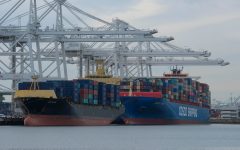
The owner of a vessel is bound to pay to the owner of the cargo at the time of arrival of the vessel at the port of the destination
By Chris Micheli, October 14, 2025 2:30 am
Division 4, Chapter 2 of the California Harbors and Navigation Code deals with ship masters and cargoes. Section 800 provides that the master of a vessel is appointed by and holds his or her appointment at the pleasure of the owner.
Section 801 requires the master of a vessel to always be on board when it is entering or leaving a port, harbor, or river unless the vessel is in charge of a mate who possesses a master’s license.
Section 802 states that, upon entering or leaving a port, harbor, or river, the master of a vessel, the navigation of which is not in charge of a pilot, licensed for that port, harbor, or river, is required to take a pilot if one offers himself. While the pilot is on board the navigation of the vessel devolves on him or her.
Section 803 allows the master of a vessel to enforce the obedience of the mate and seamen to his lawful commands by confinement and other reasonable corporal punishment; but the master is responsible for the abuse of his power.
Section 804 states that the master of a vessel may confine any person on board, during a voyage, for willful disobedience to his lawful commands.
Section 805 provides that, if, during a voyage, the vessel’s supplies fail, the master, with the advice of the officers, may compel persons who have private supplies on board to surrender them for the common want, or payment of, or on giving security for, their value.
Section 806 prohibits the master of a vessel from abandoning it during the voyage, without the advice of the other officers.
Section 807 requires the master of a vessel, upon abandoning it, to carry with him the money and the most valuable of the goods on board, under penalty of being personally responsible.
Section 808 prohibits the master of a vessel, who engages for a common profit on the cargo, from trading on his own account.
Section 809 requires the master of a vessel to use great care and diligence in the performance of his duties, and he is responsible for all damage occasioned by his negligence.
Section 810 provides that the master of a vessel is a general agent for its owner in all matters concerning the vessel.
Section 811 specifies that the master of a vessel has authority to borrow money on the credit of its owner, if it is necessary to enable him to complete the voyage.
Section 812 states that, during a voyage, the master of a vessel is a general agent for each of the owners of the cargo, and has authority to do whatever they might do for the preservation of their respective interests.
Section 813 authorizes the master of a vessel to procure all its necessary repairs and supplies, engage cargo and passengers for carriage, and, in a foreign port, enter into a charter-party.
Section 814 allows the master of a vessel to hypothecate the vessel, freightage, and cargo, and sell part of the cargo, in the cases prescribed by the articles on bottomry and respondentia, if it is found to be of such perishable nature, or in such damaged condition that if left on board or reshipped it would be entirely lost or seriously endanger the interests of its owners.
Section 815 provides that, when a vessel is seriously damaged, or the voyage is otherwise broken up beyond the possibility of pursuing it, the master, in case of necessity, may sell the vessel without instructions from the owners, unless by the earliest use of ordinary means of communication he can inform the owners and await their instructions.
Section 816 authorizes the master of a vessel to sell the cargo if the voyage is broken up beyond the possibility of pursuing it, and no other vessel can be obtained to carry it to its destination, and the sale is otherwise absolutely necessary.
Section 817 states that the master of a vessel in case of its capture may engage to pay a ransom for it in money or in part of the cargo.
Section 818 provides the power of the master of a vessel to bind its owner, or the owners of the cargo, ceases upon the abandonment of the vessel and freightage to insurers.
Section 819 specifies that, unless the contracting parties give exclusive credit to the owner, the master of a vessel is personally liable upon his contracts relative to the vessel, even when the owner is also liable.
Section 820 makes the master of a vessel liable to third persons for the acts or negligence of persons employed in its navigation, to the same extent as the owner of the vessel.
Section 821 states that the owner of a vessel is bound to pay to the owner of the cargo, at the time of arrival of the vessel at the port of the destination, the market value of that portion of the cargo which has been sold to enable the master to pay for the necessary repairs and supplies of the vessel.


- California’s Unclaimed Property Law - March 16, 2026
- Undertakings in California - March 15, 2026
- Marine Life Definitions - March 15, 2026
RELATED ARTICLES
-
 July 3, 2025
 -
 August 23, 2025
 -
October 9, 2025