

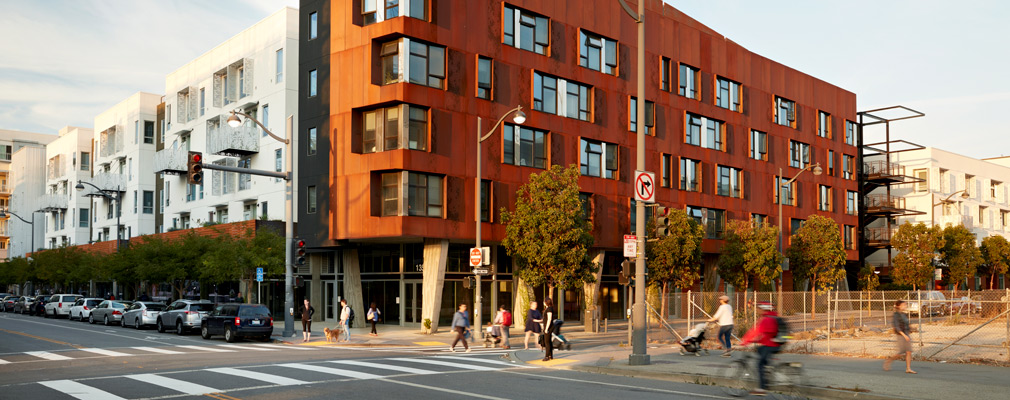
New home construction. (Photo: Katy Grimes for California Globe)
Come One, Cabal: How America Turned Affordable Housing into a Self-Protecting Industry
What voters do not see is a regulatory and financial structure that rewards contractors, subsidized-housing developers, lenders, and nonprofits
By Rob Brewster, January 12, 2026 3:00 am
Good Intentions, Terrible Results
American housing policy has become a blend of politics and profit, over people.
In America’s most prosperous cities, taxpayers now routinely spend close to, and in some cases more than a million dollars to produce a single “affordable” apartment unit. In San Francisco, Los Angeles, and Washington, D.C., the cost of publicly subsidized housing frequently exceeds double the price of comparable market-rate homes.
Though “affordable housing” is an attractive political promise, the outcome does not deliver what it claims to: more housing, priced affordably.
Affordable housing began as a moral project: to help working families, stabilize communities, and ensure that economic prosperity did not leave people behind. Over time, it has evolved into something far less defensible: a system in which the scarcity of housing has become financially advantageous to those tasked with solving it.
The public hears the word affordable and imagines modest, efficient housing delivered at scale. What voters do not see is a regulatory and financial structure that rewards contractors, subsidized-housing developers, lenders, and the very nonprofits created to lower housing costs.
The complex matrix of fees, tax credits, and state, local, and federal programs is shielded by the language of equity and compassion, reinforced by the politically potent label of a “housing emergency.”
America’s housing crisis is not a shortage of money or concern. It is a failure of incentives, accountability, and leadership.
It is tempting to blame this failure on greed, on developers, lenders, or contractors chasing profit. But that explanation is too simple, and ultimately wrong. The modern affordable-housing system exists largely because decades of restrictive zoning, perpetual building code changes, and political miscalculations have made housing increasingly difficult to build. Instead of fixing those barriers, policymakers responded with subsidy programs designed to compensate for the very scarcity they created. In doing so, they treated the symptom rather than the cause, applying a bandage to a structural headache and built a system around managing the consequences of American policy failures.
“Affordable housing” has become one of the safest political talking points in American public life. It signals compassion without requiring follow-through. Elected officials announce ambitious funding totals, hold press conferences at groundbreakings, and move on long before results, or failures become visible. Once the money is spent, there is remarkably little interest in how many homes were delivered, how long it took, how many families were left unserved, or how richly the system surrounding “affordable housing” is profiting.
A Price Tag That No Longer Makes Sense
Independent audits, city controller reports, and federal reviews now tell a remarkably consistent story. In city after city, the per-unit cost of subsidized housing has climbed to levels that would have been inconceivable just a generation ago.
These figures are often defended as the unavoidable cost of doing the right thing, union labor wages, sustainability mandates, seismic standards, community benefits, and layered oversight.
Yet this explanation collapses under scrutiny. Private developers operating in the same cities, using the same labor pools and materials, continue to deliver unsubsidized housing at a fraction of the cost per unit.
The difference is not quality. It is structure.
Subsidized housing is built through an unnecessary maze of agencies, consultants, compliance experts, lawyers, and financial intermediaries, each collecting hefty fees at nearly every step. As costs rise, nearly everyone involved earns more. When projects shrink or stall, the financial consequences rarely fall on the system itself, only on tax payers and the families waiting for housing.
The Quiet Concentration of Power
At the center of the affordable housing system is the Low-Income Housing Tax Credit (LIHTC), a program that channels tens of billions of dollars each year through state agencies and private financial institutions. In theory, it should leverage private capital for public good. In reality, it has become an exclusive marketplace.
In states like Washington, the LIHTC program is supplemented by billions in state-level grants.
Only a small circle of subsidized-housing developers, nonprofits, banks, consultants, and syndicators consistently succeed. They know how to score applications, hire the right grant writers, assemble compliant partnerships, and survive years of predevelopment risk. The application process alone can cost six figures before construction begins.
Large financial institutions purchase the credits, reduce their federal tax liability, collect fees, and market the transactions as social impact. Nonprofit entities, often closely tied to for-profit developers, provide eligibility and moral insulation while functioning as financial pass-throughs rather than independent stewards of the public interest.
For smaller builders, innovation, unique community developments, and cost discipline are not advantages. They are disqualifications.
The Side Effects No One Owns
The consequences extend far beyond subsidized projects.
When publicly funded developments pay inflated rates for labor, consultants, bank fees, and materials, the broader market adjusts upward. Skilled trades migrate to the highest-paying jobs. Suppliers prioritize guaranteed public contracts. Smaller, unsubsidized projects become harder to finance or impossible to build. Fewer homes are built.
At the same time, cities often fast-track these high-cost projects with zoning bonuses and political support, while efficient market-rate proposals wait years for approval or die quietly. The message is unmistakable: spend more and you will be rewarded; build efficiently and you will be punished.
The result is the disappearance of the housing middle; teachers, nurses, municipal workers, and first-time buyers who earn too much to qualify for subsidies and too little to compete in an artificially inflated market.
The Cabal
Here is the reality that polite housing debates avoid: the system now produces fewer homes precisely because doing so is financially rational for the institutions that dominate it.
When a city spends $1 million to build one subsidized unit instead of $800,000 to build two, no one in the approval chain is penalized. Consultants bill. Developers collect fees. Banks receive tax credits. Agencies justify larger budgets. The only measurable loss is borne by the public and by the families that are only further from housing.
Scarcity is not an accident – it is a revenue model.
If this were any other public program; transportation, defense, disaster relief, it would provoke bipartisan outrage. But housing has wrapped itself in moral language so thick that cost has become taboo and accountability optional.
Housing Advocates Learn to Buy Their Way Around Their Own Rules
The deepest irony is structural.
Over decades, housing agencies, advocates, and affiliated nonprofits have helped build an increasingly dense web of regulations; zoning constraints, code changes, procedural reviews, labor rules, and compliance regimes, governing how all housing is built.
But when it comes time to deliver affordable housing, many of these same actors now seek to avoid the very system they created.
Across multiple states, nonprofit housing organizations and public agencies have begun pre-purchasing or pre-entitling projects from for-profit, market-rate developers, projects designed and built outside the affordable-housing regulatory apparatus precisely because doing so is faster, cheaper, and less encumbered. Only later are these developments absorbed into the subsidized system, retroactively labeled “affordable,” and layered with tax credits, fees, and compliance oversight.
Private developers accept these deals because nonprofits can pay inflated prices using tax credits and grants, transforming public subsidy into structural profit.
In effect, the system has acknowledged its own failure. The bureaucracy is so costly and slow that it must be bypassed to function at all. Yet rather than reforming the rules, the institutions that benefit from them have learned to purchase efficiency on the market-rate market while continuing to preserve complexity, authority, and revenue everywhere else.
This is not corruption in the cinematic sense. It is something more unsettling: a regulatory regime that selectively exempts itself while preserving the moral narrative that justifies its existence.
Who Pays the Price
- Working families priced out of unsubsidized housing
- First-time buyers locked out of ownership
- Small developers excluded by bureaucracy
- Neighborhoods waiting years for promised projects
- Taxpayers funding fewer homes at ever-higher costs
We were promised a lifeline. Instead, we built a pipeline that reliably delivers public money upward while leaving housing scarcity intact.
Reclaiming the Mission
Affordable housing was meant to lift people up, not transform moral ambition into a self-protecting industry. Yet today, the word affordable often functions less as a promise than as a permission slip, permission to spend without scrutiny, regulate without responsibility, and declare success without measuring results.
If this system worked, it would be impossible to ignore. Rents would fall. Waiting lists would shrink. Families would move into homes faster than consultants could invoice for them. Instead, the public remains largely unaware of the facts. The affordable-housing system is costing taxpayers, obscuring real costs, shrinking housing output, and damaging the market-rate supply.
The system is broken. It has become a permanent crisis that enriches the few.
The most obvious solution is also the least politically fashionable: build more market rate housing. When supply increases at scale, prices stabilize. New units absorb demand at the top of the market, allowing older housing stock to become naturally affordable. This is how housing affordability has historically worked not through permanent subsidy, but through supply.
Real reform does not require less compassion. It requires something rarer in modern politics: accountability tied to outcomes.
The solution is actively incentivizing market-rate housing to be built at scale. It is removing the incentive to fee housing costs into oblivion. As supply grows, new construction absorbs demand, rents stabilize, and existing housing stock becomes the most effective and immediate source of affordable housing.
Supply, not bureaucracy, is what makes homes affordable.




Looks like the well-intentioned but ultimately misguided policies of the “progressives ” is actually HURTING the very people that they PURPORT to be protecting.
And they lie to get the uninformed to believe them…
Check out the latest series of YouTube videos from an intelligent INFORMED citizen from NorCal named Ramin and his channel is named @RaminRealTalk
He’s right over the target and his videos expose these lying liars and their lies…
Good article. You did a great job explaining the Affordable Housing construction market. I have 2 points to add. Politicians are also financially benefitting from Low Income Housing as they receive donations from trade associations, labor unions and from large scale developers. Secondly the construction quality is inferior in most (not all) LIHTC projects. In many cases subs are not properly supervised by the developers on-site Project Manager and they use inferior materials that affects the overall quality of the project.
Post WWII, former SeaBee Levitt unrolled acres and acres of private industry affordable housing, called Levittowns – they still thrive.
Government gets involved in “affordable housing” and instead creates what is now called in California the “Mexican Mafia” made up of construction trade union members, who like their counterparts in SEIU and the teachers unions, totally suffocate the entire industry they touch.
There is a lesson here. When you want something done, give it to private industry. If you want something to turn into one more Democrat vote getting slush fund with no accountable results, turn it over to the government.
One of the best articles on the subject I’ve ever read.
This is called the Law of Unintended Consequences. Low income housing projects exist so that liberals can pat themselves on the back about how compassionate they are.
Leave low income housing to the free market. It will build better housing cheaper. Everyone benefits.