
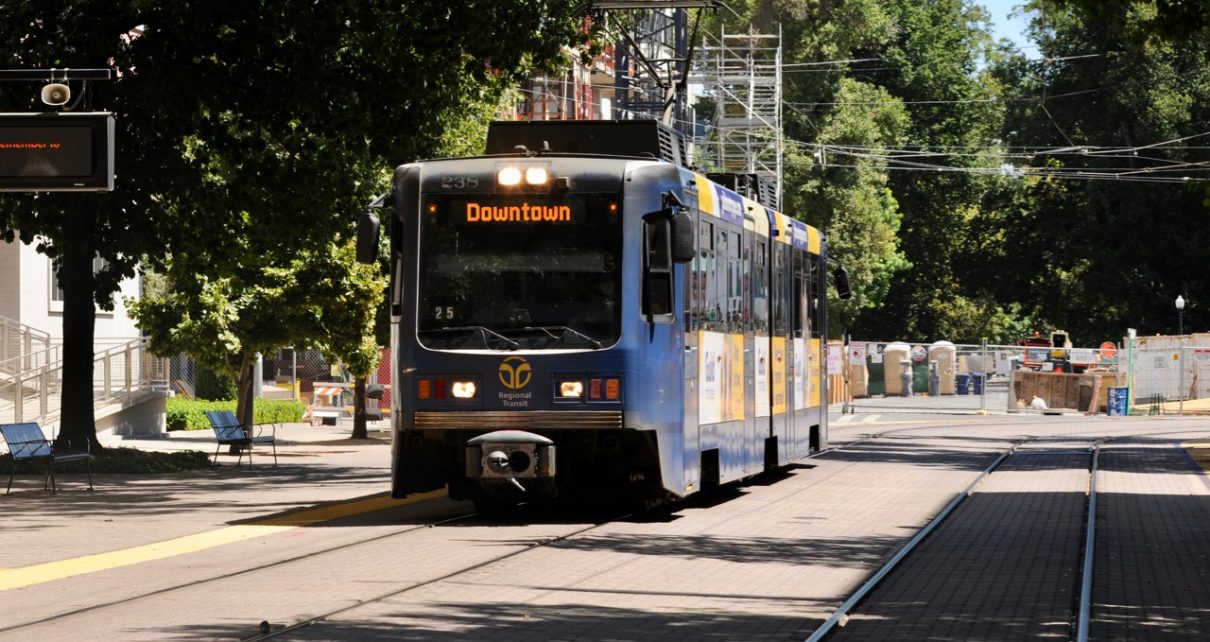
Sacramento Light Rail. (Photo: Kevin Sanders for California Globe)
California Transit Agencies Cost Taxpayers $10 Billion Per Year – And They Want More
The future will take the form of driverless and self-service transportation
By Marc Joffe, October 14, 2025 7:00 am
By Marc Joffe and Athan Joshi
California transit agencies required over $10 billion of taxpayer funds to provide service and maintain their capital plant in Fiscal Year 2023. This is the key finding of our analysis of data from 85 transit systems reported to the Federal Transit Administration.
Although the numbers may improve somewhat in FY 2024 and FY 2025 amidst a post-pandemic ridership recovery, the long-term trend toward greater losses should resume soon. Like other labor-intensive government services such as education and healthcare, transit suffers from a union-driven cost spiral. Fare revenue is unable to keep up, especially with urbanists pushing for “fare free transit” or fare reductions for various classes of riders.
This is why transit agencies like San Francisco BART, Muni, and Caltrain will be going to the ballot next November to get more sales tax money from voters. San Francisco Sen. Scott Wiener’s SB 63, just signed by Governor Gavin Newsom, would raise sales tax by 1% in San Francisco and by 0.5% in four other Bay Area counties. If voters give the green light, the total sales tax in Hayward and some other East Bay Cities would reach 11.5%.
We found a lot of variation across systems. Notably San Diego’s Metropolitan Transit System required much less taxpayer support than San Francisco Muni despite providing more overall service as measured in passenger miles. That is largely due to longer average trip length in San Diego County, but SF Muni has the unique challenge of providing cable car service which loses tens of millions annually despite the high fares it charges tourists.
Rather than raise everyone’s taxes to pay for this expensive tourist attraction, Muni should turn it over to a private operator.
The most cost-effective system we found was CalVans, sponsored by the California Vanpool Authority, which relies on volunteer drivers carrying passengers paying full fares. CalVans reported an FY 2023 farebox recovery ratio of 96.77%, well above the statewide average of 10.25%.
Some large bus systems fell below the statewide average because of their low fares and/or low passenger occupancy. I witnessed the causes of this low farebox recovery just other day; I took a three-mile midday bus ride in the suburban area where I live. Although the bus line only operates once an hour, I shared a full-size bus with just three other passengers. That is not nearly enough passengers to cover the pay and benefits of the unionized driver, as well as vehicle maintenance and fuel costs plus administrative overhead.
As transit advocates tell us, low frequency contributes to low ridership because potential passengers do not want to wait around. But running more frequent service with the current staffing model would drive up costs far more than any incremental revenue the agency might collect.
A better approach is being test driven across Japan and now in Jacksonville, Florida: driverless buses. With Waymo having proven that robotaxis can work in Los Angeles, San Francisco, and portions of Santa Clara County, there is every reason to think that technology has matured to the point at which autonomous buses could work throughout most of California.
The state’s transit agencies should also follow the example of Vancouver, Honolulu, Paris, Singapore, and the many other cities that operate driverless trains. Ironically, San Francisco BART was designed for automated service, but never got there, likely due to pressure from unions to create and maintain more jobs for operators.
Finally, a range of small-scale electric vehicles are becoming increasingly popular choices for individual transportation. E-bikes, e-scooters, and even golf carts, available for both sale and rent, can provide on-demand travel for those who cannot access a car or SUV or who prefer to avoid those types of vehicles.
Today, transit is a big consumer of taxpayer money, and it will get worse unless and until state and agency leaders become willing to rethink the existing transit model. The future will take the form of driverless and self-service transportation. The question is when or even whether transit unions and the political officials whom they employ will allow this future to reach California.
Athan Joshi is an intern at California Policy Center.


- California’s Bloated Healthcare Sector and the Push for a Billionaire Wealth Tax - January 19, 2026
- Sacramento Metropolitan Fire District’s Fragile Finances - December 18, 2025
- The Innovative Wealth Tax That Could Break California - November 19, 2025
RELATED ARTICLES
-
 August 3, 2022
 -
 December 22, 2022
 -
 June 16, 2022
There are two huge problems with public transit- safety and not collecting fares. The Homeless, vagrants, drug addicts and fare jumpers use public transit to travel all over urban areas, while making the urban and working class very uncomfortable and subject to attacks. Meanwhile the transit agencies spiral downward.
Anyone who votes for sales tax increases is just plain stupid. Who are these people?
Public transit ridership has been on the decline for years, and yet the spending increases. I look at buses when they go by, and many times I don’t see one person in the bus. I see trains going by, and they are basically empty. Interesting how the global warming Communist Democrats don’t see a problem running empty buses and trains arounds producing CO2.
I can well imagine the havoc that could be created with a fleet of driverless buses if the overall control programming was hacked into by a malicious actor whether it was by a nation state, ransom collector, or domestic terrorism.
Do they have to be centrally controlled?
They have to get their route instructions from somewhere. I had a detailed response to make it clear, but the schparm feeltor blahcked it.
Mark, check out gps spewphing, the fact that machines are incapable of reasoning, and if a machine is told by its electronic master on a point in the route to make a right turn and go over a cliff into a lake it will.
The whole point of mass transit is the endless subsidies. Just imagine how much they would demand to keep the high speed train running.
No one in their right mind wants to ride public transportation in the lawless Democrat controlled hellhole cities in California and be subjected to the crazies, homeless, and gangbanger thugs who might endanger your life?