
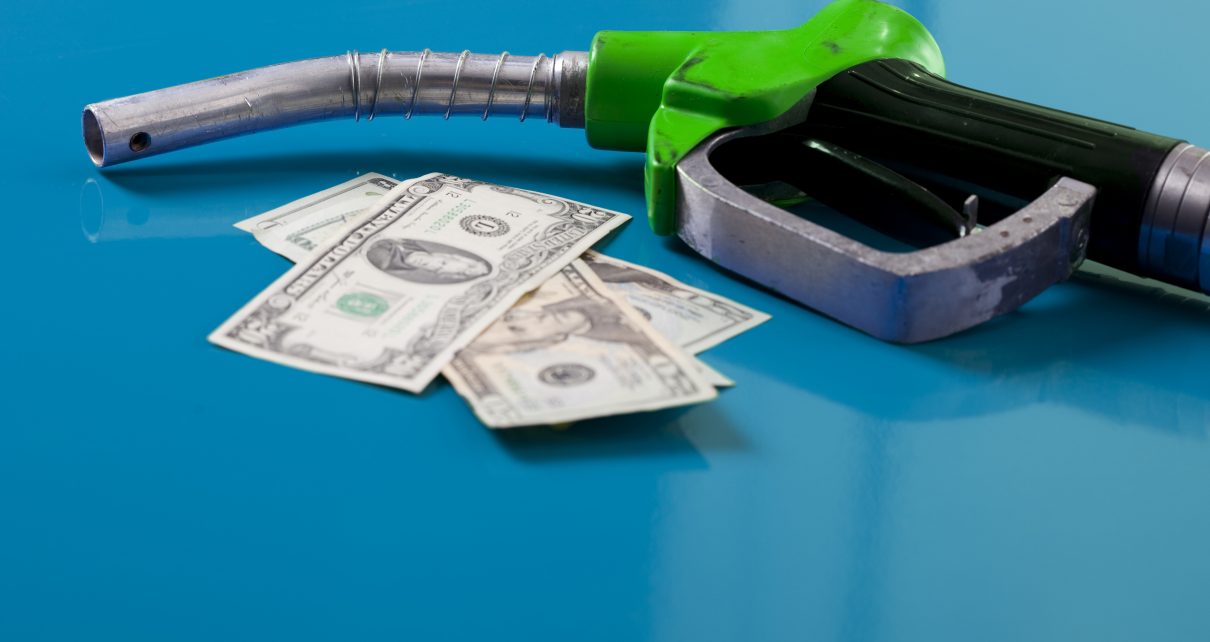
Gas Pump with Bills. (Photo: Shutterstock)
Fueling Poverty, Not Progress: Why Extending Cap and Trade to 2045 Is a Bad Deal
This isn’t progress; it’s a policy that picks the pockets of the poor to fund Sacramento’s pet projects
By Mike Garcia, August 1, 2025 3:30 am
As President Donald Trump champions a “big, beautiful” economic revival, California’s cap-and-trade program stands as a stark reminder of legacy policies that burden everyday Americans for no clear gain. This system, which forces oil companies to buy emission allowances to cover the carbon emissions from the fuel they sell, drives gasoline prices to punishing heights. This hits (you guessed it) working-class Californians the hardest. But just as America stands at the precipice of economic revival after four hard years, some advocates say it’s time to extend cap-and-trade policies. I couldn’t disagree more – it’s time to reject this flawed approach that “enriches” the state at the expense of its people.
California’s gas prices are among the nation’s highest, averaging $4.61 per gallon compared to the national average of $3.16, more than a dollar per gallon less. The cap-and-trade program adds an estimated 23 to 74 cents per gallon. This disproportionately harms low- and middle-income families who can’t afford electric vehicles or have lengthy commutes. As the state pushes to extend this program through 2045, Californians would face the prospect of even steeper prices as California restricts the supply of allowances. This isn’t progress; it’s a policy that picks the pockets of the poor to fund Sacramento’s pet projects.
Proponents of cap-and-trade argue it’s essential to limit greenhouse gas emissions, claiming it will protect the environment by helping California hit its target goal of carbon neutrality by 2045. They also claim the program generates valuable revenue for the state, having collected over $30 billion to date.
But this assumes emissions are an intractable problem requiring heavy-handed market interventions, ignoring how human ingenuity and innovation have historically solved environmental challenges without such punitive measures. Supporters of cap-and-trade push to expand it, arguing it generates revenue and positions California as a global model for environmental policy. If you happen to buy the climate catastrophist argument, note that even advocates of cap-and-trade admit that the program is failing on these terms. The idea that the program’s revenues point to its success is pure nonsense. Instead of helping the citizens whose taxes have paid for this program, funds have gone to bloated projects like $100 billion, yet unfinished high speed railway project and the scandal-ridden California Conservation Corps. The high-speed rail project—massively over budget and years behind schedule—is a poster child for how cap-and-trade revenues are squandered. Bureaucratic schemes enrich elites while ordinary Californians struggle with rising prices. Meanwhile, the U.S. emits about 1/8 of global emissions (and falling) making California’s sacrifices a drop in the bucket.
Energy is the lifeblood of progress and jacking up costs through manufactured scarcity punishes the poor and stifles innovation. True progress comes from unleashing energy markets, not tying them up in bureaucratic and volatile schemes that enrich elites while families struggle to fill their tanks.
California’s cap-and-trade program highlights a broader disconnect: policies crafted by coastal elites that ignore working-class struggles. Low- and middle-income households in California, stretched thin by a 17% homeownership affordability rate, spend extra income on transportation. Adding to the cost of gasoline only increases the hardship. In truth, the program is nothing more than a bureaucratic scheme to enrich elites while ordinary Californians struggle with rising prices. The program’s complexity benefits savvy corporations while leaving small businesses and families to bear the costs. This isn’t an America First approach; it’s a policy that prioritizes ideology over people.
The path forward is clear: prioritize affordability and unleash innovation. Lawmakers should let cap-and-trade expire in 2030 and focus on policies that empower businesses and citizens. Streamlined regulations for domestic oil production and infrastructure investments free of regressive fees could lower costs and create jobs. California can address environmental concerns without impoverishing its citizens by trusting in market-driven solutions and human ingenuity.


- An America First Housing Solution Starts With Fixing California - March 16, 2026
- An America First Year of Results for California - February 22, 2026
- Want Cheaper Gas? End California’s Special Recipe - December 10, 2025
RELATED ARTICLES
-
-
-
 June 19, 2022
Mr. Garcia is “spot on”. Like it or not hydrocarbon fuels are our gateway to the quality of life and mobility that sets America and California apart from the rest of the world.
BTW, before the dismantling of the structures at San Onofre begins consider a rebuild and restart of this piece of critical infrastructure: Sadly San Onofre NGS going the way of the refineries all so critical to California and America.
http://www.ocregister.com/2025/07/31/is-enough-money-set-aside-to-tear-down-san-onofre-and-store-waste-for
“…positions California as a global model for environmental policy” is a straight up Elitist Delusion! The rest of this world is going to take care of itself. What arrogance. Just another sanctified scam. Hopefully more and more young people keep waking up to the fact that big government can’t be trusted, so we can turn this around.
Cutting carbon emissions in California is just stupid, when the rest of the world is increasing theirs. There is no cost effective technology for reducing carbon emissions. We are making ourselves poor for no reason.
My dad was involved in this research. Trips to Antarctica from 1967 to early 2000s, IPCC conferences, etc. He has since passed away but I remember a conversation about 20 years ago when he said he felt as if the evidence was being ginned to generate funding for the University…but over time he was reduced to pretty much being the very small dissident faction of this concept. Today of course we have seen it morph into a weapon of Larry Fink and ESG ratings. Donald Trump is ending this charade in a way that the RINOs and Neocons, which unfortunately take up too much space in the CA GOP even though I much prefer them to CA DNC, ever ever did. Even Arnold Schwarzenegger played way too much footsy with these global boiling conmen.