
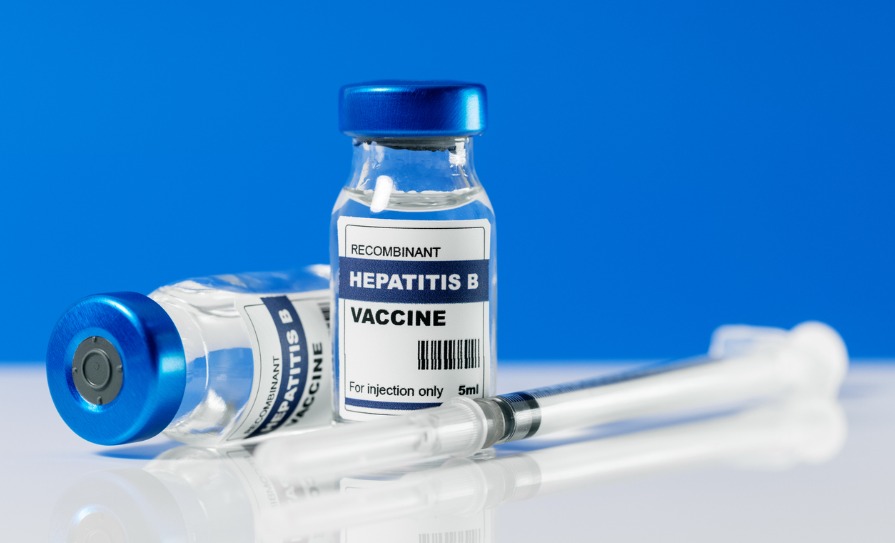
Hepatitis B Vaccination | Environmental Health & Safety. (Photo: ehs.ucr.edu)
California Doubles Down on Coercion After Immunization Advisory Committee Rejects Universal HepB Newborn Dose
These practices reflect an institutional belief that parents must be managed, frightened, or overridden because they cannot be trusted with the decision
By Rita Barnett-Rose, December 11, 2025 2:55 am
On December 5, 2025, the Advisory Committee on Immunization Practices (ACIP) finally aligned federal vaccine policy with evidence. By an 8–3 vote, the committee ended the automatic Hepatitis B birth-dose recommendation for babies born to HepB-negative mothers — overturning a 30-year practice never supported by robust safety data or medical necessity. ACIP acknowledged what many clinicians and researchers have been saying for decades: healthy newborns face essentially zero risk of contracting Hepatitis B, and parents deserve a meaningful role in deciding whether their hours-old infants should receive a vaccine designed for adult behavioral risk.
Within hours, Governor Gavin Newsom, the California Department of Public Health (CDPH), the Los Angeles County Department of Public Health (LACDPH), and — in a coordinated statement — the all-blue-state West Coast Health Alliance (California, Oregon, Washington, and Hawai‘i) announced they would reject the shift. All four states insisted they would continue promoting the universal newborn dose, framing ACIP’s correction as “ideological” and “political.” The irony is difficult to miss: the same officials who for years insisted that their policies reflected unquestionable science now dismiss federal scientific review because it restores parental choice rather than preserves automatic compliance. Their response made one thing unmistakably clear — even when federal experts concede the evidence for a policy is weak, these states prefer to maintain the coercive model rather than allow parents a seat at the table.
The Birth Dose Was Never Evidence-Based — And ACIP Finally Admitted It
For infants born to HepB-negative mothers, the early-childhood risk of Hepatitis B is effectively zero. Published estimates place it at fewer than 1 in 1 million, and some experts argue the true rate may be far lower.
Yet the universal newborn dose was implemented in the 1990s not because infants were at risk, but because the adults who were at risk — IV drug users, sex workers, and adults with multiple sexual partners — were not seeking voluntary vaccination. Newborns, by contrast, were a captive audience. No ethical framework supports using infants to compensate for adult noncompliance.
When ACIP revisited the evidence this year, the omissions were impossible to ignore. No randomized placebo-controlled trials for childhood HepB vaccines have ever been conducted. U.S. infant safety trials enrolled fewer than 150 infants, most of them not newborns, and monitored adverse events for only four or five days. No long-term neurodevelopmental follow-up was ever performed. Aluminum adjuvants were administered during a period of rapid brain development without adequate toxicological study, and yeast-derived antigens presented plausible autoimmune pathways that were never rigorously examined.
These are not minor gaps; they represent a systemic failure to generate the evidence that should be required before giving any medical intervention — especially one administered to millions of healthy newborns within hours of birth.
Other nations recognized this long ago. Europe does not administer HepB at birth unless the mother is infected. Canada and Japan begin at two months. Australia reserves the birth dose for high-risk cases. The United States was the outlier.
Although ACIP recommendations are technically voluntary, they function as the backbone of modern vaccine policy. States often incorporate them into school-entry requirements; employers and universities rely on them when setting vaccination rules; hospitals use them to shape newborn protocols; insurers use them to determine reimbursement and coverage. In practice, what ACIP “recommends” often becomes what Americans are required to do. Now that ACIP is finally restoring a measure of parental autonomy, California is choosing to reject the change.
California’s Hospital Protocols Depend on Coercion, Not Consent
California officials insist they are protecting children by maintaining the newborn dose, but the system they’re defending is built on coercion at the exact moment when informed consent is least possible.
Under long-standing California practice, parents declining the HepB shot for their newborns commonly report being given refusal forms filled with dire warnings of “serious disease and death” — even when the mother is confirmed HepB-negative. Although refusal forms are not required by California law, many hospitals present them as though they are. Parents in childbirth forums, parent-advocacy groups, and vaccine-injury support networks consistently describe being told the shot is “required,” despite no statute mandating it.
Pressure is often applied when mothers are medicated, exhausted, recovering from surgery, or separated from their newborns — the opposite of what meaningful consent requires. Some parents report being warned, implicitly or explicitly, that refusal might be documented as a safety concern or reported to Child Protective Services. Whether or not CPS is contacted is beside the point; coercion operates through fear.
Other families have recounted discovering that the shot was administered without their consent while the mother was asleep or the baby was in the nursery. These accounts surface regularly in parent support groups, though they seldom appear in public records because hospitals resolve such incidents internally.
These practices have nothing to do with informed consent. They reflect an institutional belief that parents must be managed, frightened, or overridden because they cannot be trusted with the decision. ACIP’s move to Shared Clinical Decision-Making (SCDM) challenges precisely that assumption.
But because AB 144 now gives CDPH independent authority to set California’s vaccine standards, rejecting ACIP’s update means hospitals will continue treating the birth dose as routine and expected — preserving precisely the coercive dynamics ACIP sought to eliminate.
Why Shared Decision-Making Threatens Authoritarian Public Health
Shared Clinical Decision-Making requires clinicians to discuss the actual risks and benefits with families, allowing parents to decide whether the birth dose is appropriate for their child. That model is fundamentally incompatible with a system built on automatic compliance. Once parents are no longer cornered in the delivery room, many will simply wait until the two-month visit. Others will research the true risk profile, discover that the vaccine was never tested in newborns, examine evidence on aluminum exposure or autoimmune pathways, or review VAERS reports on injuries and deaths. Many will reasonably conclude that a newborn at essentially zero risk does not need a vaccine designed for adult behavioral exposure.
But in California, declining the birth dose does not mean parents can simply opt out later if they continue to hold reservations. Since SB 277 eliminated religious and personal-belief exemptions, and SB 276 sharply restricted medical exemptions, HepB remains a mandatory immunization for entry into public or private school. Parents who decline the birth dose but plan to enroll their child in school must still comply later in early childhood unless they homeschool or secure a rare, state-approved medical exemption. In other words, California will “capture” nearly all children eventually. What officials are defending is not the need for HepB vaccination per se — which can occur months or years later — but the maintenance of a coercive delivery-room protocol that ensures immediate, uniform uptake before parents have time to exercise SCDM.
This is where the politics become impossible to ignore. California leaders accuse RFK Jr. and federal reformers of “politicizing” public health, yet refuse to acknowledge that coercive vaccine policies are themselves political. Mandates convert medical decisions into legal obligations. They replace persuasion with compulsion. They regulate private behavior through state authority. And California’s modern vaccine framework — from SB 277 to SB 276 to AB 144 — has cemented a system in which parental autonomy is treated as a threat rather than a norm.
As attorney Aaron Siri put it plainly during the hearing:
“If you want to increase vaccine confidence, you must depoliticize vaccines. And the way to depoliticize vaccines is to end mandates. Mandates make vaccines political.”
California’s public-health establishment has not yet absorbed that lesson.
The Public Should Watch the Hearing—And Decide for Themselves
California officials are counting on the public relying on headlines and agency press releases —rather than watching the hearing to form their opinions. But the entire proceeding is publicly available, and anyone who views it can see which ACIP members anchored their arguments in evidence and which relied on indignation, deflection, or appeals to authority. The contrast is striking, and it cuts directly against the narrative California leaders are promoting.
Public trust in health institutions was profoundly damaged during COVID. It will not be rebuilt by preserving the same coercive practices that helped erode that trust. Restoration begins only with transparency, scientific humility, and genuine respect for parental judgment.
California Can Delay Accountability, But Not Escape It
For the first time in decades, federal authorities have openly acknowledged the limits of the evidence behind a long-standing childhood vaccine policy. That admission creates space for honesty, scientific humility, and a long overdue restoration of parental authority in medical decision-making.
The truth is no longer a secret. The evidence for the universal HepB newborn dose was never there; ACIP finally said so. California refuses to. And that contrast tells the public everything they need to know about who is protecting children — and who is protecting power.


- Federal Judge Enjoins California Medical Boards from Punishing Doctors for Rejecting the Government’s COVID Narrative - August 7, 2026
- The Second Circuit Just Narrowed Religious Liberty – Did It Misread the Supreme Court’s Remand? - July 14, 2026
- Boston Activist Judge Decides He Alone Can Set Federal Health Policy - March 17, 2026
RELATED ARTICLES
-

-
-
 January 25, 2024
“Within hours, Governor Gavin Newsom, the California Department of Public Health (CDPH), the Los Angeles County Department of Public Health (LACDPH), and — in a coordinated statement — the all-blue-state West Coast Health Alliance (California, Oregon, Washington, and Hawai‘i) announced they would reject the shift.”
In other words a Governor with an IQ 25 and bunch of dimwit Communists rejected the shift.
“HepB remains a mandatory immunization for entry into public or private school.”
This is a good reason to homeschool your kids, along with them actually learning something and not sending them to leftist indoctrination camps.