
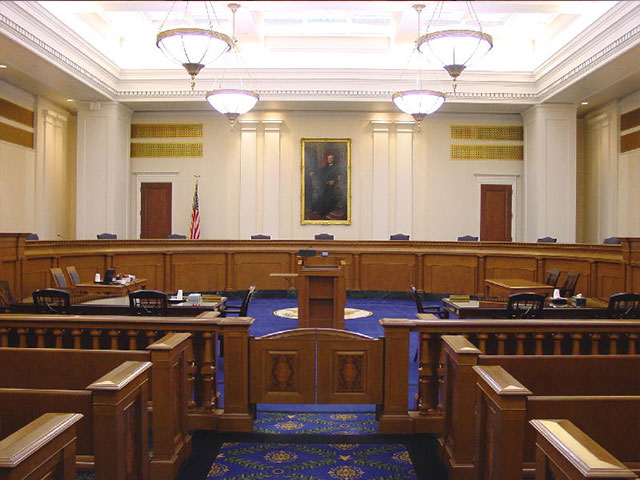
Courtroom (Photo: public domain)
Arbitration Proceedings
Requires the use of a single neutral arbitrator
By Chris Micheli, March 18, 2026 2:30 am
Code of Civil Procedure Part 3, Title 9, Chapter 3 deals with the conduct of arbitration proceedings in this state.
Section 1281 requires the use of a single neutral arbitrator. If there is more than one neutral arbitrator, two specified rules apply. If there is no neutral arbitrator, the powers and duties of a neutral arbitrator may be exercised by a majority of the arbitrators.
Section 1282.2 requires the neutral arbitrator to appoint a time and place for the hearing and cause notice to be served personally or by registered or certified mail on the parties to the arbitration and on the other arbitrators not less than seven days before the hearing. Appearance at the hearing waives the right to notice.
Section 1282.4 specifies that a party to the arbitration has the right to be represented by an attorney at any proceeding or hearing in arbitration under this title. A waiver of this right may be revoked; but if a party revokes that waiver, the other party is entitled to a reasonable continuance for the purpose of procuring an attorney.
Section 1282.5 provides that a party to an arbitration has the right to have a certified shorthand reporter transcribe any deposition, proceeding, or hearing. The transcript is to be the official record of the deposition, proceeding, or hearing.
Section 1282.6 states that a subpoena requiring the attendance of witnesses, and a subpoena duces tecum for the production of books, records, documents, and other evidence, at an arbitration proceeding or a deposition for the purposes of discovery, must be issued as provided in this section. In addition, the neutral arbitrator upon their own determination may issue subpoenas for the attendance of witnesses and subpoenas duces tecum for the production of books, records, documents, and other evidence.
Section 1282.8 authorizes the neutral arbitrator to administer oaths.
Section 1283 says that, on application of a party to the arbitration, the neutral arbitrator may order the deposition of a witness to be taken for use as evidence and not for discovery if the witness cannot be compelled to attend the hearing or if exceptional circumstances exist as to make it desirable, in the interest of justice and with due regard to the importance of presenting the testimony of witnesses orally at the hearing, to allow the deposition to be taken.
Section 1283.05 allows depositions to be taken and discovery obtained in arbitration proceedings as specified in this section.
Section 1283.4 requires the award to be in writing and signed by the arbitrators concurring. It must include a determination of all the questions submitted to the arbitrators the decision of which is necessary in order to determine the controversy.
Section 1283.6 requires the neutral arbitrator to serve a signed copy of the award on each party to the arbitration personally or by registered or certified mail or as provided in the agreement.
Section 1283.8 requires the award to be be made within the time fixed by the agreement or, if not so fixed, within the time as the court orders on petition of a party to the arbitration. The parties to the arbitration may extend the time either before or after the expiration. A party to the arbitration waives the objection that an award was not made within the time required unless he gives the arbitrators written notice of his objection prior to the service of a signed copy of the award on him.
Section 1284 allows the arbitrators, upon written application of a party to the arbitration, to correct the award upon any of the grounds set forth in law not later than 30 days after service of a signed copy of the award on the applicant. Application for correction must be made not later than 10 days after service of a signed copy of the award on the applicant. Upon or before making the application, the applicant is required to deliver or mail a copy of the application to all of the other parties to the arbitration. Any party to the arbitration may make written objection to the application.
Section 1284.2 provides that, unless the arbitration agreement otherwise provides or the parties to the arbitration otherwise agree, each party to the arbitration is required to pay his pro rata share of the expenses and fees of the neutral arbitrator, together with other expenses of the arbitration incurred or approved by the neutral arbitrator, not including counsel fees or witness fees or other expenses incurred by a party for his own benefit.
Section 1284.3 prohibits any neutral arbitrator or private arbitration company administering a consumer arbitration under any agreement or rule requiring that a consumer who is a party to the arbitration pay the fees and costs incurred by an opposing party if the consumer does not prevail in the arbitration, including, but not limited to, the fees and costs of the arbitrator, provider organization, attorney, or witnesses.


- Sales Tax Presumptions - October 17, 2026
- A Unique Aspect of California Lobbying: Local Governments - October 16, 2026
- Some Suggestions for Those New to California Legislative Drafting - October 16, 2026
RELATED ARTICLES
-
 January 31, 2026
 -
 January 21, 2026
 -
 February 13, 2026