
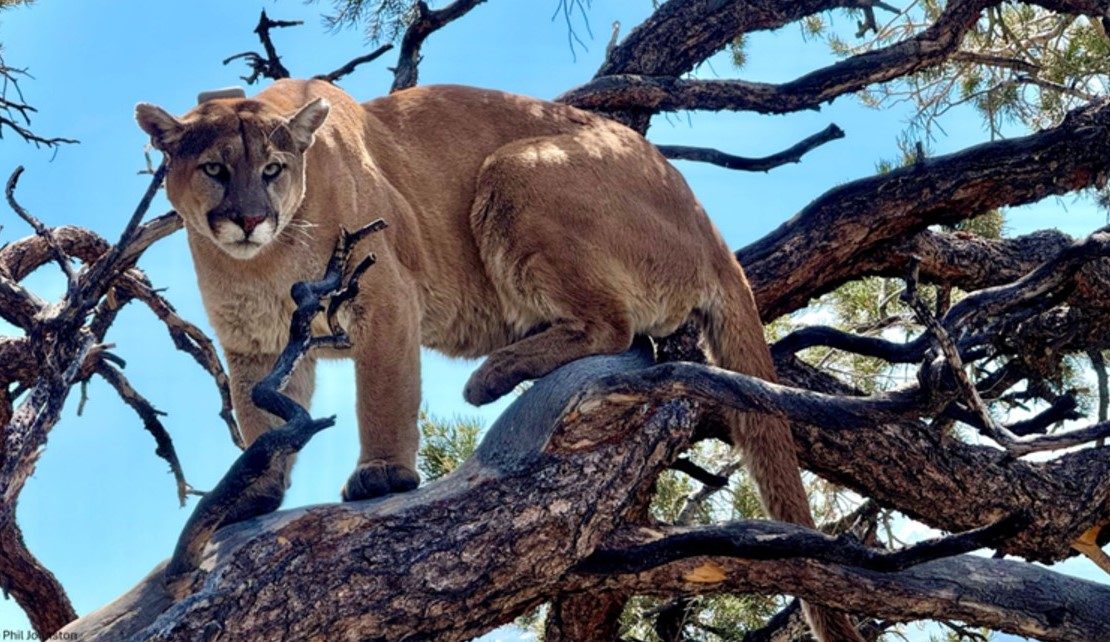
Mountain lion. (Photo: wildlife.ca.gov)
Are Legislative Findings in Prop. 117 Bills Sufficient?
Proposition 117 classifies the mountain lion as a specially protected mammal
By Chris Micheli, April 29, 2026 2:00 pm
In reviewing pending legislation that proposes amendments to the California Wildlife Protection Act of 1990, the same legislative finding and declaration is made in each bill. It is a simplistic statement that raises the question whether this language meets the requirement of Prop. 117.
Proposition 117, among other provisions, classifies the mountain lion as a specially protected mammal under the laws of this state, and makes it unlawful to take, injure, possess, transport, import, or sell any mountain lion or any part or product thereof. The act authorizes the take of mountain lions under limited circumstances. It also created the Habitat Conservation Fund ($30 million annually) to protect critical wildlife habitats, wetlands, and endangered species.
The California Wildlife Protection Act was enacted by the voters in June 1990 by Proposition 117, which was a statutory initiative. The Wildlife Protection Act is found in the California Fish and Game, Chapter 9, beginning with Section 2780. Article II, Section 10 of the California Constitution provides in Subdivision (c)
(c) The Legislature may amend or repeal a referendum statute. The Legislature may amend or repeal an initiative statute by another statute that becomes effective only when approved by the electors unless the initiative statute permits amendment or repeal without the electors’ approval.
This provision only allows an initiative that was adopted by the state’s voters to be amended by the Legislature (such as Prop. 117) if the initiative permits amendment without the electorate’s approval. The Wildlife Protection Act does allow amendment by the Legislature. The California Wildlife Protection Act of 1990 prohibits the Legislature from changing the act, with specified exceptions, except by a 4/5 vote of the membership of both houses of the Legislature and then only if consistent with, and in furtherance of, the purposes of the act.
As a result, the Legislature may amend Prop. 117 “to further its purposes” so long as those amendments are “consistent with” the Act. So, when the Legislature desires to amend the Wildlife Protection Act, it includes in a “plus section” (which can be seen at the end of a bill that proposes to amend the law) a legislative finding and declaration. The following is an example of what is contained in almost every Prop. 117 amendment bill:
The Legislature finds and declares that the amendments made by this act are consistent with, and further the purposes of, the California Wildlife Protection Act of 1990.
The question to address is whether the language in the above example is sufficient or if there should be some explanation why the Legislature believes the Wildlife Protection Act’s purpose is being furthered by its proposed amendment. The following are the provisions of Prop. 117 that set forth its purposes after the people’s findings and declarations:
Fish and Game Code Section 2780 provides:
The people of California find and declare all of the following:
(a) Protection, enhancement, and restoration of wildlife habitat and fisheries are vital to maintaining the quality of life in California. As the state’s human population increases, there is an urgent need to protect the rapidly disappearing wildlife habitats that support California’s unique and varied wildlife resources.
(b) Much of the state’s most important deer winter ranges have been destroyed in the last 20 years.
(c) Critical winter ranges of migratory deer in the Sierra Nevada and Cascade mountain ranges are increasingly subject to incompatible land uses. In some counties, over 80 percent of the critical winter ranges fall on these lands. The potential for incompatible land uses on these lands is a major threat to the survival of many migratory deer herds.
(d) Deer, mountain lion, and other wildlife habitat within the Sierra Nevada, Cascade, Coast Range (including the Santa Lucia Mountains in Monterey County along the Central Coast), Siskiyou and Klamath Mountains; and the Santa Susana, Simi Hills, Santa Monica, San Gabriel, San Bernardino, San Jacinto, Santa Ana and other mountains and foothill areas within southern California, is disappearing rapidly. Small and often isolated wildlife populations are forced to depend upon these shrinking habitat areas within the heavily urbanizing areas of this state. Corridors of natural habitat must be preserved to maintain the genetic integrity of California’s wildlife.
(e) This chapter shall be implemented in the most expeditious manner. All state officials shall implement this chapter to the fullest extent of their authority in order to preserve, maintain, and enhance California’s diverse wildlife heritage and the habitats upon which it depends.
Should the bills that propose amendments to the Wildlife Protection Act include reference to any of these findings and declarations or purposes? That is the approach often taken with urgency clauses and special statutes. If courts examine the urgency clause or special statute findings, there is at least a short sentence or paragraph that explains why the Legislature has determined a particular bill needs an urgency clause or why the bill qualifies as a special statute.
As an example, California’s AUMA (allowing the adult use of cannabis) initiative statute similarly allows legislative amendment if those amendments further the purposes of the AUMA. A bill amending the AUMA contained what could be an example for Prop. 117 amendment bills:
The Legislature finds and declares that this act furthers the purposes and intent of the Control, Regulate and Tax Adult Use of Marijuana Act (AUMA) by accomplishing all of the following:
(a) Preventing the illegal diversion of cannabis to other states by providing legal and regulated channels for multi-state commercial cannabis activities.
(b) Reducing barriers to entry into the legal, regulated market by providing additional legal outlets for cannabis and cannabis products produced in California.
(c) Ensuring that cannabis and cannabis products produced in other states and sold in this state meet the same testing and packaging requirements required under AUMA.
So, perhaps the bills that propose to amend Prop. 117 should also provide some rationale for their proposed amendments so that, if the legislation were challenged in litigation, courts would have a basis for understanding why the Legislature determined the bill made an amendment to the Wildlife Protection Act that furthered its purposes. As a result, the Legislature should consider adding some explanatory language to their simple statements in Prop. 117 amendment bills.


- Space Flight Liability - October 13, 2026
- Disposition of California Senate Bills - October 13, 2026
- Hiring in General - October 13, 2026
RELATED ARTICLES
-
 February 19, 2023
 -
 January 17, 2024
 -
 June 25, 2023