
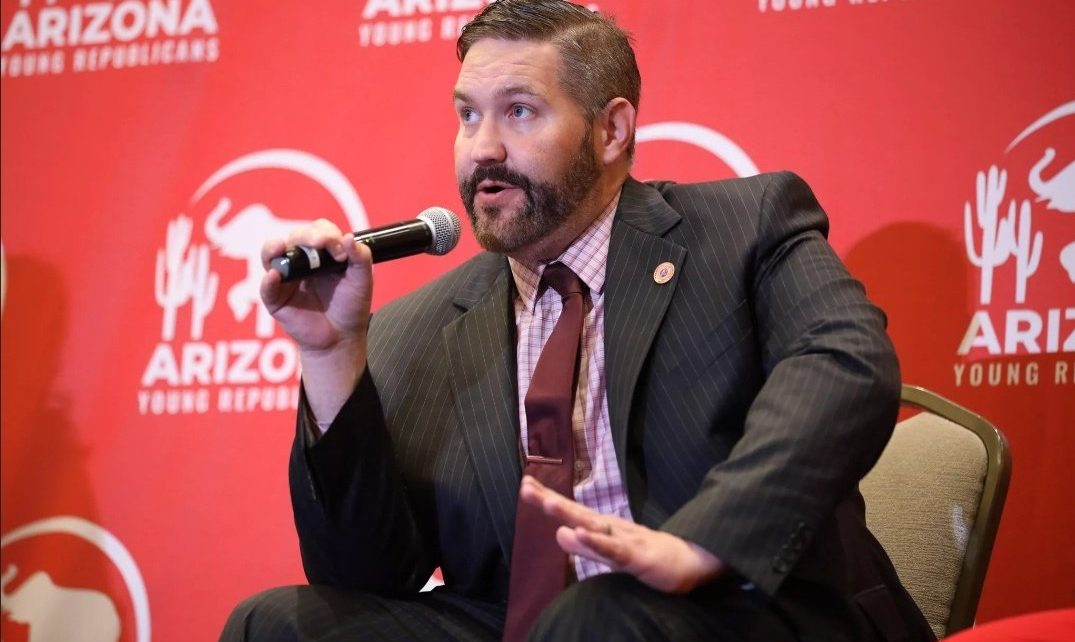
Maricopa County Recorder Justin Heap (Photo: X)
Arizona Supreme Court Slams Maricopa Board’s Election Power Grab, Hands Recorder Heap Major Win
Chief Justice Ann Scott Timmer wrote for the Court that the Board cannot use its budgetary authority to ‘usurp an independently elected officer’s statutory functions’
By Megan Barth, July 9, 2026 1:17 pm
In a decisive unanimous ruling Tuesday, the Arizona Supreme Court sided with Maricopa County Recorder Justin Heap, vacating a lower appellate court stay and reinstating a Superior Court injunction that bars the Maricopa County Board of Supervisors from usurping statutory election duties assigned by law to the independently elected Recorder.
The high court rejected the Board’s central arguments and adopted Heap’s proposed 12-point interim operational protocol to ensure the July 21 primary proceeds smoothly for Maricopa County’s 2.6 million registered voters without disruption.
The ruling restores requirements for the Board to fund all necessary expenses of the Recorder’s office, including returning or replacing IT staff, servers, databases, software, websites, and equipment previously shifted away from Heap’s control. “This is a major victory for election integrity, the rule of law, and the voters of Arizona,” stated a post from the Abe Hamadeh War Room highlighting the decision, framing it as the rejection of a “blatant election power grab attempted by the disgraced former Maricopa County Recorder and the Board of Supervisors.”
The Arizona Supreme Court has decisively rejected the blatant election power grab attempted by the disgraced former Maricopa County Recorder and the Board of Supervisors.
This is a major victory for election integrity, the rule of law, and the voters of Arizona. https://t.co/IxnnSX2AGl
— Abe Hamadeh War Room (@AbeWarRoom) July 8, 2026
Recorder Heap called the ruling “a decisive victory for the rule of law.”
In a statement released through his office, he added: “The Arizona Supreme Court overturned the Board’s stay and restored the Superior Court’s injunction in favor of the Recorder. In addition, it rejected the Board’s central legal arguments and made clear that the Recorder is likely to prevail on the merits. My office is ready to implement the Court’s order and deliver secure, lawful, and professional elections for the people of Maricopa County. The Board of Supervisors, through Chairwoman Kate Brophy McGee and Vice Chairwoman Debbie Lesko, said they would comply: The Board will follow the law and abide by the court’s decision, and we look forward to Recorder Heap’s plans in terms of how he intends to exercise his authority to administer lawful, high-quality elections this year and beyond.”
The California Globe has extensively reported on the escalating standoff between Heap, a Republican, and the Republican-controlled Board of Supervisors. As detailed in prior Globe articles, the dispute centers on who controls key aspects of election administration in Arizona’s most populous county, including early voting sites, IT systems, personnel, and related infrastructure.
In April 2026, Maricopa County Superior Court Judge Scott Blaney issued a sweeping ruling in Heap’s favor. The Globe reported that the court ordered the Board to return unlawfully seized election systems and restore early voting authority to the County Recorder, holding that the Board’s actions constituted an “unlawful usurpation” of duties assigned by state law to the elected Recorder. The court rejected claims of plenary Board authority over elections that would allow it to override statutory roles through funding leverage or by shifting responsibilities to an appointed elections director. The Board appealed and secured a stay from the Arizona Court of Appeals in June 2026, pausing implementation ahead of the primary.
Heap sought emergency Supreme Court review. The high court’s July 7 order dissolved that stay, reinstated Blaney’s injunction with modifications via Heap’s 12-point protocol, and cleared the path for Heap’s office to exercise its authority. Globe coverage has also highlighted related developments, including the Board’s attempts to pass unilateral election resolutions and policies in the absence of a shared services agreement, special meetings where Heap was grilled under oath, and efforts by some supervisors to oust the duly elected Recorder.
Separate reporting detailed Arizona lawmakers’ criminal referral against former Maricopa County Recorder Stephen Richer amid broader scrutiny of past election practices.
This ruling arrives amid ongoing Arizona efforts to strengthen election security. As the Globe reported in June, a Tempe Democrat filed a lawsuit challenging the SAVE AZ Act, a voter-approved measure embedding election integrity reforms, including proof-of-citizenship requirements, into the state constitution.
Maricopa County has long been ground zero for national debates over election administration, with previous controversies under prior leadership fueling calls for greater transparency and accountability.
The Supreme Court’s affirmation that elected constitutional officers like the Recorder cannot have their core statutory duties stripped by a board through budgetary maneuvering reinforces the separation of powers at the county level. Heap’s office indicated it is prepared to move forward with the interim protocol, prioritizing secure and professional administration of the July 21 primary. Both sides have pledged cooperation to avoid any voter disruption.
The California Globe will continue monitoring developments in this case and related election integrity matters across Arizona.


- DOJ Presses Judge Carter to Sequester Suspected Noncitizen Ballots as Hearing Concludes - October 27, 2026
- Newsom Caught on Undercover Camera Calling DSA ‘Dominant’ and ‘Mainstream’ in Democratic Party - October 27, 2026
- Congressman Randy Fine Warns Jewish Voters Against Nevada Democrat Teresa Benitez-Thompson, Backs David Flippo - October 26, 2026



Dominion has security backdoor exploits purposely built into the system…
It’s been proven multiple times….
Why not build that case rather than insisting on having the foxes guard the hen house???