

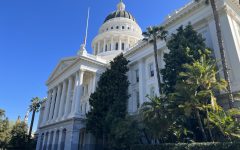
California Assembly. (Photo: Katy Grimes for California Globe)
California Legislative Process Lingo: Chart of Key Terms
Bill Signing Message: A statement made by the Governor when signing a bill
By Chris Micheli, August 5, 2026 2:00 pm
It probably does not come as a surprise, but those working in and around California’s Capitol use a number of terms or “lingo” to describe aspects of the legislative and executive branch processes.
The following chart provides a listing of common terms used in the California legislative process with a short definition of each term:
| Term | Definition |
| 2- year Bill | This is when a bill that did not pass out of its house of origin before the specified deadline in the first year of the two-year legislative session and is carried over to the second year of the Session. If the bill does not clear the second-year deadline, then the measure has officially failed passage. |
| 12-day Rule | The general rule for the number of calendar days the Governor has to act on a bill. |
| 28.8 | This is a Senate Rule that allows the Senate Appropriations Committee Chair to waive a hearing and report a fiscal bill out of committee and to the Floor because there is very little state fiscal impact for the bill. |
| 29.10 | This is a Senate Rule that allows the Senate Rules Committee to refer a bill to a policy committee for a hearing if the bill has been substantially amended. |
| 72-hour Rule | The voters adopted Prop. 54 which, among other provisions, requires a bill to be “in print” in its “final form” for a minimum of 72 hours before either house can vote on it. |
| 77.2 | This is an Assembly Rule that allows the Speaker to refer a bill to a policy committee for a hearing if the bill has been substantially amended. |
| Abstain | When a legislator chooses not to cast an aye or no vote on a motion or measure. |
| Across the Desk | Bills when introduced and amendments to bills are placed “across the desk” which is an official act of introducing bills or making amendments to existing measures. |
| Act | An act is another word for a statute (e.g., the Budget Act). |
| Adjourn / Adjournment | When a meeting or session concludes. Adjournment sine die is November 30 of the even-numbered year when the 2-year legislative session concludes. |
| Adjourn in Memory (AIM) | When the Assembly or Senate at a Floor Session expresses its remorse for the death of a constituent or other individual. |
| Agenda | The order of business for a committee of the Legislature. |
| Amendment | A change to a legislative measure or motion. |
| Analysis | A committee or floor analysis is done for each legislative measure being considered which explains what the measure would do and generally arguments for or against the measure. |
| Appeal the Ruling of the Chair | A procedural motion when a legislator objects to the ruling of the committee chair or presiding officer on the Floor. |
| Appropriation | An appropriation is an amount of money and authorization for a specific agency to make expenditures for a specified purpose. |
| Appropriation Bill | This bill contains language that appropriates funds for expenditures by the state. |
| Author | In California’s Legislature, the legislator whose name is on the bill is the author. |
| Author Amendments | These are amendments made to a bill by the author of the measure either in committee or on the floor. |
| Backed Bill | This bill is ready for introduction because it has a “backing” (formally called a jacket) that shows who the author is. |
| Balanced Budget Requirement | Under California’s Constitution, the Governor must propose a balanced budget by January 10 and the Legislature must pass a balanced budget by June 15. |
| Batching | In the Assembly, a procedural motion is made to approve a series of measures that both political parties agree can be passed by a single vote. It is usually for measures that do not have any opposition. It is similar to the Senate’s Special Consent. |
| BCP (Budget Change Proposal) | This is an acronym for the term “Budget Change Proposal” which is a document prepared by a state agency and the Department of Finance to propose and document budget changes to maintain the existing level of service or to change the level of service, propose new program activities not currently authorized, or to eliminate existing programs. |
| Bill Signing Message | A statement made by the Governor when signing a bill. |
| Blue Pencil / Line-Item Veto | This is a term used to refer to the Governor’s ability to line-item veto items of appropriation in the Budget Bill or appropriation bills. |
| Bond Measure | A bill to enact a revenue bond or general obligation bond to incur debt by the state. |
| Budget Bill | This is the annual bill required by the constitution that sets forth the spending proposals for the next fiscal year, containing the budget submitted to the Legislature by the Governor. |
| Budget Bill Junior | One or more bills that make adjustments to the annual Budget Bill (the plural is budget bills junior). |
| Call of the House | This refers to when absent Members are called to the Floor of the Assembly or Senate, usually in order to establish a quorum. |
| Carryover Bill | Another term for a 2-year bill. |
| Caucus | A caucus can refer to a group of legislators (e.g., the Democratic Caucus) or a private meeting of a political party. |
| Chamber | This refers to either the Assembly Chamber or Senate Chamber. |
| Chaptered Bill | The version of a bill in its final (i.e., chaptered) form after approval by the Governor. |
| Chapter Number | The number assigned by the Secretary of State and Governor to an enacted bill. |
| Chapter Out | This is a phenomenon when a law’s provisions override any conflicting provisions in existing law, thereby chaptering out the earlier law. |
| Check-In-Session | These are non-floor session days when legislators do not meet in formal legislative session. |
| Clean-up Bill | This bill “cleans-up” changes to a law following enactment of a prior bill that needs to be modified. |
| Co-author | A legislator may add his or her name in support of a legislative measure by co-authoring the measure. |
| Code | California’s over 155,000 statutes are contained in a series of 29 Codes, which begin with Business & Professions and end with Welfare & Institutions. |
| Codified Statute | An enacted bill that adds, amends, or repeals a statute in one of California’s 29 Codes. |
| Committee Amendments | These are amendments made to a bill by the standing committee that is acting on the bill. |
| Committee Bill | This bill is authored by a majority of a committee; usually used for enacting non-controversial law changes. |
| Concur / Non-concur | To concur is when the house of origin approves the amendments made to a measure in the other house and the measure returns for a final vote. Non-concur is when the house of origin refuses to approve the amendments made by the other house. |
| Concurrent Resolution | A resolution adopted by both houses of the Legislature. |
| Consent | A measure is usually placed on the consent calendar when there is no registered opposition to a measure and no “no” votes have been cast. |
| Constitutional Amendment | A proposed change to the California Constitution either proposed by the Legislature through an ACA/SCA, or by the People through an initiative. |
| Contingent Enactment | When the enactment of a measure is made contingent upon a specified occurrence or the enactment of another measure. |
| Continuous Appropriation | This is a constitutional or statutory expenditure authorization that is renewed each year without further legislative action. |
| Custom and Practice | A term used to describe the usually followed order established by precedent. |
| Daily File | The Assembly and Senate publish a File that contains valuable information including committee listings, committee hearings, and the measures pending on the floors. |
| Daily History | The Senate and Assembly publish daily the official actions taken on legislative measures. |
| Daily Journal | The Assembly and Senate publish daily official proceedings including floor actions and committee actions. |
| Deadline | A procedural date specified for actions to occur, such as when policy committees must conclude their hearings. |
| Delegation of Authority | The legal phrase describing when the legislative branch delegated some of its lawmaking authority to the executive branch for rulemaking purposes. |
| Digest | This refers to the Legislative Counsel’s Digest which provides an objective, brief explanation of existing law and what a bill proposes to change in existing law. |
| Digest Keys | At the end of the Legislative Counsel’s Digest, there are four keys for each bill: Vote (the vote threshold required for passage); Appropriation (whether the bill appropriates funds); Fiscal Committee (whether the bill is to be re-referred to the Appropriations Committee); and Local Program (whether the bill would result in a state-mandated local program). |
| Direct Democracy | The three political powers granted to the People of California under the state Constitution: initiative, referendum, and recall. |
| District Bill | This is a measure that was introduced by a legislator for his or her district, generally affecting only that particular legislative district. |
| Double Jointing | This refers to language added to a bill that makes its passage contingent upon another bill’s passage to avoid one bill chaptering out the other bill. |
| Dual Referral / Double Referral | This refers to when a measure has been referred to two policy committees by the Rules Committee. |
| Effective Date | This is the date that a measure takes effect. It is January 1 of the following year, unless the bill has an urgency clause or a different specified date. |
| Enacting Clause | Each bill is required by the Government Code to contain the phrase: “The People of the State of California Do Enact as Follows:” |
| Engrossing | This is the processing of a bill by the clerk of the house either after an amendment is made, or before the bill is sent to the governor for action and refers to when the text of the bill is checked for errors. |
| Enrolled Bill Report | This is a report done by the Department of Finance, relevant state agency, and Office of Legislative Counsel (when appropriate) to the Governor’s Office regarding a bill that has reached the Governor’s Desk. |
| Extraordinary Session / Special Session | The Governor may call the Legislature into special or extraordinary session to consider legislation proposed in the gubernatorial proclamation. |
| File Notice | The Joint Rules require either a 4-day or 2-day Daily File Notice for committee hearings, absent a rule waiver. |
| Findings and Declarations | Made by the Legislature in a bill, usually in uncodified language, to provide a basis for the measure. |
| Fiscal Committee | This is the term that usually refers to either the Senate Appropriations Committee or the Assembly Appropriations Committee. |
| Fiscal Year | California’s fiscal year is July 1 through June 30 of the following year, which is different than the federal government’s fiscal year of October 1 through September 30. |
| Floor | The term used for the floors of the Assembly and Senate Chambers where the two houses meet. |
| Floor Alert | A written document sent by an interested party in support of or opposition to a legislative measure on the Senate or Assembly Floor. |
| Floor Manager / Floor Jockey | The legislator in the second house who will take up a measure from the house of origin (e.g., a Senator who takes up on the Senate Floor an Assembly Bill) for the measure’s author. |
| Floor Session | This refers to an Assembly or Senate Floor session when they meet in their respective chambers. |
| General Law City | This type of city is governed by state laws. |
| General Statute | A statute that applies generally to all those similarly-situated. It is a law that has uniform operation. It is the opposite of a special or local statute. |
| Germane Amendments | Amendments that are related to the subject matter of the current legislative measure. |
| Gut and Amend | This refers to when amendments to a bill remove the current contents in their entirety and replace them with different provisions which are unrelated to the original contents of the bill. |
| Hostile Amendments | These are amendments that are proposed by another Member in Committee or on the Floor that are not supported by the bill’s author. |
| House of Origin | The first or original house in which a legislative measure is introduced. |
| Inactive File | A bill can be placed on the Inactive File on the Assembly Floor or Senate Floor at either the bill author’s request or because of a procedural motion. |
| Intent Bill | This is a bill that merely expresses the intent of the Legislature without any other substantive language. |
| Interim Study | This occurs when the subject matter of a bill is considered by a legislative committee while the Legislature is conducting its recess. |
| January 10 Budget | This refers to the Governor’s initial budget proposal, which is due per the Constitution by January 10. |
| JLBC (Joint Legislative Budget Committee) | This is a joint committee with an equal number of Assembly Members and Senators. It is the duty of the committee to ascertain facts and make recommendations to the Legislature concerning the State Budget, the revenues and expenditures of the state, and the organization and functions of the state and its departments, subdivisions, and agencies, with a view to reducing the cost of state government and securing greater efficiency and economy. |
| Joint Author | A legislator may add his or her name in support of a legislative measure by being a joint author of the measure and having his or her name on the same top line as the Lead Author. |
| Joint Committee | A committee that is comprised of an equal number of Senators and Assembly Members. |
| Joint Recess | This is the time period in which both the Assembly and Senate are on recess at the same time. |
| Joint Resolution | A measure adopted by both houses of the Legislature to express an opinion about a federal matter. |
| Joint Rules | The rules adopted by the Senate and the Assembly to govern matters of both houses of the Legislature. |
| Journal | This is the official record of the proceedings of the Senate and Assembly. |
| Legalese | The term to describe language in a statute that is unnecessarily legalistic (e.g., heretofore) and is generally not used in today’s legislative drafting. |
| Legislative Counsel’s Digest | This refers to the Legislative Counsel’s Digest which provides an objective, brief explanation of existing law and what a bill proposes to change in existing law. |
| Legislative Intent | What the Legislature intends by enacting a particular bill. |
| Letter to the Journal | This type of letter is submitted by a legislator to the Assembly Daily Journal for an AB or to the Senate Daily Journal for an SB in order to state legislative intent or provide additional information on a bill. |
| Line-Item Veto / Blue Pencil | This is a term to refer to the Governor’s constitutional authority to line-item veto (i.e., reduce or eliminate) items of appropriation in budget or appropriation bills. |
| Local Statute / Special Statute | A statute that does not have uniform operation. It is the opposite of a general statute. |
| Mason’s Manual | This is the default set of procedural rules that are referenced by both the Assembly and Senate Rules if their respective house rules do not cover a specific item. |
| Matter of Statewide Concern | If the Legislature determines that a measure is of “statewide concern,” then the state law will be imposed upon both general law cities and charter cities. |
| May Revise / May Budget Revision | The Governor is required to update his or her January budget proposal after the April tax receipts are available. Occurring May 14, it is an updated estimate of revenues and expenditures that replaces the estimates contained in the Governor’s budget submitted in January. |
| Mock up | This is an unofficial copy of a bill with proposed amendments so that interested parties and other legislators can examine the bill as it will be amended. |
| Motion | Making a request for action in a legislative committee proceeding or on the floor. |
| MOU | A memorandum of understanding negotiated by the executive branch with a union of state employees, for example, that is approved by the Legislature. |
| Move a Call | This refers to a parliamentary procedure that delays the announcement of the vote on a measure. A call must be lifted in order for a final vote to be recorded. |
| Municipal Affair | A state law that is a municipal affair cannot be imposed upon a charter city. The opposite of a matter of statewide concern. |
| Non-concur / Concur | To non-concur is when the house of origin refuses to approve the amendments made to a legislative measure by the other house. Concur is when the house of origin approves the amendments made to a measure in the other house and the measure returns for a final vote. |
| Nonfiscal Bill | A bill that will not be re-referred to the fiscal committee in either house. |
| On Call | A measure that has been heard but did not garner enough votes for passage is then placed “on call” while the author attempts to garner additional votes. |
| Parliamentary Inquiry | This occurs when a legislator asks the committee chair or presiding officer a procedural question. |
| Pilot Program | When the Legislature authorizes a new, temporary statute for a specified period of time. |
| Placeholder Bill | Another term for an intent or spot bill used to introduce a bill, but save a place for substantive language to be inserted at a later date. |
| Plus Section | One or more sections of a bill placed at the end that are not codified and provide types of statements (e.g., an urgency clause). |
| Point of Order | This occurs when a legislator raises an issue with a committee chair or presiding officer of a possible violation of procedural rules. |
| Point of Personal Privilege | This occurs when a legislator raises an objection with a committee chair or presiding officer under the belief that their reputation has been attacked. |
| Preemption | When federal law prevents a state law from conflicting with it, or when the state law precludes a local ordinance from conflicting with the state law. |
| Privileges of the Floor | A procedural motion on the floor to allow persons on the Floor of the Assembly or Senate. |
| Put Over | A measure can be put over to a subsequent hearing either at the request of the author or the committee. |
| Recess | This is either a temporary break in official legislative activity (e.g., a floor session or committee hearing), or when the Assembly and Senate are on a specified break (e.g., interim recess). |
| Reconsideration | This occurs when a measure or motion has not been successful the author or maker of the motion is afforded another opportunity to have his or her bill or motion considered. |
| Retroactive | When a bill’s provisions are clearly intended to apply to past conduct. The opposite is prospective. |
| Second House | The other house in which a legislative measure is considered after a measure passes its house of origin. |
| Second Reading | When a bill has been amended or passes out of a committee, it is read the second time. |
| Severability Clause | A provision of a bill that allows some of its provisions to remain in effect while others are declared invalid. |
| Signing Message | A statement made by the Governor when signing a bill. |
| Sine Die | When the Legislature adjourns its 2-year session on November 30 pursuant to the state Constitution. |
| Single Subject Rule | A bill in the Legislature or an initiative by the People can “embrace but one subject.” |
| Special Order of Business | When a legislative measure is designated to be heard in committee or on the Floor at a specified time. |
| Sponsor | This refers to the legislator, private individual or interest group who developed a piece of legislation and advocates for its passage. |
| Sponsored Bill | This bill usually comes from an interest group or individual as the sponsor. |
| Spot Bill | This is the term used to describe a measure that contains a non-substantive change to a Code. It is usually a placeholder measure that will be amended at a later date. |
| State Mandated Local Program | This describes when a bill imposed a required program to be administered by a local agency or school district. |
| Sunset Date | The date specified in a bill or a statute when a law will expire. |
| Supplemental File | Used during the last day of house of origin deadline or end of session for bills on concurrence by creating a supplement to the already printed Assembly or Senate Daily File for that day. |
| Tax Levy | This is a bill that changes the base, rate, or burden of a tax. A tax levy bill takes effect immediately once enacted. |
| Third Reading | When a bill is read the final time, it is taken up for consideration and voted on by the body. |
| Trailer Bill | These are the bills that are required to enact statutory changes related to implementation of the budget. |
| Two-year Bill | This is when a bill that did not pass out of its house of origin before the specified deadline in the first year of the two-year legislative session and is carried over to the second year of the Session. If the bill does not clear the second-year deadline, then the measure has officially failed passage. |
| Unbacked Bill | This bill does not yet have an author and no “backing” (also called a “jacket”) for introduction. |
| Urgency Clause | This is a provision in a bill that states the bill will take effect immediately upon enactment. The clause must specify a reason for the need to take effect immediately. |
| Vote Change | A legislator is generally allowed to change his or her vote in committee or on the Floor until the final vote is recorded. In the Assembly, legislators can change their vote after the final vote was announced so long as it does not affect the outcome of the measure. |
| W.O.R.F. | This is an acronym for the phrase “without reference to file.” A measure that is not listed in the official agenda of the Assembly or Senate that would have to be taken up “without reference to file”, which requires suspending the orders of the day. |


Chris Micheli is an attorney and lobbyist with Snodgrass & Micheli, LLC, as well as an Adjunct Professor at McGeorge School of Law.
Latest posts by Chris Micheli (see all)
- Does California’s Prop. 45 Apply to Data Centers? - October 6, 2026
- Restrictions on Trust Transfers - October 5, 2026
- Bills Containing a Local Mandate in California - October 5, 2026
RELATED ARTICLES
-
 May 14, 2020
 -
 December 24, 2024
 -
 July 24, 2026