
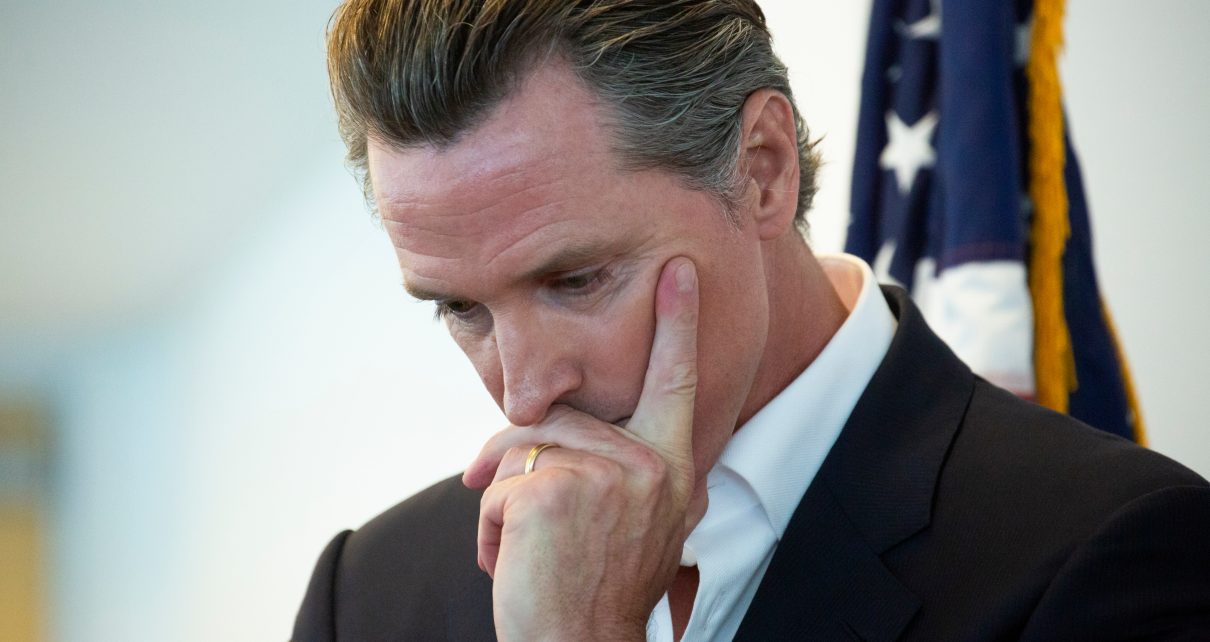
California State Governor Gavin Newsom before a meeting in Sacramento, CA, May 31, 2020. (Photo: Matt Gush/Shutterstock)
Gov. Newsom Failed to Rewrite California’s Wildfire Liability System
He had 8 years… but tried to shift wildfire responsibility to insurers
By Katy Grimes, September 2, 2026 2:16 pm
During the final days of California’s 2026 legislative session, which just concluded Monday at midnight, Gov. Gavin Newsom pushed a last-minute overhaul of the state’s wildfire liability rules. Well, sort of. There wasn’t much effort nothing was resolved.
Why?
Negotiations pitted California utilities against insurers in a fight over who pays after a damaging wildfire, and the deal fell short of Newsom’s aims to limit utilities’ liability, KQED reported. They are right.
California’s inverse condemnation doctrine “is a California property owner’s legal tool for forcing a government agency or public utility to pay for property it has effectively taken or damaged without going through the formal eminent domain process. The right is grounded in Article I, Section 19 of the California Constitution, which prohibits any taking or damaging of private property for public use unless just compensation is paid first. When a public project floods your land, a utility’s equipment sparks a wildfire across your property, or a regulation strips your land of all economic value, inverse condemnation flips the script: instead of the government suing you to acquire your property, you sue the government to get paid for what it already took.”
After disasters like the 2018 Camp Fire and the 2025 Palisades/Eaton/Malibu Fires, those costs have reached tens of billions of dollars, strained the 2019 Wildfire Fund, driven up electricity rates, and raised bankruptcy fears. Newsom argued the system needed structural change to keep utilities solvent, protect ratepayers, and speed payments to survivors.
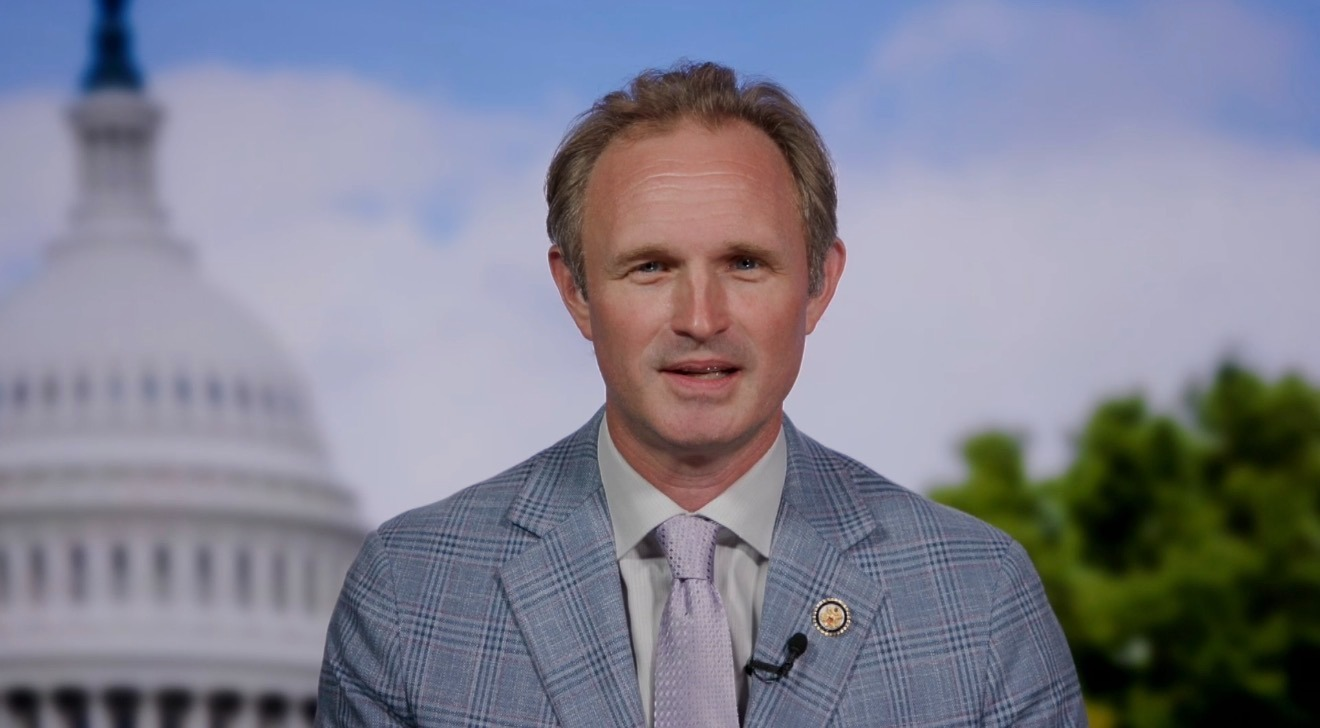
Rep. James Gallagher blasted Gov. Newsom as he “attempted to push the proposal through in the final days of his last legislative session with less than 72 hours for public review. Both Democrats and Republicans in the Legislature ultimately rejected the deal.”
“Governor Newsom had the votes, he had the power, and he had eight years,” said Congressman Gallagher. “Yet, with just months remaining in office, he’s suddenly discovered that the system is broken and that he has the answer to save us all. Apparently, everyone is responsible for California’s problems except the people who have actually been running the state.”
In a statement today, Rep. Gallagher summed up the breadth of the issue:
Gallagher represented Paradise in the State Assembly when the Camp Fire devastated the community in 2018 and spent the years that followed fighting for victims through PG&E’s bankruptcy and California’s response.
“The last time Newsom did utility reform, the hedge funds, the insurance companies and the trial lawyers all got paid,” Gallagher said. “The wildfire victims got devalued stock and broken promises.”
Then came the utility bills.
Gallagher’s constituents watched their electricity rates climb as California regulators approved rate increase after rate increase. Today, Californians are paying more without getting the safer and more reliable energy system they were promised.
“The governor said this week that we need to deal with reality. I couldn’t agree more,” Gallagher said. “The energy policy of California is a total disaster. We pay the highest rates in the nation and we still have old infrastructure that is sparking wildfires.”
Gallagher is calling for California to modernize its aging energy infrastructure, move away from its dependence on the big utility model and get serious about reducing the dangerous buildup of fuels on public lands before the next catastrophic wildfire.
“Governor Newsom is trying to patch the roof of a burning building as he’s walking out the door,” Gallagher said. “He doesn’t actually want to solve the fundamental problem because that would require a look in the mirror.”
“Governor Newsom, stop pointing fingers,” Gallagher continued. “After eight years, California’s problems aren’t somebody else’s legacy, they’re yours.”
You can watch Congressman Gallagher’s full remarks HERE.
Newsom’s original proposal would have:
- Ended or sharply limited insurers’ ability to sue utilities (subrogation) to recover what they paid policyholders.
- Capped noneconomic damages for many survivors (e.g., $150,000 for some who fled the fire zone).
- Restricted local governments’ recovery of infrastructure replacement costs.
- Added limits on attorney fees and other measures.
Opponents of Newsom’s plan called it a utility bailout that would shift costs onto homeowners via higher premiums and insurers. The plan would reduce compensation for victims.
After closed-door talks, a compromise (SB 492, introduced via last-minute gut-and-amend) dropped the most controversial pieces, the LA Times reported. It would have banned hedge funds and private equity from buying insurers’ claims, capped attorney fees in subrogation cases at 10%, barred utility executive bonuses after a company-caused fire, created a faster-pay program for survivors, and restricted unsolicited lawyer outreach. It left inverse condemnation, full victim damages, and insurer subrogation intact.
But even that narrower bill failed. On the extra final day of session (Sept. 1), Assembly Speaker Robert Rivas declined to bring it to a vote, saying it fell short on accountability and reform for victims, Politico reported. Newsom blamed “outside groups” including insurers, hedge funds, and trial attorneys. Utility stocks had already dropped sharply on news that the compromise did not go far enough for the companies. The session ended with no new law. Newsom and legislative leaders left open the possibility of returning in a special legislative session.
But the underlying tensions – like who pays when utility equipment starts catastrophic fires – remain unresolved, as does rebuilding in Pacific Palisades 19 months after the fires.


A California native and Navy mom, Katy lives in Sacramento, CA.
- Gov. Newsom Failed to Rewrite California’s Wildfire Liability System - September 2, 2026
- Chinese Propaganda, Foreign Influence Campaign Against U.S. AI Data Centers - September 2, 2026
- Rep. Jared Huffman’s Trump Derangement Syndrome is Thriving in Epic Ballroom Rant - September 1, 2026