

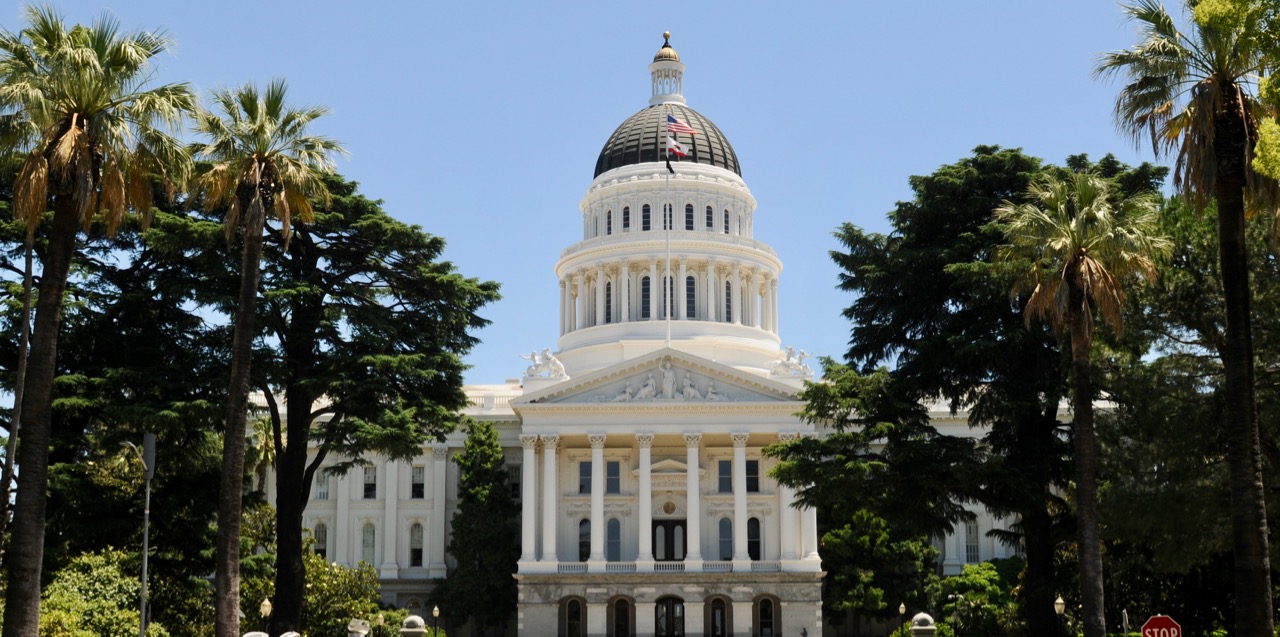
California State Capitol. (Photo: Katy Grimes for California Globe)
How to Read a Bill in the California Legislature
The following is a structured approach to reading a bill or statute effectively
By Chris Micheli, September 23, 2026 2:00 pm
This article is intended to provide one pathway to follow in reading a bill in the California Legislature. There are naturally several ways of doing so and many bill readers develop their own style or approach of doing so.
The following is a structured approach to reading a bill or statute effectively, especially when the legislation is lengthy or dense and perhaps connected with other laws or proposed legislation. I think an individual is ill-served to try and speed-read through proposed statutory language. Misreading a word, or a comma even, can change the meaning of bill language.
It is important to orient yourself before reading a specific Code section; in other words, figure out the section’s structural placement in the codified statutes, including the Code, Title, Chapter, and any headings in order to get a general understanding of the subject matter.
In properly drafted bills and statutes, the definitions are contained at the beginning. This allows the reader to quickly ascertain who is affected, what is affected, and how they are affected, if at all, by the bill’s or statute’s provisions. Understand the proposed statutory terms and their specified definitions and how those definitions may differ from your general understanding or perhaps an ordinary dictionary definition of the words and phrases used.
In the California Constitution, Article IV, Section 8(b)(1), it explains that “the Legislature may make no law except by statute and may enact no statute except by bill.” Reading a bill requires an understanding of the component parts of a bill. In terms of its anatomy, a bill contains the following major provisions:
Legislative Session Which, at the top of Assembly bills only, the following language appears: “California Legislature – 2023-2024 Regular Session.” This obviously tells you which 2-year Legislative Session the bill was considered.
Bill Number Which follows the words “Assembly Bill” or “Senate Bill” on the left-hand side. The Assembly Chief Clerk or the Secretary of the Senate assigns the bills the numbers for each bill introduced in its respective house of origin. The bill number never changes.
Bill Author Which list the joint authors, principal co-authors, and coauthors. The first line always lists the main author(s) who introduced the bill. Below the first line lists any principal coauthor and the next line lists any coauthor. They are also distinguished by house (i.e., Senators on one line and Assembly Members on a different line).
Date Introduced As well as Date(s) Amended, with the house making the amendment listed (i.e., the Senate or Assembly). The most recent amendment date is listed at the top of the bill.
Bill Title Which is a short phrase, as well as the “Relating” clause. The title must encompass the subject matter contained in the bill and is not changed or amended as the bill moves forward, unless the bill is “gutted-and-amended” into an entirely different subject. The title also included the Code(s) and section(s) that are being added, amended, or repealed.
Subject Which begins with the bill number, the phrase “as introduced” or “as amended,” the bill’s lead author, and a short phrase regarding the subject matter of the bill.
Legislative Counsel’s Digest Which contains a statement of existing state law, followed by an explanation of what this bill proposes to do to change existing law. This is an independent statement without any policy rationale explanation.
Digest Keys Which contain the four keys: vote (required); appropriation (whether the bill appropriated funds); fiscal committee (whether the bill is to be re-referred to the Appropriations Committee); and, local program (whether the bill imposes a state-mandated local program).
Bill Text Which is the actual language of the bill to amend, add, or repeal sections of the 29 Codes that contain California’s 156,000 statutes. Bills are divided into sections. At the end of the statutory text can often been found “plus sections,” which are uncodified provisions related to statutory changes, but are parts of the bill. Examples could include an urgency clause, a state-mandated local program, etc. Before the actual bill text begins, it is preceded by the required “Enacting Clause,” which every bill must contain and it reads: “The People of the State of California do enact as follows:”
Knowing the main provisions of a California bill, how should the proposed statutory language be read? When reading the new or amended statutory language being proposed, read the core subject and verb of the sentence first while glossing over the descriptive, dependent clauses. Once you grasp the main rule contained in the subject and verb, then add back the dependent modifiers.
Even before reading the proposed statutory language, you should review the accompanying Code sections. For example, review the title, table of contents, and surrounding chapter headings to see how the provision fits into the broader legal framework.
Then look for definitions, noting in particular any statutory terms that will override ordinary meanings.
Who or what is being impacted by the bill’s language? Is it being mandated (“shall”), prohibited (“shall not”), or permitted (“may”)? The word “shall means the action is mandatory or required; the word “may” means the action is optional or discretionary.
Also pay attention to words such as “and,” “or,” “if,” “unless,” and “except.” The word “and” means every single listed element must be satisfied; an “or” means satisfying just one element is sufficient. There are other words that create exceptions and need to be understood, such as “provided that” or “notwithstanding” clauses which completely nullify or alter the main rule under the specific scenarios.
For lengthy sections or those that can a number of dependent clauses, it may make sense to break complex provisions into separate components or conditions, turning the text into an explicit conditional “if-then” structure or flowchart.
Finally, in some instances, it be advisable to review relevant judicial opinions, administrative regulations (i.e., the executive branch agency’s interpretations), or legislative history only after analyzing the plain text of the statute.
Again, when reading statutes, pay close attention to words that set limits, create duties, or change meanings. Key words include “shall” (mandatory duty), “may” (discretionary power), “and” (conjunctive, all conditions required), “or” (disjunctive, any condition suffices), and “including” (non-exhaustive list).
The following are some common words found in statutes and how they should be understood by those reading the bill language:
- Shall: Imposes a strict, mandatory requirement or duty.
- May: Grants permission or discretionary authority.
- And: Connects items where all conditions must be met.
- Or: Connects alternatives where only one condition is needed.
- Including: Signals that the list is a partial example, not exclusive.
- Including, but not limited to: Confirms other items are allowed.
- Except: Creates an explicit exception to a general rule.
- Unless: Sets a condition that alters the outcome if met.
- No later than: Sets a strict hard deadline.
- Within: Specifies a time window for an action.
- Reasonable: Introduces a flexible standard judged by circumstances.
- Deemed: Treats something as a fact even if it is not.


- How to Read a Bill in the California Legislature - September 23, 2026
- Credit Card Disclosures - September 23, 2026
- Contingencies in California Legislation - September 22, 2026
RELATED ARTICLES
-
 July 11, 2026
 -
 March 15, 2026
 -
 February 11, 2026