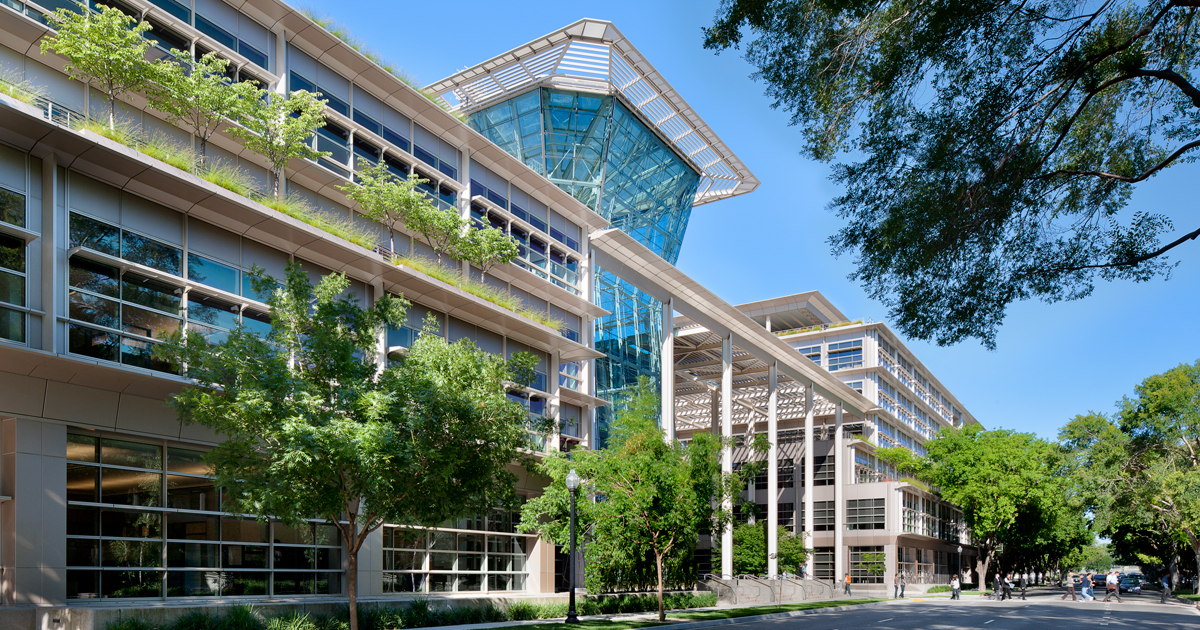
CalPERS headquarters, Sacramento. (Photo: calpers.ca.gov)
CalPERS Can’t Show Its Work
CalPERS’ own consultant estimated that tobacco divestment cost the fund $3.581 billion in missed gains from 2001 through June 2018, about 1% of assets
By Jay Rogers, October 1, 2026 6:00 am
CalPERS just posted a 14.8% return for fiscal 2025-26. Assets reached $637.1 billion and the funded ratio rose to 85%, up from 79% a year earlier. Good news deserves a fair hearing, and it raises a question. If the books are that healthy, why did retirees pass the hat to hire a former SEC lawyer to inspect them?
Because retirees own the outcome, and owners get to see the books. The forensic report they funded, released in May, labels itself preliminary and stops short of alleging a proven breach. Its charge is simpler: CalPERS discloses plenty and reveals little. I’ve spent 30 years in institutional investing, ran a hedge fund and a private equity fund of funds, and have served as an expert witness in fiduciary cases since 2015. In that world, an investor who asks what a fund costs gets an itemized answer. Anything less is a red flag.
California’s Constitution sets the bar. Under Article XVI, Section 17, retirement board members must act solely for participants and their beneficiaries, and that duty “shall take precedence over any other duty.” Solely means solely, and a mission that competes with returns ranks second. No court has ruled on whether CalPERS met that standard, so treat everything below as allegation and open question.
Start with performance and fees. The report says CalPERS trailed a simple 70/30 stock and bond portfolio by roughly 100 to 150 basis points a year and ranked 48th among 50 large public plans over ten years. It says CalPERS budgeted about $2.2 billion in disclosed fees for 2026-27, up 69% in two years, and estimates that 45% to 55% of private equity’s economic costs go unreported. That estimate has a precedent. In 2015 CalPERS disclosed that it had paid $3.4 billion in carried interest since 1990, after years of saying it couldn’t track the number.
John Bogle built a career on what he called the relentless rules of humble arithmetic: gross return minus costs is what the investor keeps. Public money has been tested against that rule before. Boston College’s Center for Retirement Research found CalPERS paid 102 basis points in fees in 2013, against an average of 40 across 150 plans. New York City’s comptroller found in 2015 that external managers fell $2.5 billion short of benchmarks over ten years after fees. Those numbers are old, and CalPERS says its fees are down 35% since 2024. The arithmetic hasn’t changed.
Then come the missions layered on top of performance. In January CalPERS hired Shari Slate as chief diversity, equity and inclusion officer to extend DEI to suppliers, contractors and investment partners. CalPERS lists no investment background for her. Her pay is murky. Reporting on her hire put base salary at $221,580, while a CalPERS schedule lists $354,660 for that position in fiscal 2024-25. I couldn’t reconcile the two, and CalPERS should. A House committee also flagged a managing investment director for ESG who earned $624,024 in 2023. The report counts four executives above $1 million and 26 more between $500,000 and $900,000 in 2024, while the governor earns $245,929. State law adds paperwork. AB 890 reports show $20.9 billion allocated to 51 diverse managers since 2022 and no performance comparison with anyone else. A climate report under SB 964 leans on outside data such as MSCI’s, and the fund is chasing a $100 billion climate solutions target with about $60 billion in. I couldn’t find a published dollar figure for what this reporting apparatus costs. Retirees should see it.
CalPERS knows what a mission can cost. Its own consultant, Wilshire Associates, estimated that tobacco divestment cost the fund $3.581 billion in missed gains from 2001 through June 2018, about 1% of assets. Reasonable people can favor divestment on principle. Nobody should call it free.
Absolute performance is the job. Any mandate that competes with it should show a net-of-fee return or justify itself to the people paying for it. As I wrote in July, CalPERS’s diversity filings never disclose one. Nobody here strikes me as a mustache-twirling villain. Visible commitments earn applause while invisible costs never reach a scorecard. Gordon Gekko told Bud Fox that information is the most valuable commodity, and the managers collecting fees hold most of it. CEO Marcie Frost told CNBC that private markets are private for a reason. Perhaps so, the money still belongs to public employees.
To be sure, CalPERS fights back. Frost called the report “an opinion piece full of baseless assertions and breathless language,” and the fund cites a 10-year return of 8.57% against a 6.8% assumption. That’s real money for real retirees. This year’s 14.8% also beat an estimated 9.37% public plan average, and its 85% funded ratio matches the projected national average of 85.0%. Over ten years, though, 8.57% trails the 8.69% average. The sponsor has a stake, the right benchmark is arguable, and the report predates this year’s results. Still, the 20-year return of 6.81% clears the assumption by a hundredth of a point, and no headline number says whether a cheap index mix would have paid more after every cost.
Only an outside examiner with access to the records can answer that. The report’s central remedy is an independent inspector general, and RPEA President Margaret Brown wants one with subpoena power. Retirees are the ultimate beneficiaries, and they should be able to read every fee, valuation and contract term that touches their checks, with redactions limited to what a court would uphold. I’d add three rules. Publish the all-in cost of every private fund, carried interest included. Show net returns beside a plain 70/30 portfolio. Post the annual cost of DEI and ESG reporting next to what it earned.
Louis Brandeis wrote that “sunlight is said to be the best of disinfectants.” If CalPERS is right, an inspector general says so and members get a clean bill of health they can trust. If it’s wrong, they deserve to learn that before the next downturn rather than after. Either way, open the blinds.


- CalPERS Can’t Show Its Work - October 1, 2026
- Birth Tourism Is Now Legal and You’re Picking Up the Tab - September 28, 2026
- My HOA Just Out-Governed the State of California - September 21, 2026