
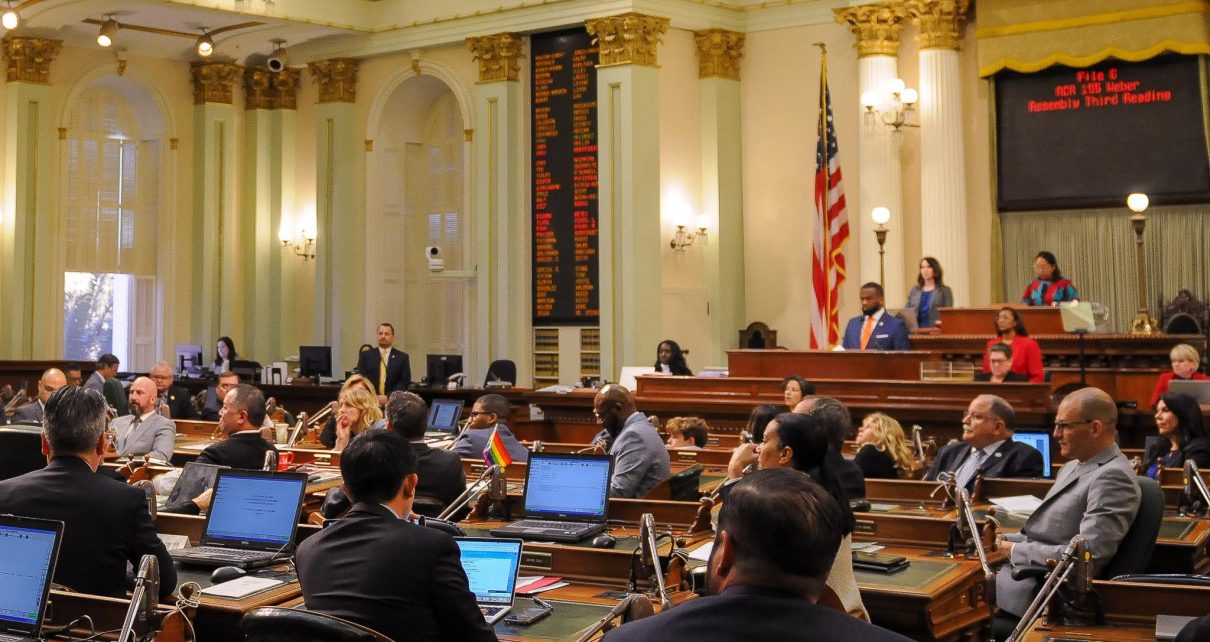
California State Assembly. (Photo: Kevin Sanders for California Globe)
Guidance on California Legislative Process
Understanding California lawmaking requires examining the five distinct frameworks that govern legislative behavior
By Chris Micheli, November 1, 2026 2:00 pm
My general guidance on the California legislative process is as an intricate, rule-governed system rooted heavily in constitutional requirements, statutory law, and distinct internal branch rules. There are several foundational pillars:
Five Sources of Procedural Rules
Understanding California lawmaking requires examining the five distinct frameworks that govern legislative behavior:
The California Constitution (specifically Article IV, which dictates the scope and explicit limits of legislative power)
The California Government Code
Joint Rules
Assembly Rules
Senate Rules
“Life Cycle” of a Bill
The following is a breakdown of the passage of a bill in a strict, constitutional sequence:
The Constitutional Mandate: Article IV, Section 8(b)(1) of the state Constitution, explains that the Legislature cannot make laws except by statute, and cannot enact statutes except by a bill.
Legislative Counsel Form: Before any measure or amendment can be introduced, it must be drafted or finalized by the state’s Legislative Counsel attorneys.
The 30-Day In-Print Rule: This is a critical transparency checkpoint, that after a bill is introduced, a full 30 days must pass before any policy committee can hear or vote on the measure.
The Committee Gauntlet: A bill must travel through the Rules Committee of its home house, navigate at least one (and sometimes up to three) policy committees, and frequently pass a fiscal committee before receiving three formal public readings on the chamber floor. This entire journey must be replicated in the second house.
Public Access and Transparency
There are rigid open-meeting rules required during California lawmaking:
Mandatory Open Hearings: Under the state Constitution, proceedings of both the Assembly and Senate, including any committee or subcommittee meeting where a vote is taken, must be public.
Public Recording Rights: Citizens have an absolute right to record (audio or video) and broadcast legislative proceedings, subject only to reasonable administrative regulations.
Executive Branch Dynamics
A final component of my analysis focuses on how the Governor interacts with the Legislature. There is a rigid timeline for final action: the Governor generally has 12 days to sign or veto a bill during the active session, but that evaluation timeline extends to 30 days for the massive influx of bills passed at the very end of a legislative session


- Guidance on California Legislative Process - November 1, 2026
- Ex Post Facto Clause in California - November 1, 2026
- Guidance on California Constitution - October 31, 2026
RELATED ARTICLES
-
 May 14, 2020
-
 December 24, 2024
-
 August 19, 2025