

California State Capitol. (Photo: Katy Grimes for California Globe)
Guidance on California Constitution
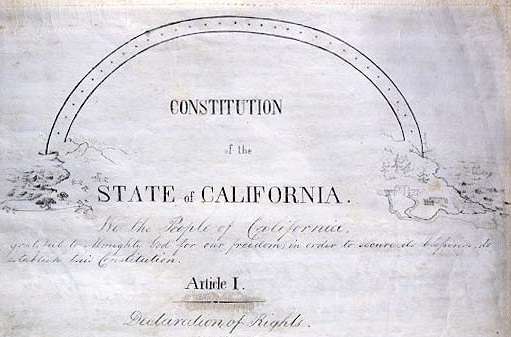
California’s first Constitution was adopted in 1849
By Chris Micheli, October 31, 2026 2:00 pm
My general guidance on the California Constitution as the “supreme law of the land” at the state level is broke down on several core structural pillars:
Historical Origins and Length
California’s first Constitution was adopted in 1849 (prior to statehood in 1850), while the current governing document was ratified on May 7, 1879.
It is one of the longest and largest constitutions in the world, spanning roughly 75,000 words and containing over 500 amendments or revisions.
One of the reasons for this massive length points directly to direct democracy. Because California has one of the lowest signature thresholds in the nation to place measures on the ballot, citizens regularly insert policy details directly into the constitution via statewide elections.
System of Government and State Doctrines
Article III, Section 3 is the foundation for the state’s strict separation of powers doctrine. A key legal distinction: unlike the federal system—where separation of powers is implied through Supreme Court rulings—California explicitly writes this mandate into its constitutional text.
While the state Constitution dictates state and local laws, Article III explicitly acknowledges that California is an “inseparable part” of the nation and that the U.S. Constitution is the ultimate supreme law under federal preemption.
While federal rights are found in the Bill of Rights, California outlines its individual protections in Article I. The state document frequently grants broader protections to citizens than those guaranteed by the federal government.
Institutional Safeguards and Local Autonomy
A unique structural element is how the state Constitution explicitly authorizes and establishes institutions like the University of California, the State Bar of California, and the State Compensation Insurance Fund. This framework deliberately insulates these entities from political interference by the Governor or Legislature.
The text sets up rules for cities and counties. The Constitution grants them the power to insulate local ordinances from being overwritten by state statutes.


- Guidance on California Constitution - October 31, 2026
- What Is ‘Latent Ambiguity’ in California Law? - October 31, 2026
- Guidance on California Legislative Drafting - October 31, 2026
RELATED ARTICLES
-
 March 14, 2026
-
 June 3, 2022
-
 October 18, 2019