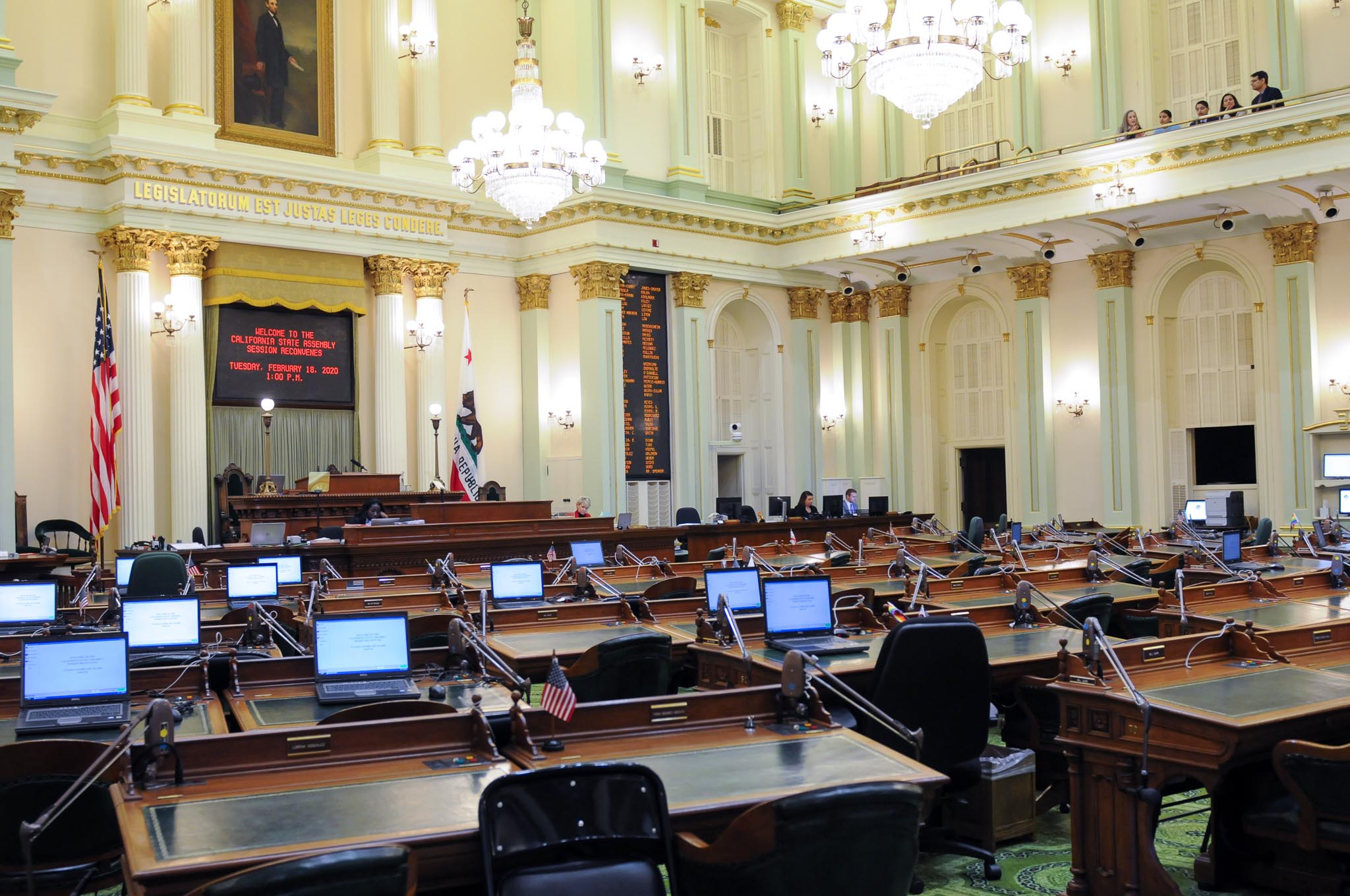
California State Capitol. (Photo: Katy Grimes for California Globe)
Comparing the California and Federal Administrative Procedure Acts
APA imposes significantly stricter independent oversight, rigid statutory deadlines, and an administrative enforcement mechanism against informal agency rules than the federal APA
By Chris Micheli, November 21, 2026 2:30 am
While modeled on the federal framework, the California Administrative Procedure Act (APA) imposes significantly stricter independent oversight, rigid statutory deadlines, and an administrative enforcement mechanism against informal agency rules than the federal APA. Under the federal system, agencies largely police their own compliance prior to judicial review, whereas California requires every non-exempt rule to pass an independent legal audit before taking effect.
The following chart provides a brief comparison of the California and federal APAs:
| Feature | California APA | Federal APA |
| Governing Statutes | Split across California Government Code §§ 11340–11365 (rulemaking) and §§ 11400–11529 (adjudication). | Unified under 5 U.S.C. §§ 551–559 and §§ 701–706. |
| Oversight Bodies | Divided between the Office of Administrative Law (OAL) for rulemaking and the Office of Administrative Hearings (OAH) for disputes. | No single central oversight agency. Each agency runs its own process, with selective White House (OIRA) review for major rules. |
| Pre-Adoption Review | Mandatory. OAL reviews every proposed regulation for compliance before it can take effect. | None by an independent body. Rules take effect 30 days after publication unless challenged in court or delayed by executive review. |
| Substantive Rule Standards | OAL can reject rules based on six strict criteria: Necessity, Authority, Clarity, Consistency, Reference, and Nonduplication. | No pre-adoption clarity or necessity veto. Rules are only invalidated post-adoption if a court finds them arbitrary, capricious, or unlawful. |
| Notice & Publication | Published in the California Regulatory Notice Register (Z Register) and codified in the California Code of Regulations (CCR). | Published in the Federal Register and codified in the Code of Federal Regulations (CFR). |
| Public Comment Periods | Strict statutory minimums, typically a 45-day initial comment period and 15-day periods for substantial changes. | Flexible “meaningful opportunity” to comment (typically 30 to 60 days by agency practice, not fixed by statute). |
| Informal Guidance (“Underground Rules”) | Strictly prohibited. OAL issues formal determinations invalidating uncodified agency policies that act as rules. | Broadly permitted. Interpretive rules and general policy statements are exempt from notice-and-comment requirements. |
| Adjudication Triggers | Governed by a tiered “Administrative Adjudication Bill of Rights” (formal vs. informal hearings) triggered by statute or constitutional due process. | Formal trial-type hearings (§§ 554, 556, 557) apply only when Congress explicitly requires a decision “on the record”. |
| Judicial Review | Challenged via a writ of administrative mandamus (CCP § 1094.5) or declaratory relief action in state Superior Court. | Challenged directly in federal district or appellate court under APA § 702 after final agency action. |
What are some of the differences between the two APAs? First, there is stricter independent OAL review. Unlike federal agencies, which publish final rules directly in the Federal Register, over 200 California state agencies must submit their complete rulemaking file to the Office of Administrative Law. OAL acts as an independent legal auditor with 30 working days to approve or disapprove the rule.
OAL can reject a regulation if it fails any one of six criteria. Most notably, Clarity allows OAL to veto rules containing ambiguous language or poor drafting, while Necessity requires agencies to prove with substantial evidence in the record why every specific provision is needed. During regular rulemaking, OAL cannot accept external public comments. It judges the regulation strictly on the official rulemaking file compiled by the agency.
A second area of difference is tighter statutory timelines. Under the California APA, an agency must complete its public comment process, respond to every comment in a Final Statement of Reasons (FSOR), and submit the final package to OAL within one year of publishing the initial notice. If the agency misses this deadline, the entire rulemaking terminates and must restart from scratch.
At the federal level, a Notice of Proposed Rulemaking (NPRM) can remain pending for years without expiring, allowing agencies to delay or indefinitely pause rules across administrative shifts. When immediate action is needed to protect public peace, health, or safety, California emergency rules undergo an abbreviated 5-calendar-day public comment window and a 10-calendar-day OAL review, remaining valid for only 180 days unless formalized.
California also has a unique “Underground Regulation” enforcement. Under California Government Code § 11340.5, any guideline, manual, bulletin, or enforcement standard of general application that interprets or implements law is illegal if not adopted through the formal APA. California lacks the broad federal “interpretive rule” exception, meaning state agencies cannot rely on guidance documents to establish binding standards.
There is also the Chapter Two Unit (CTU) petition process. Any member of the public can file a formal Underground Regulation Petition directly with OAL’s Chapter Two Unit without needing to file a costly lawsuit. Using a three-step legal test, OAL publishes the petition in the California Regulatory Notice Register, solicits public comments, and issues a formal Determination. While OAL Determinations are not binding on courts, courts give them substantial deference, and agencies routinely abandon challenged policies rather than face guaranteed invalidation in litigation.


- Comparing the California and Federal Administrative Procedure Acts - November 21, 2026
- Exploring Grammatical and Punctuation Canons - November 20, 2026
- Mechanics of Budget Bills Junior - November 20, 2026
RELATED ARTICLES
-
 October 23, 2021
-
-