

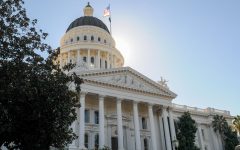
California State Capitol. (Photo: Katy Grimes for California Globe)
Mechanics of Budget Bills Junior
A Budget Bill Junior directly modifies the uncodified chaptered text of the annual Budget Act
By Chris Micheli, November 20, 2026 11:01 am
Budget Bill Junior (BBJ) is a legislative vehicle authored by the budget committee of either house in the California Legislature to amend an already-enacted Budget Act. Formally classified under the California Constitution as an “other bill providing for appropriations related to the budget bill,” a BBJ allows lawmakers and the Governor to adjust state spending mid-year without passing a brand-new, comprehensive budget.
Unlike standard policy bills that amend California’s permanent statutory Codes (such as the Education Code or Penal Code), a BBJ directly modifies the uncodified chaptered text of the annual Budget Act. A BBJ targets specific 11-digit item numbers (e.g., 0509-001-0001) within the enacted Budget Act. It explicitly “amends, adds, and repeals” individual items of appropriation, increasing dollar amounts, reducing allocations, or shifting funds between departments and fiscal years.
Beyond changing dollar figures, BBJs modify “Budget Bill Language” (the provisional text attached directly beneath a line item). This language dictates strict conditions, reporting requirements, or encumbrance deadlines on how an agency may spend a specific appropriation. BBJs routinely update “Control Sections” at the back of the Budget Act, most notably Section 39.00, which lists all companion “trailer bills”.
Under Proposition 25, a trailer bill can only take effect immediately with a majority vote if it is explicitly named in the Budget Bill or a BBJ. A single BBJ is not restricted to the current fiscal year. It frequently amends multiple prior Budget Acts simultaneously to reappropriate unspent balances, revert unused funds to the General Fund, or adjust multi-year capital outlay schedules.
Under Article IV, Section 12 of the California Constitution, the Legislature must pass a balanced Budget Bill by midnight on June 15 or forfeit daily pay and per diem expenses. To meet this deadline, lawmakers routinely pass an initial “placeholder” or baseline budget in mid-June, leaving unresolved policy disputes, technical corrections, and late-breaking fiscal data to be settled over the summer.
In late August, right before the Legislature adjourns for the year on August 31, leadership packages final three-party agreements (between the Assembly, Senate, and Governor) into end-of-session BBJs. During the 2026 budget cycle (following the June enactment of the main 2026–27 Budget Act, AB 109), the Legislature passed two late-summer BBJs at the end of August.
While both a BBJ and a standard supplemental appropriation bill authorize state spending outside the initial June Budget Act, they operate under vastly different constitutional rules established in Article IV, Section 12 of the California Constitution. Like the main Budget Act, appropriations inside both a BBJ and a standard appropriation bill are subject to the Governor’s line-item veto authority, allowing the Governor to reduce or eliminate specific dollar amounts while signing the rest of the bill into law.


- Mechanics of Budget Bills Junior - November 20, 2026
- Workers Comp Medical Issues - November 20, 2026
- Mortgage Forbearance - November 19, 2026
RELATED ARTICLES
-
 December 16, 2024
-
 June 25, 2023
-
 June 13, 2026