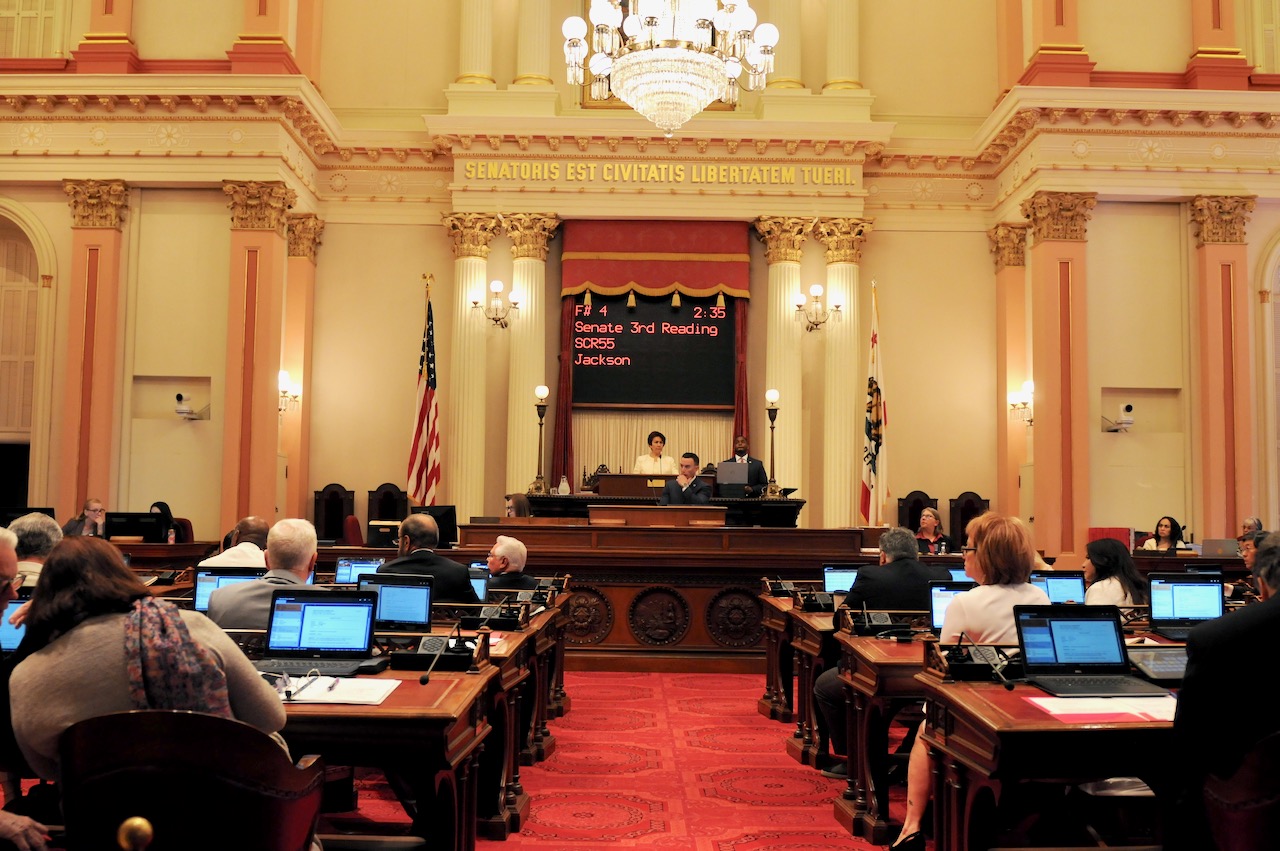
California State Capitol. (Photo: Katy Grimes for California Globe)
Legislative Statements and the Separation of Powers Doctrine
These are intended to give direction to readers of the legislation
By Chris Micheli, November 10, 2026 2:00 pm
On occasion, the California Legislature sets forth in legislation its considers, most often in uncodified sections, findings and declarations or intent statements. These are intended to give direction to readers of the legislation, as well as executive branch agencies when implementing the statutory provisions and the courts when interpreting the statutory text.
Does ignoring these legislative statements violate the separation of powers doctrine because either the executive or judicial branches ignore the will of the Legislature as expressed in the statute? Or does ignoring the Legislature’s explicit statements respect the separation of powers doctrine?
As a general rule, under California law, courts do not treat legislative findings and declarations as direct, self-executing mandates, but rather as interpretive aids to resolve statutory ambiguity or to assess a statute’s constitutionality. Some legal observers have noted that the courts view these statements as moving from “boilerplate text” to an influential, binding policy guide only when specific, actionable legal triggers are met.
That leads us to the obvious question, “when do these legislative statements get treated as binding interpretive aids to the courts of this state?”
While a legislative statement or declaration cannot create a law or mandate action on its own, California courts will rely on a legislative pronouncement as a binding reflection of public policy in scenarios such as the following:
- To Resolve a Statutory Ambiguity: If the operative text of a statute is vague or susceptible to multiple interpretations, California courts look directly to the legislative findings to select the interpretation that aligns with the Legislature’s stated purpose.
- To Uphold the Statute’s Constitutionality: In constitutional challenges (such as equal protection, due process, or free speech issues), courts rely heavily on robust, fact-based legislative findings to establish the “compelling state interest” or “factual basis” required to uphold the statute.
- To Define a “Strong Public Policy”: In employment and contract laws, for example, courts often look to legislative findings to determine whether a specific issue constitutes a fundamental public policy of the state (e.g., voiding an unconscionable agreement or supporting a wrongful termination claim).
- To Confirm the Scope of Liberal Construction: When the Legislature includes a directive stating a policy “shall be liberally construed to effectuate its intent,” courts in general respect this as a legitimate policy mandate that governs how they must apply the operative text.
How about when these legislative statements or directive are instead treated as non-binding “boilerplate” text? Conversely, courts in this state will largely disregard legislative declarations or treat them as hollow boilerplate in scenarios such as the following:
- When the Operative Statute Is Not Ambiguous: As a fundamental rule of California statutory interpretation, if the operative text of a law is clear, the plain meaning controls. Courts will not use general introductory intent statements to override or rewrite unambiguous statutory text.
- When Used to Create a Mandate or Right: The California Supreme Court has repeatedly held that uncodified preambles and intent statements do not confer power, determine rights, or enlarge the scope of a measure. According to the state’s high court, if the Legislature wants to create a binding requirement, it must use affirmative, operational language (i.e., “shall”) within the body of the statute itself, not just in a preamble.
- When the Findings Contain Mere Opinion: When legislative declarations or statements are “simple statements, without citation or verification” or are filled with generic rhetoric rather than concrete, fact-based findings, courts give them very little weight.
The following chart provides a summary checklist of judicial weight that is afforded legislative findings and declarations and statements of legislative intent in California:
| Feature | Viewed as Boilerplate / Precatory | Viewed as Binding Policy Guide |
| Operative Text Status | The operative text is already clear and plain. | The operative text is ambiguous or vague. |
| Legal Effect Sought | A party trying to invent a new cause of action or legal right solely from the preamble. | A party using the text to clarify the intent behind a poorly written, existing clause. |
| Substance of Findings | Generic political rhetoric, unverified opinions, or boilerplate language. | Robust, empirical, or fact-based citations detailing a specific state crisis or policy objective. |


- Legislative Statements and the Separation of Powers Doctrine - November 10, 2026
- Legislative Open Records Act Refresher - November 10, 2026
- What Are Some Unique Aspects of the California Budget Process? - November 10, 2026
RELATED ARTICLES
-
 November 22, 2019
-

-