

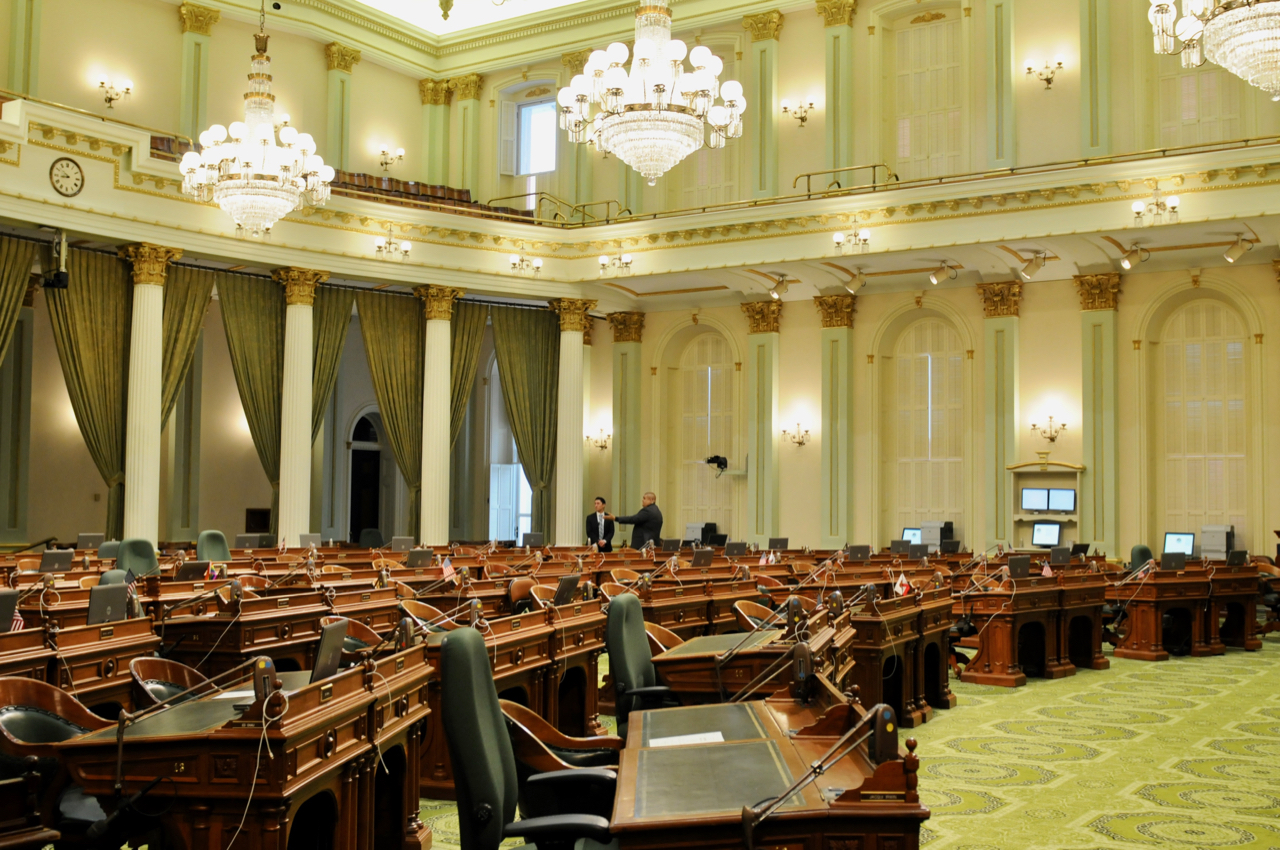
California State Capitol. (Photo: Katy Grimes for California Globe)
What Are Some Unique Aspects of the California Budget Process?
California’s Governor holds some of the strongest veto powers in the nation
By Chris Micheli, November 10, 2026 2:30 am
What are some unique aspects of the California budget process?
It stands out from most other states due to a unique mix of direct democracy propositions, a lower legislative vote threshold paired with a penalty, and powerful executive veto authority.
Majority Vote – Proposition 25 was approved by voters in 2010, which lowered the vote requirement to pass the state budget bill from a two-thirds supermajority to a simple majority in each house. The measure also dictates that legislators forfeit their pay and living expenses for every day the budget is late past the June 15 constitutional deadline (which has yet to happen).
Line-Item Veto – California’s Governor holds some of the strongest veto powers in the nation. Beyond signing or vetoing an entire bill, the Governor can use a line-item (“blue-pencil”) veto to reduce or eliminate specific dollar appropriations within the budget bill without killing the entire package.
Education Funding Guarantee – Passed in 1988, Prop 98 constitutionally mandates that a specific, substantial percentage of General Fund revenues (roughly 40%+) goes toward K-12 schools and community colleges, removing a massive portion of the state budget from standard annual discretion.
Rainy Day Fund – Prop 2, adopted by the voters in 2014, requires the state to set aside 1.5% of General Fund revenues annually, as well as extra amounts during strong capital gains tax years, into the Budget Stabilization Account (BSA) or use it to pay down debts and unfunded pension liabilities.
The May Revision – By May 14 each year, the Governor must release an updated budget proposal, referred to as the “May Revise.” This update incorporates actual state tax receipts collected in April (when income tax filings and payments are due), completely reshaping the spring legislative negotiations based on real-time economic data.
Trailer Bills – Instead of packing every single policy change into one massive budget document, California uses trailer bills (which are statutory changes passed after the main budget act) to implement the detailed law changes required to make the spending bill.
Budget Bills Junior – Throughout the fiscal year, lawmakers can pass follow-up legislation, known as “Budget Bills Junior,” with a simple majority to amend, increase, or decrease previously allocated items in the budget bill as economic or program needs shift.


- What Are Some Unique Aspects of the California Budget Process? - November 10, 2026
- Jeopardy Determinations - November 9, 2026
- Citing Uncodified Sections of Law by California Courts - November 9, 2026
RELATED ARTICLES
-
 October 15, 2026
-
 November 8, 2022
-
 March 24, 2025