
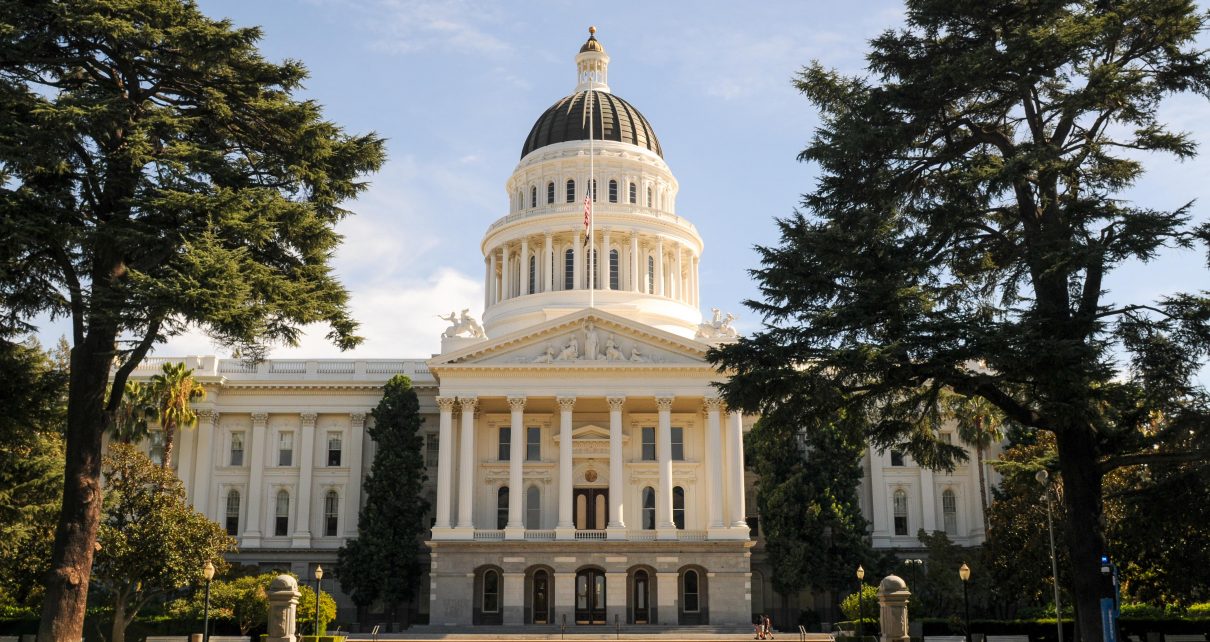
California State Capitol. (Photo: Kevin Sanders for California Globe)
Conservatorships
Deals with conservatorships. Chapter 1 deals with the establishment of a conservatorship
By Chris Micheli, April 28, 2026 2:30 am
Division 4, Part 3 of the Probate Code deals with conservatorships. Chapter 1 deals with the establishment of a conservatorship. Article 1 deals with person for whom a conservator may be appointed. Section 1800 contains eight statements of legislative intent.
Section 1800.3 provides that, if the need therefor is established to the satisfaction of the court and the other requirements of this chapter are satisfied, the court may appoint one of two specified conservators.
Section 1801 allows a conservator of the person to be appointed for a person who is unable to provide properly for his or her personal needs for physical health, food, clothing, or shelter. A conservator of the estate may be appointed for a person who is substantially unable to manage his or her own financial resources or resist fraud or undue influence.
Section 1801 allows a conservator of the person or estate, or both, to be appointed for a person who voluntarily requests the appointment and who, to the satisfaction of the court, establishes good cause for the appointment.
Section 1803 authorizes a conservator of the estate to be appointed for a person who is an absentee.
Section 1804 allows a conservator of the estate to be appointed for a person who is missing and whose whereabouts is unknown.
Article 2 deals with the order of preference for the appointment of a conservator.
Section 1810 provides that, if the proposed conservatee has sufficient capacity at the time to form an intelligent preference, the proposed conservatee may nominate a conservator in the petition or in a writing signed either before or after the petition is filed. The court must appoint the nominee as conservator unless the court finds that the appointment of the nominee is not in the best interests of the proposed conservatee.
Section 1811 provides that the spouse, domestic partner, or an adult child, parent, brother, or sister of the proposed conservatee may nominate a conservator in the petition or at the hearing on the petition.
Section 1812 states that the selection of a conservator of the person or estate, or both, is solely in the discretion of the court and, in making the selection, the court is to be guided by what appears to be for the best interests of the proposed conservatee.
Section 1813 says that the spouse of a proposed conservatee may not petition for the appointment of a conservator for a spouse or be appointed as conservator of the person or estate of the proposed conservatee unless the petitioner alleges in the petition for appointment as conservator, and the court finds, that the spouse is not a party to any action or proceeding against the proposed conservatee for legal separation of the parties, dissolution of marriage, or adjudication of nullity of their marriage.
Section 1813.1 prohibits the domestic partner of a proposed conservatee from petitioning for the appointment of a conservator for a domestic partner or be appointed as conservator of the person or estate of the proposed conservatee unless the petitioner alleges in the petition for appointment as conservator, and the court finds, that the domestic partner has not terminated and is not intending to terminate the domestic partnership.
Article 3 deals with the establishment of a conservatorship.
Section 1820 provides that a petition for the appointment of a conservator may be filed by any of the five specified individuals. If the proposed conservatee is a minor, the petition may be filed during his or her minority so that the appointment of a conservator may be made effective immediately upon the minor’s attaining the age of majority.
Section 1921 requires the petition to request that a conservator be appointed for the person or estate, or both, specify the name, address, and telephone number of the proposed conservator and the name, address, and telephone number of the proposed conservatee, and state the reasons why a conservatorship is necessary.
Section 1822 provides that, at least 15 days before the hearing on the petition for appointment of a conservator, notice of the time and place of the hearing must be given as provided in this section. The notice is accompanied by a copy of the petition.
Section 1823 requires, if the petition is filed by a person other than the proposed conservatee, the clerk to issue a citation directed to the proposed conservatee setting forth the time and place of hearing. And, the citation has to state the legal standards by which the need for a conservatorship is adjudged.
Section 1824 requires the citation and a copy of the petition to be served on the proposed conservatee at least 15 days before the hearing.
Section 1825 requires the proposed conservatee to be produced at the hearing except in three specified cases.
Section 1826 requires the court investigator to do specified items.
Section 1827.5 provides that, in the case of any proceeding to establish a limited conservatorship for a person with developmental disabilities, within 30 days after the filing of a petition for limited conservatorship, a proposed limited conservatee, with his or her consent, is to be assessed at a regional center.
Section 1828 provides that, before the establishment of a conservatorship of the person or estate, or both, the court is required to inform the proposed conservatee of all of the specified information.
Section 1828.5 states that, at the hearing on the petition for appointment of a limited conservator for an allegedly developmentally disabled adult, the court is required to do each of the five specified actions.
Section 1829 provides that any of four specified persons may appear at the hearing to support or oppose the petition.
Section 1830 states that the order appointing the conservator must contain, among other things, the names, addresses, and telephone numbers of three specified individuals.
Section 1834 states that, before letters are issued in a conservatorship that originates in this state or a conservatorship that is transferred to this state, the conservator is required to file an acknowledgment of receipt of a statement of duties and liabilities of the office of conservator, and a copy of the conservatorship information required. The acknowledgment and the statement are to be in the form prescribed by the Judicial Council.
Section 1835 requires every superior court to provide all conservators with written information concerning a conservator’s rights, duties, limitations, and responsibilities under this division.
Section 1835.5 states that, within 30 days of the establishment of a conservatorship under this division, and annually thereafter, the superior court must provide information to a conservatee under its jurisdiction, written in plain language, with a list of the conservatee’s rights within the conservatorship.
Section 1836 required the Judicial Council to establish a conservatorship alternatives program within each self-help center in every state Superior Court. There are specified purposes of the conservatorship alternatives program.


- A Unique Aspect of California Legislative Drafting: The Digest - October 14, 2026
- Advice on Lobbying in California - October 14, 2026
- Common Carriers of Persons - October 14, 2026
RELATED ARTICLES
-
 August 22, 2024
 -
 March 10, 2026
 -
 February 26, 2026