

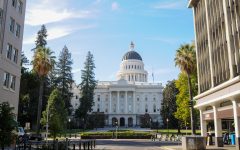
California State Capitol. (Photo: Katy Grimes for California Globe)
Drafting California Legislation Dealing with Indian Tribes
Like local governments in this state, tribal governments can pass their own local ordinances to govern their members and their land regardless of state law
By Chris Micheli, September 30, 2026 2:23 pm
California currently has 109 federally-recognized Indian tribes and there are special rules that govern state and local jurisdiction for Indians and Indian Country. Moreover, certain federal and tribal laws may also apply in specified circumstances. Like local governments in this state, tribal governments can pass their own local ordinances to govern their members and their land regardless of state law.
In fact, tribal governments generally do not rely on state law to adopt or enforce their locally enacted ordinances. When a tribe seeks to enforce their ordinances, like those allowing for the imposition of a new tax for example, these tribal ordinances typically get enforced through tribal courts.
In light of these circumstances, when drafting legislation to impose a requirement on an Indian tribe, language such as the following is likely to be included in the bill:
“This chapter shall only apply to an Indian tribe that adopts an ordinance that makes the provisions of this chapter applicable within its jurisdictional boundaries.”
As a result of federal law, most provisions of state law do not apply to Indian Country. That is why an Indian tribe must adopt an ordinance having a provision of state law applicable.
Another common provision found in tribal-related legislation may include language such as the following which explicitly provides that the state law does not preempt an Indian tribute from adopting an ordinance on the same topic:
“Nothing in this chapter shall be construed to preempt an Indian tribe from adopting an ordinance that regulates ___ (e.g., taxes) in a manner different from the procedures prescribed in this chapter.”
Finally, many of the tribal bills contain language to the following that makes clear that Indian tributes continue to have inherent powers of self-government and that the tribes can exercise their powers.
“This section shall be construed to empower Indian tribes and tribal law enforcement officers to exercise powers conferred by the laws of the State of California in a manner consistent with those laws. Those powers are in addition to a tribe’s inherent powers of self-government. This section does not infringe upon the sovereignty of an Indian tribe or their inherent authority to self-govern, including the authority to enact laws that govern their lands.”


- Physically Disabled Persons - October 20, 2026
- What are Some Unique Aspects of California’s Judicial Branch? - October 20, 2026
- Employer Subrogation - October 20, 2026
RELATED ARTICLES
-
 February 3, 2023
 -
 October 31, 2022
 -
 May 28, 2022