

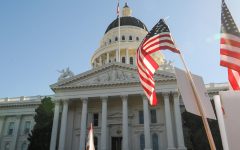
California State Capitol. (Photo: Katy Grimes for California Globe)
Navigating Local Lobbying Ordinances
This highlights one of the most complex challenges for government relations professionals in the Golden State
By Chris Micheli, November 23, 2026 8:16 am
The phrase “Navigating the Chaotic Patchwork of California City and County Lobbying Ordinances” highlights one of the most complex challenges for government relations professionals in the Golden State.
While lobbying the California State Legislature and state agencies is governed by a single framework, which is the Political Reform Act of 1974 that is overseen by the Fair Political Practices Commission (FPPC), lobbying at the local level is radically different. Under California’s constitutional “home rule” authority, each of the state’s 58 counties and 483 cities has the power to enact its own independent lobbying regulations.
This has created a fragmented, often confusing regulatory environment where an action that requires no reporting in one city could be a misdemeanor or trigger strict registration requirements just across the street in another local jurisdiction.
At the state level, a “lobbyist” is generally defined by the “80-hour/one-month” rule or a specific financial threshold (e.g., spending $5,000 or more in a quarter to influence legislative or administrative action).
Local jurisdictions, however, are free to adopt much stricter thresholds. This creates a multi-layered compliance burden. Because there is no statewide preemption, the state’s Political Reform Act explicitly allows local governments to impose additional, more stringent requirements on local lobbying activities.
A single real estate development project or regional policy initiative might require engaging with a city council, a county board of supervisors, and a regional joint powers authority (JPA)—each with completely different rules. When navigating California’s local ordinances, compliance teams must track several constantly shifting variables such as the following:
Who Qualifies as a “Lobbyist”?
Definitions vary wildly across major jurisdictions:
The “Contact” Threshold: Some cities define a lobbyist based on the number of communications. For example, in Los Angeles, an individual qualifies as a lobbyist if they receive economic consideration of $4,000 or more in a calendar quarter to influence official action, or if they make a certain number of direct contacts.
The “First Contact” Threshold: In some stricter jurisdictions, a single communication with a local official (or even senior staff) regarding a contract or land-use decision can trigger an immediate registration requirement.
In-House vs. Contract Lobbyists: Some cities only regulate contract lobbyists (those hired by clients), while others strictly regulate “owner-lobbyists” and in-house employees who advocate on behalf of their employers.
What Triggers “Lobbying Activity”?
The scope of what constitutes an attempt to influence local government varies:
Legislative vs. Administrative: Almost all local ordinances cover city ordinances, resolutions, and land-use zoning. However, many also cover administrative actions, such as the awarding of city contracts, grants, or the approval of permits.
Staff-Level Engagement: In some cities, lobbying only counts if you speak directly to elected officials (Mayors, Councilmembers, Supervisors). In others—like San Francisco or San Diego—communicating with department heads, program managers, or even lowest-level procurement officers counts as lobbying.
Reporting and Disclosure Schedules
Filing frequencies and details are highly fragmented:
Quarterly vs. Monthly: Most larger cities require quarterly disclosures detailing clients, issues targeted, and compensation. However, during high-stakes cycles, tracking must be meticulous.
Fundraising and Campaign Bundling: Many local ordinances require lobbyists to disclose not just their lobbying activity, but also any campaign contributions they have “bundled” or raised for local candidates, as well as charitable donations made at the behest of an official (“behested payments”).
Post-Employment “Revolving Door” Bans
Localities enforce distinct “cooling-off” periods prohibiting former city officials or high-level staff from lobbying their former colleagues. These bans typically range from one to two years after leaving public service, but the exact positions covered vary strictly by municipality.
Comparative Snapshot of Selected Major Jurisdictions
| Jurisdiction | Registration Trigger | Staff Covered | Key Unique Feature |
| City of Los Angeles | Compensation thresholds ($4,000/quarter) or specific contact metrics. | Elected officials, commissioners, and high-level designated staff. | Strict matching requirements for campaign fundraising and bundling disclosures. |
| City/County of San Francisco | Making at least one contact with an officer of the City and County on behalf of another. | Broad definition including most city employees, boards, and commissions. | Requires registration before making the contact; includes strict “prohibitions on gifts” rules. |
| City of San Diego | Contract lobbyists with any contact; In-house lobbyists with 10+ contacts in a quarter. | Elected officials, unclassified staff, and members of city boards/commissions. | Broadly covers municipal decisions, including enforcement of city contracts. |
| Unincorporated LA County | Receiving $500 or more in a quarter to influence county official action. | Supervisors, deputies, and specified department heads. | Focuses heavily on county contract procurement and land-use decisions. |
To successfully mitigate legal and reputational risks in this regulatory environment, organizations generally deploy a centralized compliance strategy:
One, before scheduling a single meeting, verify the exact boundaries of the jurisdiction. An agency might be physically located in a city but governed by county rules.
Two, establish internal rules requiring government relations teams to log intended meetings before they occur to check if a local registration threshold will be crossed.
Three, track cumulative contacts and ensure in-house executives, subject-matter experts, and external consultants are pooling their contact logs. Multiple people making single calls can collectively trigger an “in-house lobbyist entity” registration.


- Navigating Local Lobbying Ordinances - November 23, 2026
- Modifying Trusts - November 23, 2026
- How Do California Courts View a Bill’s ‘Plus Sections’? - November 22, 2026
RELATED ARTICLES
-
 October 16, 2026
-
 December 27, 2022
-
 February 1, 2026