

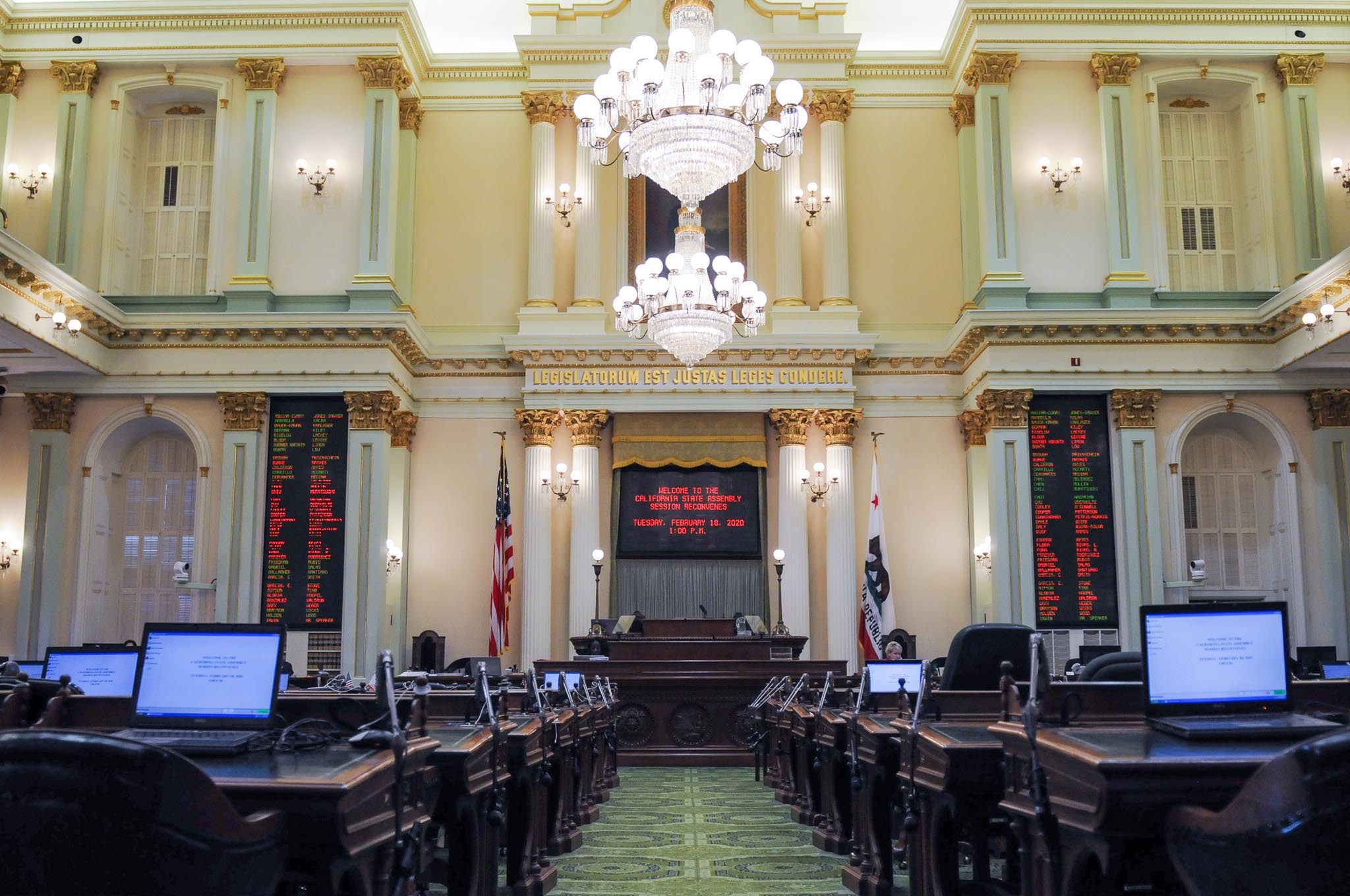
California State Capitol. (Photo: Katy Grimes for California Globe)
OAL Disapproval: Common Pitfalls in Agency Rulemaking Files
The record must demonstrate a robust, evidence-based reason for why each provision is required
By Chris Micheli, November 13, 2026 7:00 am
For California state agencies, navigating the Administrative Procedure Act (APA) is a high-stakes compliance exercise. The ultimate arbiter of this process is the California Office of Administrative Law (OAL), which reviews all proposed regulations to ensure they are legally sound, clear, and procedurally compliant.
When an agency’s rulemaking file falls short, OAL issues a formal Notice of Disapproval, halting the regulation in its tracks and sending the agency back to the drawing board (Government Code Section 11349.3).
Understanding the anatomy of an OAL disapproval requires looking past the policy intent of a regulation and focusing heavily on administrative precision. Below is an analysis of why OAL rejects rulemaking files and the most common pitfalls agencies encounter.
By law, OAL evaluates every regulation against six core APA standards (Government Code Section 11349.1). While an agency might meticulously craft its policy, a failure to satisfy even one of these criteria will trigger a disapproval.
| APA Standard | Core Requirement | Common Disapproval Trigger |
| Necessity | The record must demonstrate a robust, evidence-based reason for why each provision is required. | Relying on generalized policy goals rather than explaining the specific rationale for a specific rule. |
| Clarity | Regulations must be written so that they are easily understood by those directly affected. | Using ambiguous terms, creating internal contradictions, or referencing undefined external standards. |
| Consistency | The regulation must be in harmony with existing laws and other state regulations. | Accidentally conflicting with a governing statute or overlapping with another agency’s jurisdiction. |
| Authority | The agency must possess explicit statutory power to permit or mandate the regulation. | Interpreting a broad statutory mandate too loosely, stretching agency power beyond legislative intent. |
| Reference | The regulation must cite the specific statute or court decision it implements or interprets. | Incorrectly formatting citations or failing to link the rule to a specific statutory section. |
| Nonduplication | Regulations cannot serve the same purpose as an existing state or federal law. | Duplicating verbatim a federal regulation or state statute without an explicit statutory exception. |
The Initial Statement of Reasons (ISOR) is the backbone of the rulemaking file. OAL routinely disapproves filings because an agency explains what a regulation does but fails to explain why it is necessary. If a regulation mandates that a specific form be submitted by the 15th of the month, the record must explain why the 15th was chosen over the 1st or the 30th. Agencies often rely on “administrative discretion” as a blanket excuse, which OAL consistently rejects as inadequate documentation of necessity.
Clarity issues are the most frequent culprits in OAL disapprovals. Pitfalls include:
Vague timelines: Using phrases like “within a reasonable timeframe” or “promptly” instead of defining a strict number of business days.
Incorporation by Reference errors: When an agency attempts to include an external document (like a federal manual or guidelines) into the regulation, it must explicitly name the exact edition or date of that document. Trying to incorporate a document “as it may be amended from time to time” violates the clarity standard and constitutes an impermissible delegation of rulemaking power.
The APA requires agencies to consider and respond to every public comment directed at the proposed regulation during the public comment periods (Government Code Section 11346.9(a)(3)). A common pitfall is giving “cookie-cutter” or dismissive responses to substantive criticisms. If a member of the public provides data showing that a proposed rule will cause severe financial hardship, the agency cannot simply reply, “Comment noted, no change made.”
The Final Statement of Reasons (FSOR) must demonstrate that the agency genuinely evaluated the comment and explained the logical reason for rejecting it.
Rulemaking files are often derailed by minor mathematical or procedural errors.
The 45-Day and 15-Day Rules: If an agency makes “substantial, sufficiently related” changes to its original proposal, it must give the public a 15-day notice period to review the modified text (Government Code Section 11346.8(c)). Failing to count these days correctly, or failing to make the modified text properly available to the public, invalidates the file.
The 1-Year Deadline: From the date an agency publishes its initial notice of proposed action, it has exactly one year to complete the process and submit the final file to OAL (Government Code Section 11346.4(b)). Missing this deadline by a single day kills the regulation entirely.
When OAL issues a disapproval, it is accompanied by a detailed written decision explaining the exact legal deficiencies. The agency is not completely out of options. Under Government Code Section 11349.4, the agency has a 120-day window to fix the identified issues, post any necessary 15-day public notices for modified text, and resubmit the corrected file to OAL without paying additional filing fees or starting the entire 45-day process over from scratch.
Ultimately, the best antidote to an OAL disapproval is meticulous record-keeping. The administrative file must serve as a completely self-contained narrative proving that the agency followed every procedural turn of the APA and justified every single word of the proposed regulation.


- OAL Disapproval: Common Pitfalls in Agency Rulemaking Files - November 13, 2026
- Conditions of Compensation - November 13, 2026
- Guidance on California Rulemaking Process - November 12, 2026
RELATED ARTICLES
-
 November 24, 2023
-
 February 27, 2024
-
 April 8, 2021