
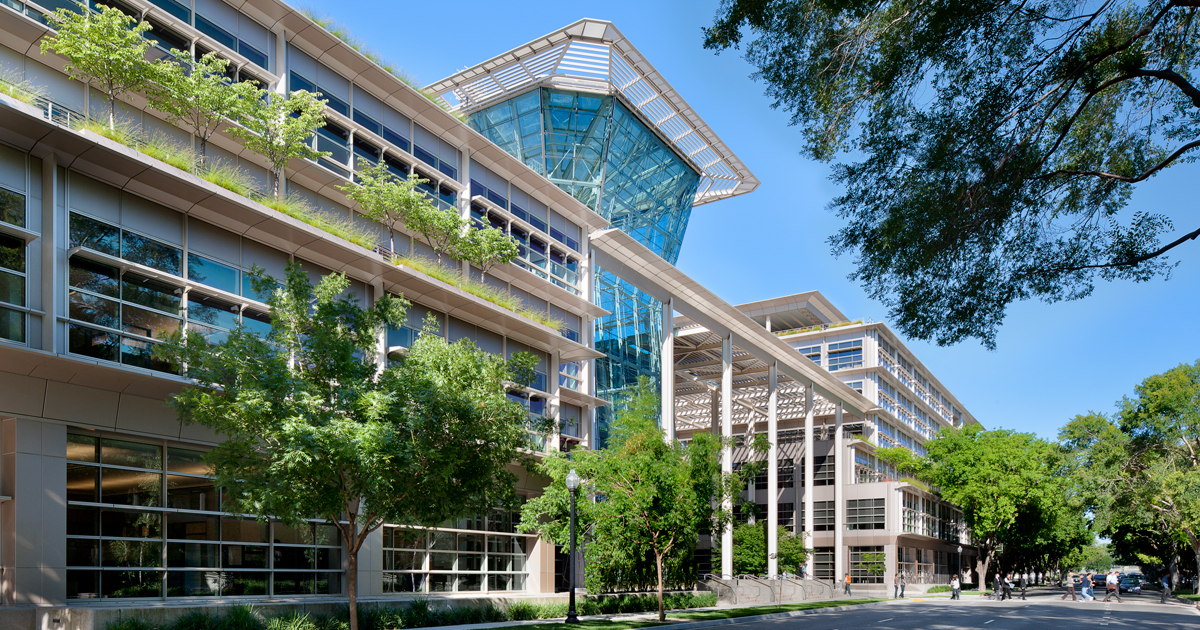
CalPERS headquarters, Sacramento. (Photo: calpers.ca.gov)
Globe Exclusive: Congressional Committee Investigating CalPERS’ Investments into Radical ESG Causes
CalPERS lost roughly 71 percent of its $468.4 million investment in the private-equity Clean Energy & Technology Fund, and then refused to fully disclose how the money was spent
By Katy Grimes, February 12, 2026 7:00 am
Congressional Education and Workforce Committee Chairman Tim Walberg (R-MI); Health, Employment, Labor, and Pensions Subcommittee Chairman Rick Allen (R-GA), and Rep. Kevin Kiley (R-CA) sent a letter Thursday morning to CalPERS’ president Theresa Taylor regarding CalPERS’ failure to safeguard worker pension benefits.
“The Committee seeks information to determine whether CalPERS is undermining this requirement by prioritizing a radical Environmental, Social, and Governance (ESG) agenda over its obligation to its beneficiaries, which will inform its potential reforms to ERISA and the Code.”
Essentially, the Members are investigating CalPERS’ investments into left-wing ESG causes that ultimately caused a more than $330 million loss for California worker pensions.
ESG is Environmental, social, and governance around “sustainability” issues.
In the letter, the Education and Workforce Committee Members note that CalPERS benefits from a special tax status as long as it prioritizes the financial wellbeing of workers.
However, CalPERS was investing heavily in ESG causes, broadly known to generally be bad investments, and consequently putting political priorities over the interests of California worker pensions.
“Sustainable fund managers who direct their investments to companies publicly embracing ESG principles may be over-investing in financially underperforming companies,” Sanjai Bhagat, Provost Professor of Finance at the University of Colorado, and author of Financial Crisis, Corporate Governance, and Bank Capital, wrote for Harvard Business Review.
Education and Workforce Committee Members detail this:
CalPERS’ investment policy is tailored around a “Sustainable Investments Program” and a “$100 Billion Climate Action Plan.” To implement this investment strategy, CalPERS has expended untold and unnecessary amounts of money in violation of the Code and the California Constitution’s mandate to “defray reasonable expenses of the system.” Incurring expenses to purpose a social agenda is not a reasonable expense when the social agenda is not permitted by the California Constitution.
This is why the Members are investigating whether CalPERS still qualifies for this special tax status.
“On October 28, the Committee learned that CalPERS lost 71 percent of its nearly half-a-billion-dollar investment in the private equity CalPERS Clean Energy and Technology Fund (CETF). Since committing to CETF in 2007, CalPERS has channeled more than $468 million into the fund. As of March 31, 2025, the investment’s value was less than $138.1 million.
“CalPERS’ loss in CETF is just the most recent example of CalPERS prioritizing ESG considerations ahead of its responsibilities to safeguard the pension fund. Both the Code and the California Constitution require public pension assets be managed solely “for the exclusive purposes of providing benefits” to participants and beneficiaries.”
The members provide an example:
CalPERS’ Responsible Contractor Policy (RCP) requires certain core managers and contractors to agree not to oppose union organizing. The purpose of this policy is to promote union organizing, rather than to provide benefits to participants in the pension or retirement system. Indeed, CalPERS appears to have acknowledged and accepted that the social purposes of the RCP conflict with its fiduciary obligations to provide benefits.
And:
The Committee seeks a better understanding of whether CalPERS is diverting tax-subsidized retirement assets in violation of the Code’s “exclusive benefit rule.” The Committee also is interested in determining whether amendments to ERISA and the Code are needed to prevent such activity if current enforcement proves inadequate.
Of specific interest is how CalPERS lost roughly 71 percent of its $468.4 million investment in the private-equity Clean Energy & Technology Fund (CETF), and then refused to fully disclose how the money was spent, as The Center Square reported in October 2025. “These losses are a major problem for California taxpayers, who at least for now are the backstop for underfunded state pensions, but also for state employees who trust CalPERS to responsibly manage their retirement plans.”
The committee members asked CalPERS to provide the following information not later than February 27, 2026:
1. A description of and all documents material to CalPERS’ due diligence leading to the selection of CETF as a sound investment.
2. A description of and all documents sufficient to show the process used by CalPERS to determine its compliance with the exclusive benefit requirements of Code section 401(a) regarding its selection of CETF.
3. All final documents relating to terms of investment in CETF.
4. All financial statements and performance documents of CETF provided to CalPERS or its affiliates, and a description, including any evidence, of CalPERS or its affiliates monitoring the investments in CETF.
5. All documents reflecting CalPERS’ CETF investments, including but not limited to investment solicitations, investment materials, records of negotiations, and documents sufficient to show investment decision making.
6. An accounting of all expenses paid by CalPERS and CETF on behalf of CalPERS to attend meetings relating to the promotion of CETF or to exercise existing or potential ownership interests to promote CETF. Please also provide all documents and communications, in whatever format, related to these meetings.
7. An accounting of all expenses paid for the purpose of procuring consultants, legal advice, or any other advisory services in connection with CETF.
The Globe will follow this investigation and report on CalPERS’ response – particularly since they “defended their private equity strategy and shifted blame for CETF’s performance on prior management in response” to an inquiry by The Center Square.
Here is the letter:
02.12.26 CALPERS Loss Oversight Letter will instructions

A California native and Navy mom, Katy lives in Sacramento, CA.
- Globe Exclusive: Congressional Committee Investigating CalPERS’ Investments into Radical ESG Causes - February 12, 2026
- Sen. Niello’s SB 84 Would Help Repair California’s Judicial Hellhole Status - February 11, 2026
- New January Jobs Report Blew Away Expectations - February 11, 2026

Always good to see any kind of digging into CalPERS asinine investments, which are not only left-wing but incredibly UNWISE investments, as Katy Grimes noted, which anyone with a functioning brain and a smidgen of common sense could predict way ahead of time would not be good investments for pensioners. Interested to see what will happen next from this effort.
Cal Pers is currently operating as just another democratic fund-raising organization. By investing in here today and bankrupt tomorrow so called “Green Energy” companies’ money magically vanishes while following mandated investment policies. Ultimately the taxpayers of California are on the hook to cover these nefarious activities.
We’re finally realizing a piece of these so-called climate projects are in large part a grift to siphon money and not have to answer to anyone because “you are trying to save the world”.
What would be do without the California Globe’s investigative reporting? This is another incredible bombshell article on an issue that the rest of the news media completely ignores as they cover for the incompetent Democraps.
The scale of the fraud and waste in Democrap California is mind boggling.
In a fictional (yet hypothetical) press conference given by CalPERS…
CalPERS spokesperson: “CalPERS chose to follow renewable energy investment strategy that was fully supported by the California Public Utilities Commission.”
Journalist: “Are you aware that four of the five CPUC commissioners are lawyers?”
CalPERS spokesperson: “No, but…”
Journalist: “Are you also aware that zero of the five commissioners have any background in engineering, technology, or finance?”
CalPERS: “What does that have anything to do with retirement funds?”
Journalist: “Subsidizing expensive, unreliable technology with state workers retirement funds? I’d say everything.”