
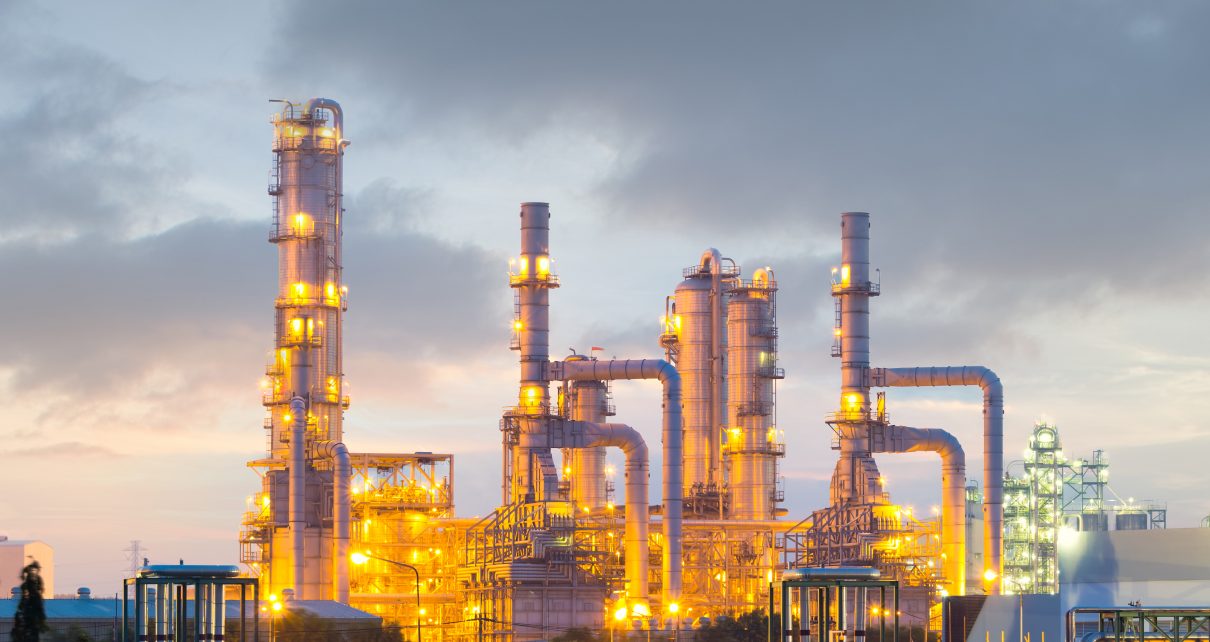
Oil Refinery Plant (Photo: chuyuss/Shutterstock)
Understanding California Refineries: The ‘Turnaround’
Refineries are very complex operations, and are the backbone of our economy
By Mike Ariza, May 4, 2026 6:00 am
“The oil industry makes up 8% of California’s GDP. Without that 8%, the other 92% would be impossible to achieve.” — USC Professor Mike Mische
California’s refineries are the heart and the pulse of the industry. Refineries are very complex plants that require constant monitoring and periodic maintenance. They operate for five years running 24/7 for 365 days of the year. During that time, they are run to 95% of their capacity to meet their production commitments, supplying the necessary fuels to California’s civilian population and meeting the needs of our military.
I am Mike Ariza, former Senior Refinery Technician and Control Board Supervisor at the Valero Benicia Refinery. As a Control Board Supervisor and instructor, my responsibilities were as follows:
- Ensure that refinery operations do not impact the health and safety of the citizens of Benicia, the workers in the surrounding industrial park, and all personnel in the refinery.
- Ensure compliance with all environmental regulations set forth by the Bay Area Air Quality Management District.
- Maximize heavier sour crude rates up to management-established targets while remaining in environmental compliance.
- Optimize gasoline, jet fuel, and diesel production rates.
California is the most expensive state in the country to do business. On September 5, 2025, Andy Walz, CEO of Chevron, stated:
“It is a very difficult place to do business. And if we don’t think we can get our return, we’re going to put our money somewhere else. And I don’t want to do that. It’s regulation. It’s the cost of doing business. It’s the cost of labor. It’s the cost of building. Permitting fees and permitting time. It’s a lot of things that make it very difficult for a company like Chevron and for a lot of businesses to do business in California.”
In this op-ed, I will take you through the many costs involved in operating a refinery, including the largest cost of all: the Refinery Turnaround. During normal operations when the refinery is online, some of the day-to-day costs are as follows:
- Electricity constantly exceeding $2 million per month.
- Water and chemicals.
- Welders and fitters, and rotating equipment specialists.
- Electricians and instrumentation specialists.
- Operation and maintenance of emergency equipment, such as the refinery’s many fire trucks, and training of the personnel to operate the emergency equipment.
- All the salaries and benefits of very talented and capable engineers, administration personnel, and operators that work so diligently to keep the refinery running.
Reason for a Turnaround: Turnarounds in the refinery are periods in which the refinery is shut down for required inspections and maintenance. Turnarounds provide a window for modifications or improvements to a refinery. Some of the reasons for modifications include increasing refinery efficiency and throughput, extending refinery running times, or installing new equipment to comply with new environmental regulations. Refineries have either partial or refinery-wide turnarounds. For the purposes of this discussion, we will dive into the Refinery Wide Turnaround.
Turnaround Duration: A typical refinery-wide turnaround can range from 4 to as much as 8 weeks. During this time, the refinery is offline. The refinery is not making its products, which results in a substantial loss of income.
Turnaround Preparation: Before the actual shutdown of the refinery, the “Coordination Department” makes arrangements to provide customers with their contracted deliveries of gasoline, jet fuel, and diesel. Coordination will also schedule the shutdown and restart of crude oil deliveries to the plant. Refinery planners work with the various unit owners to ensure that all mandatory inspections are scheduled. An example of this is the refinery boilers. The planners will also arrange for the delivery of catalyst materials for units like the hydrocracker and various hydrotreaters. All new prefabricated equipment to be installed and associated materials are brought into the plant. They are staged at or near the appropriate units. Other equipment, such as massive cranes, are also brought in, erected, and prepositioned where they will be needed.
The Shut Down: This typically takes 3–4 days. Operators, control room personnel, and supervisors are put on their turnaround schedules, which consist of 12-hour shifts for at least 6 days a week. Their main objectives are to safely shut down the units, clearing all piping and vessels of hazardous materials in preparation for opening. They will typically clear the equipment by utilizing steam, nitrogen, or water. Once the lines and equipment are verified as depressured and free of all hazardous materials, the operators begin to issue permits to open and blind the various lines and equipment.
It is at this time when the maintenance contractors that have been brought into the refinery go to work. They will typically number from 3,000–4,000 personnel, or 10-fold of normal refinery staffing. At this stage, they are tasked with installing all metal blinds in all predetermined unit battery limits piping flanges and the vessel entry blinds in the piping flanges against the vessel walls.
Vessel Opening / Entry / Repair: Once all the entry blinds are installed, the contractors are tasked with opening the various vessels in the plant. A refinery gas test supervisor will test each vessel for oxygen, along with toxic or combustible gases, prior to issuing a permit to open. Once opened, air handlers are placed at strategic locations to ensure that a good supply of fresh air is always flowing through the vessels while the contractors are performing their work inside. Between the night shift and the day shift, the gas test supervisors will go to each opening and test all entry points, verifying that all openings are still safe to enter before issuing the work permits for the day shift. The refinery operator will take the permit, ensure that all conditions on the work permit have been met, and inspect the job site before issuing the permit to the maintenance contractor.
For the next three to four weeks, intense levels of maintenance are performed. Vessel internals are cleaned, repaired, and replaced as needed. Inspectors continually go inside to check the work being done along with inspecting areas that historically have experienced problems. Occasionally the inspectors will find additional problems. Sometimes these problems have the potential of delaying the restart of the refinery. This situation is commonly referred to in the industry as “Critical Path.” It is given that name for a few reasons. One is that the contractors working in the refinery are often scheduled to move onto another refinery for another turnaround immediately after the completion of the one they are currently working on. In addition, the refinery needs to come back up to supply its customers with the gasoline, jet, and diesel that the refinery is contracted to produce. This also applies to the crude oil that is scheduled to be delivered to the refinery. Normally the folks at coordination will have already arranged to provide for a little wiggle room for problems that may arise, but it is typically only for a week at the most.
Start Up / Back Online: Once all the maintenance work is completed, the operators will enter all the vessels for one final inspection before closing everything up for startup. Once the operators have signed off on their inspection, they issue permits to remove all the entry and battery limits blinds from the units. Once all the blinds have been removed, the maintenance contractors officially turn the unit over to Operations.
For the next four days, the operators will perform their startup procedures to bring the units back online. There are many things involved in starting the various units. Some of these include O2 (oxygen) freeing the piping and equipment and performing pressure checks. Other steps include loading and circulating coke and catalyst, and heating up to operating temperature.
The Big Picture: Refineries are very complex operations. They are the backbone of our economy; indeed, our very survival as a society depends on them. These turnaround maintenance periods are significant investments that all oil corporations make to ensure that we are supplied with the critical fuels that we need to live. The costs of the turnarounds can range from approximately $400 million to well over $1 billion, depending on the work that needs to be done.
These corporations make these investments expecting to receive a reasonable rate of return on their investments over the course of five years. In the case of California, the government has become very hostile towards these critical corporations and refineries.
If the three key remaining oil companies follow through on viability threats, the West Coast loses its primary domestic fuel buffer. It is highly unlikely that imports will be able to mitigate the losses given the volumes that we are talking about.
The state could be put at severe economic risk. The governor and Air Resources Board should make every effort to work with the companies to prevent the loss of their six refineries.
The Defense Production Act needs to be invoked immediately. In addition, Executive Orders that are currently being drafted should be ratified at the earliest opportunity.


- The Pride of Benicia: The 57-Year Legacy of a Refinery and Its People - June 23, 2026
- California’s State of Emergency for Transportation Fuels - May 30, 2026
- Understanding California Refineries: The ‘Turnaround’ - May 4, 2026
RELATED ARTICLES
-
 May 14, 2020
 -
 April 6, 2022
 -
 August 11, 2020
The political idiots that make and enforce the rules are insulated from the impact by free transportation free housing no utility bills and expense accounts. California politics is totally out of control. Theft fraud and illegal activities are rampant. What was once a great state is now in the toilet. Democrats should take a bow. They did it all on their own. At this juncture, I would not even visit California let alone entertain the thought of living there.
California got its last tanker from the Middle East this week.
It is well and truly BOHICA time for every driver in California since “Green Weenie” Newsom ran the refineries off with a blizzard of regulations and fines.
Go Electric? Even if they had the power, the democrats anathema to infrastructure precludes balancing a city size load suddenly to an increase of electric cars.
The grid is simply not sufficient to charge that many cars.
I guess it is back to horses road apples!