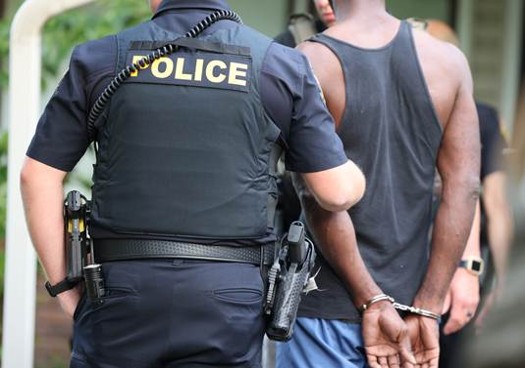
ICE arrests. (Photo: ICE.gov)
A Year Later, We Need a Surge in SF Dealer Takedowns
San Francisco’s open-air fentanyl and methamphetamine markets have long featured a large share of street dealers who are Honduran men without legal status
By Richie Greenberg, October 17, 2026 9:23 am
Late last year, in October 2025 – President Trump prepared more than 100 Customs and Border Protection and other federal agents for an immigration enforcement surge into the San Francisco Bay Area. The operation targeted removable non-citizens. The Department of Homeland Security described the focus as “the worst of the worst criminal illegal aliens.”
Trump had tied the effort to sanctuary limits, noting that federal agents could remove people local law prevents the city to hand over.
On the evening of October 22 Mayor Daniel Lurie spoke with Trump by telephone. Tech executives including Marc Benioff and Jensen Huang also intervened.
The next day Trump canceled the planned Saturday surge, saying Lurie had “asked, very nicely” for a chance – and he was making progress. Trump added that he believed Lurie’s plea was a mistake because federal officers could act faster and remove criminals the law does not permit the city to remove.
San Francisco’s open-air fentanyl and methamphetamine markets, concentrated in the Tenderloin and SOMA, have long featured a large share of street dealers who are Honduran men without legal status. A Harvard Law Review analysis found that nearly all low-level dealers prosecuted in 2024 fit this profile.
Subsequent local reporting confirm the pattern, including deportees who returned and resumed selling. These individuals are deportable under federal immigration law.
A federal operation in the high-activity corridors, if Trump had gone through with it, would have targeted federal agent/dealer encounters, undertaken status checks, and removals without relying on SFPD cooperation or detainers. The people conducting much of the visible dealing are precisely the population such a surge was designed to reach.
California’s SB 54 and San Francisco’s sanctuary ordinances restrict local officers from using resources for immigration enforcement and honoring most detainers or routinely sharing immigration status information.
These rules are lawful under the California and San Francisco anti-commandeering doctrine. But they do not strip the federal government of authority to enforce immigration statutes on its own, by its own.
Immigration is a clear federal power. Local non-cooperation slows handoffs but it does not nullify federal agents’ ability to arrest and remove people present illegally who have criminal records or prior deportation orders.
In practice the policies mean many dealers arrested locally cycle through city and state courts with low likelihood of swift deportation while open-air markets continue.
The SF vs Federal distinction matters: sanctuary laws are not nullification, rather they create obvious friction when offenders are removable.
Nearly a year later, the results are observable.
Open-air dealing has not disappeared. City council members have described “whack-a-mole” enforcement that moves activity a block over rather than ending it. Overdose deaths remain elevated.
Existing local and federal partnerships have produced arrests and seizures, yet the street-level dealing by deportable. non-citizens persists.
Mayor Lurie has maintained popularity by framing the averted surge as a local “victory” and instead celebrates the city’s economic and tourism recovery we are seeing in some neighborhoods .
Yet the daily toll of drug use and addiction together with continued disorder in the Tenderloin and SOMA tell a different story.
We should care – because this episode links a documented presidential choice to ongoing street conditions. Lurie objecting the fed’s surge traded the removal of known dealers for continued reliance on tools actually limited by sanctuary rules.
We know drug markets adapt and of course dedicated drug dealing investigations remain necessary. An immigration surge would not automatically dismantle dealer networks nor demand. Still, the October 2025 pause demanded by Lurie bought the city time.
Yet one year later the dealer population persists and overdoes deaths show the problem continues.
A renewed federal operation concentrated on the Tenderloin and SOMA neighborhoods would test whether removing that specific dealer network works more effectively than local efforts alone have tried. The legal authority exists. It’s the feds. The chance was there and was declined. One year later, it’s time to act.


- A Year Later, We Need a Surge in SF Dealer Takedowns - October 17, 2026
- Pelosi Must Press Connie Chan on Anti-Israel Stance - October 11, 2026
- Connie Chan: Failing Upward - October 5, 2026
RELATED ARTICLES
-

-
 April 12, 2023
 -