

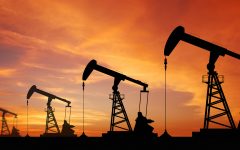
Oil pumpjack, San Benito County. (Photo: Katy Grimes for California Globe)
Ringside: Newsom’s Concessions to Oil Industry Will Not Save It
The City of Los Angeles could improve its air quality if it resumed oil drilling
By Edward Ring, October 1, 2025 2:55 am
 Access to adequate supplies of gasoline and diesel fuel for Californians is in dire peril, and the signing of SB 237 on September 19 will do very little to change that. To rescue the industry, far more sweeping legislation is required.
First, to put this in perspective, note that fully 50 percent of California’s raw energy inputs still rely on petroleum. We can debate the virtues and detriments of fossil fuel all we like, but we can’t change this math. Californians need petroleum products, and at the same time, our state legislature has systematically attempted to destroy the industry.
The supposed breakthrough represented by SB 237 by Sen. Tim Grayson (D-Contra Costa) is that it will restart permitting for drilling. It directs CalGEM (California’s Geologic Energy Management Division) to issue up to 2,000 drilling permits. This volume of permitting is necessary to sustain production, but under pressure from state agencies and regulators, the volume of drilling permits has steadily dropped; only 74 were granted in 2024.
As a result, California’s in-state oil production has dropped from a high of 402 million barrels in 1986 to only 118 million barrels in 2024. But consumption has not fallen nearly as fast. In 1986 California consumed 676 million barrels of oil, and that total has only declined to 511 million barrels in 2024. We now import 77 percent of our petroleum.
The inadequacies with SB 237 are many. To begin with, it only directs CalGEM to issue a higher volume of permits in Kern County. This leaves areas of the state with high value fields completely cut off, including Los Angeles, Ventura, and Santa Barbara counties. Even if Kern County drillers were reactivated overnight under ideal conditions, they could not produce enough oil to replace what’s being lost as existing wells everywhere else are being forced to shut down, or are naturally depleted and deactivated.
Moreover, SB 237 does not allow for fracking, and most of the oil wells in Kern County require fracking. California’s regulators do not acknowledge that in contrast to Texas, fracking in California is done in relatively soft soil and at shallower depths. This means it requires far less energy and far less water, and has a far more localized impact. Fracking in California is responsible and safe, but CalGEM is keeping it out of bounds.
Compounding the problems with SB 237 is the fact that it does not override SB 1137 which puts boundaries on oil fields. SB 1137, currently in litigation, restricts drilling to areas that are at least 3,200 feet away from any inhabited structure. Unless SB 1137 is overturned, it will further limit how much oil can be extracted in Kern County, or anywhere else in California.
The next link in California’s endangered oil supply chain are the major north/south pipelines that carry oil from California’s wells to California’s refineries. As it is, thanks to the steady decline in production, the major pipelines moving oil in California are flowing at rates that are almost too low to be sustained. The pipelines cannot operate if the flow of oil is much below 25 percent of their capacity, and right now they are approaching that tipping point. The pipelines also have to charge far more per barrel when they’re so underutilized, since their fixed costs don’t change.
Less oil. No way to move the oil to refineries. And then there are the refineries themselves. Operators are justifiably asking why they should stay active in a state that regulates their profits, micromanages their storage and distribution, and imposes environmental regulations far in excess of any other state or nation. As it is, two major refineries, Valero in Northern California, and Phillips 66 in Southern California, have both announced they will cease operations. When this happens, California’s refineries will not have the capacity to supply the state’s current demand for gasoline and diesel fuel.
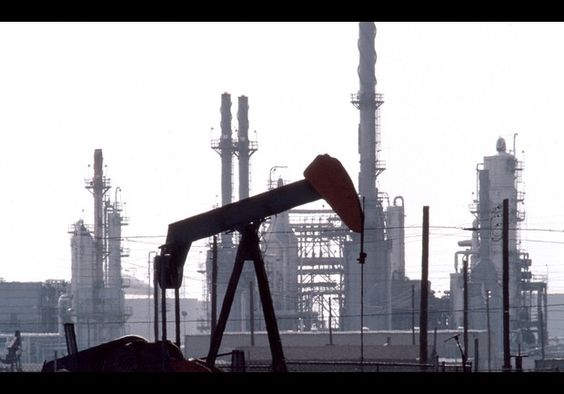
What Californians need is a practical approach to energy policy, one that includes a long overdue acknowledgment of facts that contradict the incessant, rote demonization of fossil fuel. For example, natural seepage of oil in Los Angeles and Santa Barbara counties releases into our air and water more oil, methane, and volatile organic compounds that the drilling itself. In fact, capped wells often release more gaseous pollution than active wells, and even with extremely expensive attempts to prevent that on a carefully capped well, the pressure that naturally builds under the cap means that gas inevitably escapes. The City of Los Angeles could improve its air quality if it resumed drilling.
Someone closely following California’s oil industry told me “there is a reasonable chance SB 237 hasn’t done anything at all. It’s all just show.”
Supporting California’s oil and gas industry while committing to alternative fuel technologies as soon as they become competitive are not incompatible sentiments. And trying to kill an industry that still accounts for 50 percent of California’s total energy consumption is suicide.
Governor Newsom and the state legislature need to seriously confront the problems their governance has sown before these problems explode into an energy crisis that will make 1973 look like a picnic. SB 237 is a very, very small step in the right direction at most. More likely, it is merely a gesture.


- Ringside: Federal Options for Large Scale Seawater Desalination - April 2, 2026
- Ringside: The Economics of Managing Mono Lake - March 26, 2026
- Ringside: The Many Benefits of Dredging the Sacramento-San Joaquin Delta - March 19, 2026
RELATED ARTICLES
-

-
 November 8, 2024
 -
California crude production was ~255 kb/d in July 2025 per the recent EIA report, 16.1% less than July 2024 when it was ~304 kb/d. Sable Offshore could help make up the difference–if it were allowed to ship the oil via pipeline, it would help shore up their volumes by roughly 55 kb/d.
More intentional scarcity by the Dems. They want to make the lives of the working men and women of CA and America worse. They want to force everyone but the rich out of our cars and onto slow, dirty, and dangerous Government Transportation.
How long will the working men and women of CA continue voting for this?
Too bad the CA Reps won’t articulate an agenda of abundance vs. the Dem agenda of scarcity.
So, a Contra Costa county senator throws a bone to the “dirty Central Valley” (I mean that with love) even while he watches and waits and likely cheers for the disappearance of the refineries and their related services jobs in his own backyard. Thank you Mr. Ring, for continuing to report the painful truths.
Help me define Gav’s SB237
Showboating or Grandstanding?
The dismantling of the Carson Wilmington Phillips refinery has commenced thus California damaged into eternity.
Donald Trump’s failure to intervene and stop this is another one of his failures relating to the wellbeing of California and the nation. Donald Trump is compromised therefore fearful of any confrontation with Gavin Newsom.
Why should President Trump intervene to stop Newsom from ending Newsom’s political future by stopping Newsom’s BAD DECISIONMAKING???
As Obama once famously observed “Elections have consequences” …
Whether California elections are FAIR and ACCURATE is another topic for another time, but perhaps $8-10 a dollar gasoline will awaken low-information California voters to start asking the hard questions that should have been asked years or decades ago, before the Democrat party INFESTED California politics via “dominion”….
Every single field discovery in the LA Basin, Ventura and Kern basins was discovered by oil seeps (oil springs back in the late 1800’s). It is total insanity to shut down all wells where millions of people live on top of the fields. Back when there was a DOGGR, not the political idiocy of the new CALGem, there was reported 27 active oil seeps in the LA region alone. The LA Basin has more oil than anywhere on the planet, but production causes free gas – to the ultimate detriment of residents that live on top of the super giant oil fields. We need more wells for pressure observation if nothing else…period.
This is a FACT… 40+ years ago we would have to clean the tar off of our feet when we went to the beach, from the natural oil & tar seepage… every single time….
the difference is the onshore and platform production which we know that the onshore and offshore fields are connected that reduces the pressure on the seeps. Once the fields are abandoned, like what is going to happen in Huntington Beach, the beaches will be coated with oil tar bars as that is the natural state.