
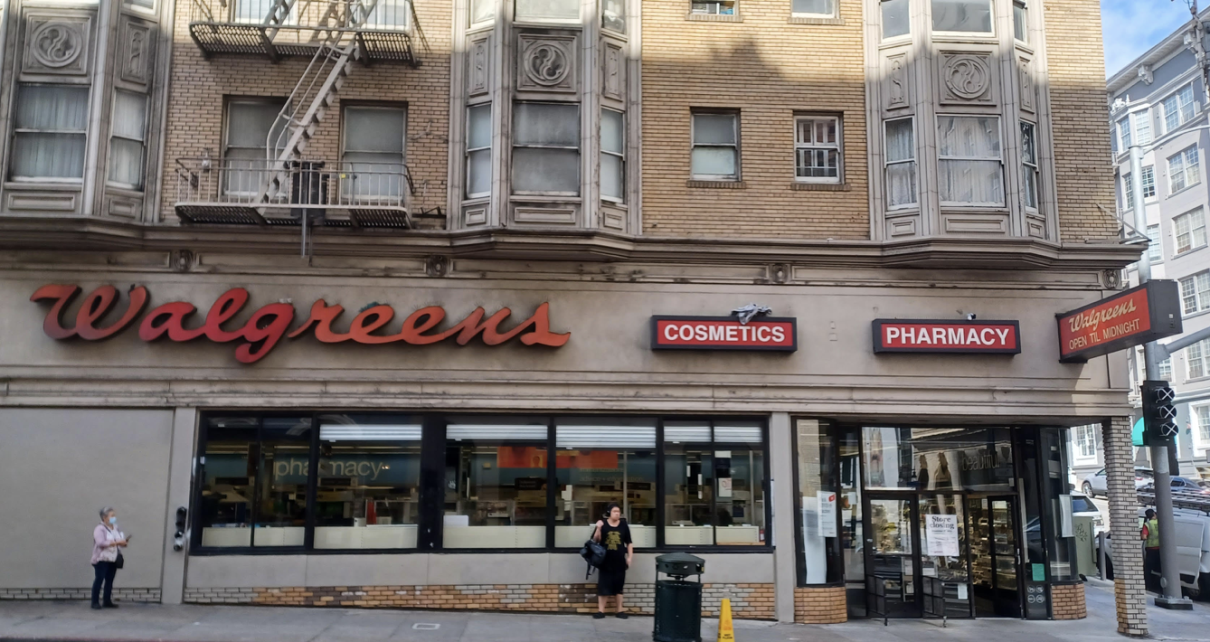
Walgreen's 7th San Francisco store closing. (Photo: Sebastian)
San Francisco’s Latest Proposal: A Curfew on Corner Markets
This proposed curfew is yet another symptom of left-wing progressive governance gone awry
By Richie Greenberg, January 7, 2026 12:32 pm
This week, two members of San Francisco’s Board of Supervisors Matt Dorsey and Bilal Mahmood jointly introduced controversial legislation to expand an overnight curfew on corner stores and convenience markets from San Francisco’s Tenderloin into South of Market (SoMa) and the Sixth Street corridor neighborhoods. This new 18-month pilot program would force many small retail establishments to close between midnight and 5 a.m., with liquor-licensed stores restricted from 2 a.m. onward.
The overnight retail curfew is a strategy that works, and it will help make 6th Street and West SoMa a less welcoming place for public drug use and drug dealing.
A hearing on the legislation I’m co-sponsoring with Sup. @BilalMahmood is planned for later this month. (1/3) pic.twitter.com/voimKQ1iMX
— Matt Dorsey (@mattdorsey) January 6, 2026
This proposed curfew is yet another symptom of left-wing progressive governance gone awry, prioritizing superficial, indirect “interventions” over personal responsibility, tough enforcement, and accountability. Real solutions, one would think, demand arresting and prosecuting criminals (ie. drug dealers), not regulating innocent entrepreneurs in the vicinity in hopes the nefarious activity would disappear.
And yet, of course, there is the persistent elephant in the room: Why is the Board of Supervisors actively shielding drug dealers, those transnational narcoterrorists operating freely on our streets?
The financial burden on neighborhood business owners is undeniable and simply unjust. These corner stores, often the only sources of essentials in high-crime neighborhoods, face potentially steep revenue losses from curtailed hours. Merchants in an earlier Tenderloin neighborhood pilot program reported significant drops in sales, with those late-night shifts critical to survival. Potential job cuts for workers and the threat of city-imposed $1,000-per-hour fines add insult to injury should they stay open. These are not faceless mega-corporations but hardworking families already struggling in underserved areas. Forcing them to sacrifice for the city’s enforcement failures amounts to collective punishment, a classic big-government overreach that crushes private enterprise without addressing root causes.
Residents, particularly low-income and vulnerable ones, suffer indirectly. Night-shift workers, those in single-room occupancy hotels without kitchens, and others reliant on 24-hour access to food or hygiene items are left inconvenienced or endangered. Darkened streets without the natural surveillance of open shops invite more crime, not less. There will be displacement: drug addicts and dealers may simply shift activities, to spill into adjacent neighborhoods like the Mission and northwards into Nob Hill, spreading hazards such as needles, violence, and filth. It merely relocates the chaos, punishing more taxpayers.
Most egregiously, the proposal sidesteps direct confrontation with criminals. By focusing on environmental deterrence, closing lighted gathering spots, it allows dealers to adapt, relocating or changing hours while evading arrests. True deterrence requires escalating consequences for drug crimes, not indirect measures that let offenders operate with impunity by moving elsewhere. San Francisco claims ongoing federal-local collaborations and raids, but the persistence of these markets (and the need for this curfew) tells a different story.
This brings us to Mayor Daniel Lurie’s role. In late 2025, the Trump administration was prepared to surge federal law enforcement into the city to tackle rampant drug markets and crime. President Trump held off only after a direct telephone conversation with Lurie, who assured substantial local progress. Yet, mere months later, Supervisors introduce this expansion, clear evidence that Lurie’s tactics are failing.
Lenient approaches, “harm reduction” over accountability and diversion over prosecution, enable and prolong the dysfunction. San Francisco’s curfew expansion proves we need aggressive arrests, swift prosecutions, and policies demanding personal responsibility.


- Greenberg: Yes, Trump Has the Legal Power to Strike - March 2, 2026
- Greenberg: Newsom Once Again Proves He’s Unfit to Lead - February 26, 2026
- Greenberg: The Irony – Ineligible Blacks May Fund SF Reparations - February 22, 2026
RELATED ARTICLES
-
 November 19, 2024
 -
-
March 7, 2024
“demand arresting and prosecuting criminals (ie. drug dealers)”
Wrong again, Richie.
Why is everyone afraid to say this? Don’t just put drug dealers in jail. Put anyone in possession of illegal drugs in jail…like we used to do. Like when we had no homeless addict problem. Anything else will never work.
Send a drug sniffing dog out there, and those addicts will get their asses right off the street.
The once great city of San Francisco is doomed as long as the criminal Democrat thug mafia has a stranglehold on power there? Maybe an exorcism would help?
Encroaching communism in SF. Punish the business owner and not the criminals.