
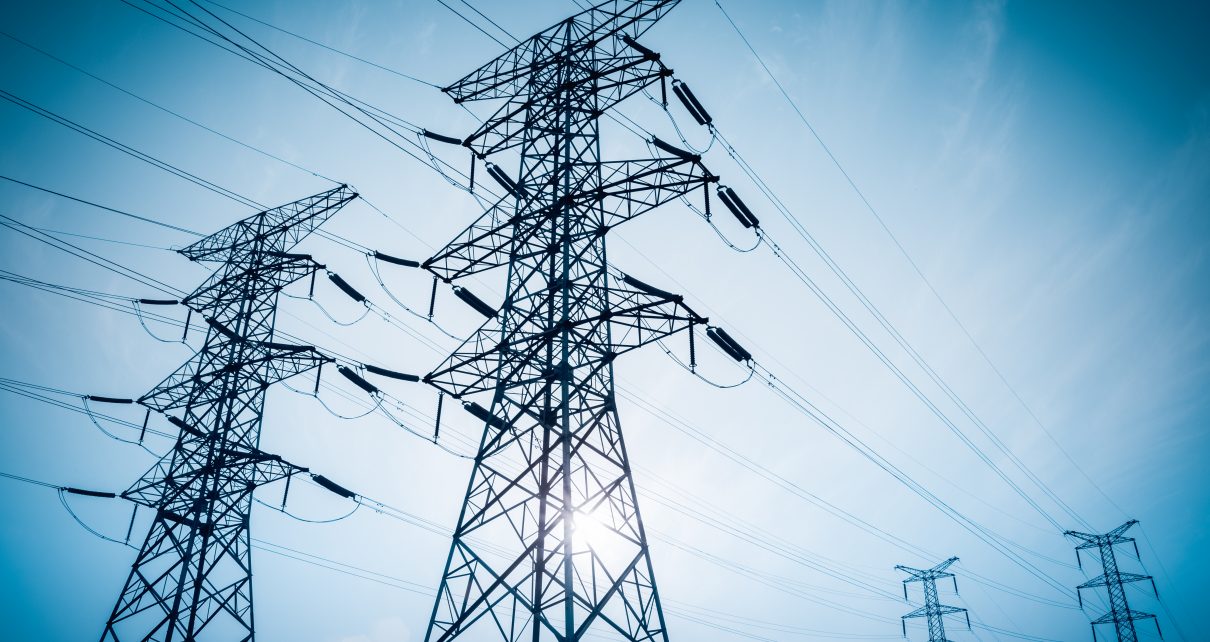
Electricity Transmission Pylon at Dusk. (Photo: chuyuss/Shutterstock)
Ringside: Why Data Centers Will Create Electricity Abundance
When considering how that electricity will be generated, the scenario gets quite interesting
By Edward Ring, March 12, 2026 4:00 am
 There is concern that the energy requirements of data centers will consume so much electricity that demand will overwhelm supply. While this is certainly a possible outcome, the actual impact may have the opposite effect.
For starters, while the total consumption of electricity by data centers is significant and growing, credible estimates point to manageable amounts. For example, an article published by the Information Technology and Innovation Foundation, published in November 2025, summarized estimates from several top tier research institutions: McKinsey, Berkeley National Lab, Goldman Sachs, EPRI, and Grid Strategies. All five of them estimated total data center electricity consumption in the U.S. in 2023 at 150 terawatt-hours (150,000 gigawatt-hours). But their future estimates sharply diverge. At the end of their projection range, for 2028, their estimates varied from a low of 200 terawatt-hours to a high of 450 terawatt-hours.
To put this in perspective, total U.S. electricity consumption in 2024 was estimated at 4 million gigawatt-hours, or 4,000 terawatt-hours. So data centers consumed not quite 4 percent of total U.S. electrical consumption in 2024, and are projected to consume as much as 11.3 percent of total U.S. electrical consumption in 2028. This higher percentage is corroborated by the International Energy Agency’s “base case” scenario, where they estimate total electricity consumption by U.S. data centers to reach 426 terawatt-hours by 2030.
Piling another 10+ percent of demand onto the U.S. electricity grid is indeed a big deal, but compared to the goals of electrification – at least here in California – for other sectors such as home heating/cooling and EVs, it is the smaller slice. California currently consumes not quite 300,000 gigawatt-hours per year, with an official goal to increase that to 500,000 GWh by 2045. As we estimated in December (EVs and California’s Future Demand for Electricity), converting the state’s entire road-based transportation fleet to EVs would consume approximately 120,000 GWh per year, whereas if data centers used 11.3 percent of California’s current electricity demand, that would only be around 34,000 GWh.
Still, that’s a lot of juice. But when considering how that electricity will be generated, the scenario gets quite interesting. Because the tech companies that are pouring money into data centers aren’t going to balk at developing their own onsite sources of electricity. Across America, tech companies are investing in a variety of ways to produce their own power, and they are definitely pursuing an all-of-the-above strategy.
For example, Meta, Microsoft, and Amazon have all signed power purchase agreements to extend the operating lifespans of large nuclear power plants. At the same time, the tech giants are investing in Small Modular Reactors, an emerging technology with enormous potential.
If nuclear is the awkward step-child of the clean electricity family, natural gas is the unwelcome uncle who won’t leave. But that’s not stopping the tech giants. A January 2026 report in Global Energy Monitor estimates that in 2025 in the United States, over 250 gigawatts of gas-fired electricity generating plants were in development, with at least one-third slated to directly power data centers on-site.
This is an astonishing amount of electricity. To verify, I went to the source, “Global Oil and Gas Plant Tracker, January 2026” and found the following for the United States: Announced, 62.8 GW; Pre-Construction, 159.5 GW; Construction: 29.5 GW. Total, 252 GW. At 90 percent uptime, which we may expect from a baseload natural gas power plant, that equals nearly 2 million GWh per year.
Needless to say, the tech giants are also turning to wind, solar, and battery storage to power their data centers. We may criticize the subsidies that sustain these technologies, as well as their impact, but when it comes to energy, you have to pick your poison. Nothing is totally unsubsidized, and nothing is totally clean. The potential for unsubsidized solar PV electricity and batteries to compete with natural gas power is coming, even if by a full system levelized cost analysis it may not have arrived just yet. The tech giants are hedging their bets, and with billions to burn, are also investing heavily in renewables.
It doesn’t end there. The beauty of tech giants entering the energy space is not only their access to stupefying amounts of cash to pay for their projects. They also bring with them a culture of urgency. They also bring with them a culture of urgency. These companies are run by individuals who have spent their careers measuring the timeline for project launches in months. They will not accept decade long delays, and they will use all their power to adhere to the timelines to which they have become accustomed.
That brings with it unpleasant side effects that we have to manage. These data centers will have to recycle their water. They will need to blend their massive data centers into the landscape and be good neighbors to the people disrupted by these behemoths. But when it comes to energy, it is quite likely they’re going to invest so much, and stimulate so much innovation, that their onsite generators will export power to the grid instead of draining it.
The price of electricity is bound to come down. Innovation across every possible source of electricity – large and small scale nuclear, natural gas, solar, geothermal (a big wild card), novel solutions such as linear motors and other advances we can’t possibly predict – ensures that the days of grossly overpriced electricity are numbered. And that, at least that, is a very good thing.


- Ringside: Where Does California Get its Energy? - September 2, 2026
- Ringside: Without Sediment Removal in the Delta, Catastrophic Flooding is Coming to California - August 27, 2026
- Ringside: Iron Air Batteries – Niche, or Next Big Thing? - August 19, 2026
RELATED ARTICLES
-
-
 July 23, 2025
 -
 December 4, 2025
I love how nuclear power was the new end of the world boogyman. Then along comes Big Tech who snaps their fingers and now “Vee love nuclear power, don’t vee!”
“The potential for unsubsidized solar PV electricity and batteries to compete with natural gas power is coming, even if by a full system levelized cost analysis it may not have arrived just yet. ”
All you need is a week of cloud cover or no wind, and you realize this isn’t going to work.