

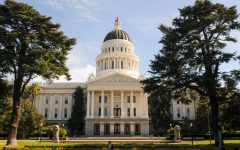
California Assembly. (Photo: Katy Grimes for California Globe)
Some More California Legislative Drafting Best Practices
I offer the following observations and suggestions for bill drafting
By Chris Micheli, May 21, 2026 2:00 pm
In reviewing some of the hundreds of bills being considered during the 2026 California Legislative Session, I offer the following observations and suggestions for bill drafting.
Separate these subdivisions from findings and declarations:
The Legislature finds and declares all of the following:
….
The Legislature reaffirms its intention stated in Senate Bill 823 (Chapter 337 of the Statutes of 2020) to ensure that….
For these reasons, the Legislature reaffirms the longstanding principle that….
The two items should be separate because they are unrelated items.
For definitions, what approach should be taken?
For purposes of this section, the following definitions apply:
For purposes of this part, the following definitions shall apply:
The definitions set forth in Section 25405 of the Health and Safety Code apply for purposes of this section.
The three examples above are the standard language.
I don’t think this should be used:
As used in this part:
As used in this chapter, the following terms have the following meanings:
The first example is too limited. The second example does not need
Here is the proper way of drafting a repeal or sunset clause:
This chapter shall remain in effect only until January 1, 2032, and as of that date is repealed.
Here is the proper way of drafting combined findings and declarations and intent statements:
(a) The Legislature finds and declares all of the following:
(1) Existing state law declares that it is the established policy of the state that every human being has the right to safe, clean, affordable, and accessible water adequate for human consumption, cooking, and sanitary purposes.
(2) In 2015, the Legislature passed Assembly Bill 401 (Chapter 662 of the Statutes of 2015) that required the State Water Resources Control Board to develop a plan, informed by the public and the State Board of Equalization, for a statewide low-income rate assistance for water.
(3) In 2020, the state board released a report pursuant to Assembly Bill 401 (Chapter 662 of the Statutes of 2015), which is entitled “Recommendations for Implementation of a Statewide Low-Income Water Rate Assistance Program,” that found that it would take over one hundred forty million dollars ($140,000,000) annually to create a low-income water rate assistance program.
(4) The cost of water has continued to rise, outpacing the rate of inflation and putting too many California families at risk of water shutoffs.
(5) Climate change adds additional cost pressure to water and sewer systems, which increasingly must invest in climate resilience.
(b) It is the intent of the Legislature that funding for a water affordability program be progressive, not create affordability challenges for ratepayers, and be durable.
Why is the above example the proper way? Because there are separate subdivisions. Subdivision (a) contains the legislative findings and declarations, while subdivision (b) contains the statement of legislative intent.
Common contingent enactment language:
Implementation of this chapter is contingent upon an appropriation by the Legislature for its purposes.
The most common contingency is based upon a funding requirement.
This statement should include an explanation:
The Legislature finds and declares that this chapter addresses a matter of statewide concern rather than a municipal affair as that term is used in Section 5 of Article XI of the California Constitution. Therefore, this chapter applies to all cities, including charter cities.
Compare the above example to the one below, which explains why it is a matter of statewide concern.
Here is the better way to draft such a clause:
The Legislature finds and declares that establishing consistent standards for local permitting fees on electric vehicle charging stations is a matter of statewide concern and is not a municipal affair as that term is used in Section 5 of Article XI of the California Constitution. Therefore, Section 1 of this act adding Chapter 7.7 (commencing with Section 66015.5) to Division 1 of Title 7 of the Government Code applies to all cities, including charter cities.
The above example explains why the bill is a matter of statewide concern.
Here is the proper way of drafting an operative date:
This section shall become operative on January 1, 2028.
The example above is a simple, straightforward statement that is required.
These statements should be re-worded because they are under findings and declarations:
(f) The Legislature declares that no one should experience hunger, especially veterans or their children.
(g) The Legislature encourages all efforts to reduce the number of veterans harmed by this cruel new federal policy and seeks to ensure that no hero experiences hunger.
This subdivision begins with legislative findings and declarations. At the end of the subdivision, are two new statements, first with a legislative declaration, and second with a legislative encouragement. These last two should be separate subdivisions.
Or they could be re-worded as follows (and remain in the findings and declarations):
(f) No one should experience hunger, especially veterans or their children.
(g) All efforts should be made to reduce the number of veterans harmed by this cruel new federal policy and seeks to ensure that no hero experiences hunger.
Why is legislative intent set forth twice in the same sentence?
(4) It is the intent of the Legislature that local agencies comply not only with the language of this section, but also the legislative intent to encourage the installation of electric vehicle charging stations and hydrogen-fueling stations by removing obstacles to, and minimizing costs of, permitting for charging and hydrogen-fueling stations so long as the action does not supersede the building official’s authority to identify and address higher priority life-safety situations.
I like this purpose of a new act:
This act shall be known, and may be cited, as the State Fire Marshal Fire Suppression Education and Training Safety Act.
The purpose of this act is to improve the performance and reliability of water- and chemical-based fire suppression systems by providing a means to certify and register any person who installs, alters, repairs, inspects, tests, maintains, performs safe-off, or adds appurtenances to those systems.
The purpose statement explains the reason for the new act in simply, straightforward language. Perhaps all bills should include a purpose statement?
Example of abrogating a court decision:
(b) It is the intent of the Legislature to abrogate the holdings in cases such as Vesely v. Sager (1971) 5 Cal.3d 153, Bernhard v. Harrah’s Club (1976) 16 Cal.3d 313, and Coulter v. Superior Court (1978) 21 Cal.3d 144 and to reinstate the prior judicial interpretation of this section as it relates to proximate cause for injuries incurred as a result of furnishing alcoholic beverages to an intoxicated person, namely that the furnishing of alcoholic beverages is not the proximate cause of injuries resulting from intoxication, but rather the consumption of alcoholic beverages is the proximate cause of injuries inflicted upon another by an intoxicated person.
Example of preemption language:
(b) It is the intent of the Legislature to occupy the field of regulation of disclosure related to either of the following:
(1) Deaths occurring upon real property.
(2) The HIV-positive status of a prior occupant in situations affecting the transfer of real property or any estate or interest in real property.
Both of these provisions are unnecessary because the courts already apply these provisions:
The provisions of this bill shall be construed and applied in a manner that is consistent with the requirements of the California Constitution and the Constitution of the United States.
The provisions of this act are severable. If any provision of this act or its application is held invalid, that invalidity shall not affect other provisions or applications that can be given effect without the invalid provision or application.
I just don’t understand why folks want these provisions in state law. They are simply unnecessary and they clog the Codes with language that does not need to be there.
Similarly, this statement is unnecessary in state statute:
This section does not limit the Attorney General’s authority under the California Constitution or any applicable state law.
Is the AG’s authority in doubt? I don’t think so. Yet, folks insist upon having these types of statements in California law. Why?
Examples of contingent enactment language (most common with an appropriation):
The implementation of this section is contingent upon an appropriation for its purposes by the Legislature in the annual Budget Act or another act.
Implementation of this article shall be contingent upon appropriation by the Legislature.
Two ways of doing multiple legislative intent statements:
(b) It is the intent of the Legislature to do both of the following:
(1) Address the use of PFAS pesticides as a class and reduce the presence of all PFAS pesticides on California-grown produce and in California’s soil, air, and water.
(2) Begin phasing out the use of PFAS pesticides already phased out elsewhere and to take additional steps to address other PFAS in pesticides.
OR
(b) It is the intent of the Legislature in enacting this to ensure that all off-highway motor vehicle operators are educated on the safe operation of off-highway motor vehicles, including adherence to existing laws, trail etiquette, best off-highway motor vehicle recreation practices, environmental protection and stewardship of public lands, protecting of cultural and natural resources, and reducing off-highway motor vehicle accident and injury rates through a mandatory safety program.
(c) It is further the intent of the Legislature to promote responsible off-highway motor vehicle operation for the preservation of recreational opportunities and to increase access to recreational opportunities throughout California.
I think the second example is the one most often found in the California Codes, but either approach works.
Narrow, mandatory grant of rulemaking authority
The Department of Justice shall promulgate regulations necessary to implement the provisions of this section.
Narrow, discretionary grant of rulemaking authority:
The Attorney General may issue regulations to further the purposes of this section.
Broad, discretionary grant of rulemaking authority:
The department may prescribe rules, guidelines, procedures, or other guidance to carry out the purposes of this chapter.
New statement?
The objectives of the state’s policy with regard to…
We set forth “state policy” in a number of California Codes. But this variation is different. This describes the “objectives” of the state policy. This approach is diverging from standardized language, which we should refrain from doing.
Interesting subdivision:
(d) (1) (A) This section shall be implemented upon an appropriation made by the Legislature for this purpose.
(B) It is the intent of the Legislature that an appropriation pursuant to subparagraph (A) consist of moneys from grants or other contributions from local, private, or philanthropic sources for the purposes expressed in this chapter.
(2) This section shall not be applicable to UCLA unless the Regents of the University of California, by resolution, make this section applicable.
(3) The two-year pilot program described in this section shall be implemented for the 2027 and 2028 calendar years, or two subsequent calendar years, whichever is earlier based on when the appropriation described in paragraph (1) is made available.
Why is it interesting to me? It has contingent language (“implemented upon an appropriation”), detailed statement of legislative intent, inapplicability unless the UC Regents adopt it, and a pilot program.
Why is this necessary?
This act shall be known, and may be cited, as the Beneficial Fire Capacity Act.
Why add that the act can be cited by its name? It already says that the act is known as the specified act. The additional clause is unnecessary.
Instead, this is the better approach:
This title shall be known as the “California Emergency Mortgage Relief Act.”
Short and sweet. This is all that is needed.
I like this phrase for a final legislative finding and declaration:
It is therefore necessary to enact …
I think this clause should be at the end of every set of legislative findings and declarations.
These are clear, concise statements:
It is the intent of the legislature to clarify that digital financial assets are intangible property that are subject to the Unclaimed Property Law.
It is the intent of the Legislature to eliminate the assessment of certain fees on low-income Californians who cannot afford to pay court-ordered debt.
There are not too many of these bills:
An act to amend, repeal, and add Section 2401 of the Business and Professions Code, relating to healing arts.
This bill amends Section 2401 of the Business and Professions Code to, among other things, become inoperative on July 1, 2037, and be repealed on January 1, 2038. This bill adds Section 2401 to become operative on July 1, 2037.


- Consumer Privacy Protection - September 20, 2026
- California’s Online Violence Prevention Act - September 19, 2026
- Data Broker Registration - September 19, 2026
RELATED ARTICLES
-
 September 11, 2024
 -
 August 19, 2025
 -
 October 30, 2025