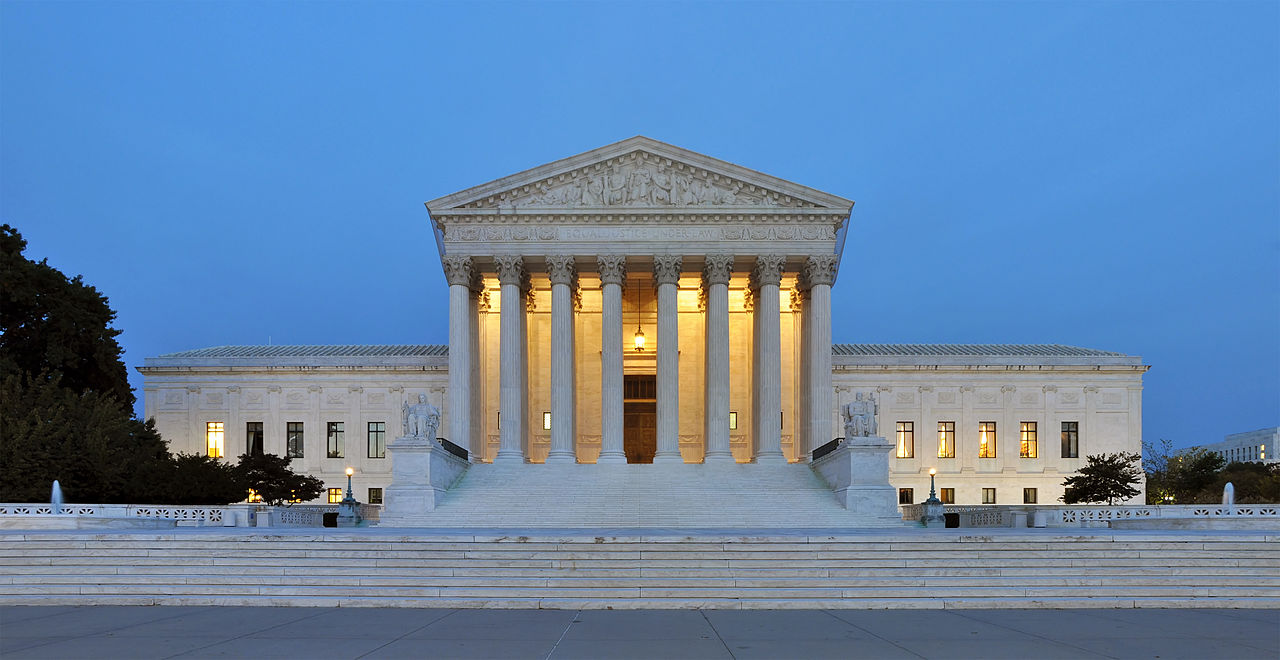
Supreme Court of the United States. (Photo: U.S. Supreme Court)
The Second Circuit Just Narrowed Religious Liberty – Did It Misread the Supreme Court’s Remand?
A federal appeals court transformed what appeared to be a broader Supreme Court protection for parental religious rights into a much narrower rule—one that could affect California as much as New York.
By Rita Barnett-Rose, July 14, 2026 7:00 am
Parents hoping the U.S. Supreme Court had quietly opened the door to restoring religious exemptions to mandatory school vaccination just suffered a major setback. On June 30, 2026, the Second Circuit Court of Appeals once again upheld New York’s repeal of its religious exemption, despite the Supreme Court’s earlier decision vacating that very judgment and ordering the court to reconsider the case.
The ruling is particularly significant for Californians. California eliminated its religious exemption in 2015, and New York followed four years later. The New York case, Miller v. McDonald, arose after Amish schools were heavily fined for admitting unvaccinated students whose parents believe vaccination violates their sincere religious convictions.
The reason many expected a different outcome lies in another recent Supreme Court decision, Mahmoud v. Taylor. There, the Court held that Maryland parents with sincere religious objections could opt their children out of mandatory LGBTQ-themed curriculum because the State had substantially interfered with their right to direct their children’s religious upbringing. Relying heavily on Wisconsin v. Yoder—the landmark case protecting Amish parents from compulsory high school attendance—the Court emphasized that Yoder announced a broader constitutional principle protecting parents whenever government substantially interferes with their children’s religious development. It was on the basis of that decision that the Supreme Court vacated Miller and ordered the Second Circuit to reconsider the case.
Many understood the remand as a signal that Mahmoud might extend beyond LGBTQ curriculum to other government actions that substantially burden religious exercise—including compulsory vaccination.
Instead, the Second Circuit reached essentially the same result by reading Mahmoud far more narrowly.
Rather than asking whether New York’s repeal substantially burdened the Amish plaintiffs’ sincere religious exercise, the court first asked whether the burden was “of the same character” as the burden recognized in Mahmoud. That seemingly small shift became the entire case.
The Supreme Court had already supplied the relevant definition. A burden is “of the same character,” it explained, when government substantially interferes with a child’s religious development and poses a “very real threat of undermining the religious beliefs and practices the parents wish to instill.”
The Second Circuit adopted a different definition. Instead of relying on the Supreme Court’s explanation, it derived the rule from the facts of Mahmoud itself and from Mirabelli v. Bonta, another parental-rights case involving school gender-identity policies. The result was a much narrower constitutional rule. Under the Second Circuit’s approach, the protected burden becomes school-based ideological conflict—particularly disputes involving LGBTQ curriculum or gender-identity policies—rather than substantial interference with religious upbringing generally.
That reading is difficult to reconcile with either Mahmoud or Yoder.
Yoder was never about curriculum. It involved compulsory school attendance beyond the eighth grade because Amish parents believed continued attendance would undermine their children’s religious upbringing. The constitutional injury arose from the government’s interference with religious formation—not from any particular ideological lesson being taught. The same principle could apply in many contexts unrelated to LGBTQ curriculum. A school policy requiring Saturday attendance, for example, could substantially burden Orthodox Jewish families without attempting to persuade children of any competing ideology.
Having defined the protected burden as school-based ideological conflict, the Second Circuit then concluded that compulsory vaccination is not ideological at all but merely a “public health measure.” Because vaccination does not involve classroom instruction or ideological messaging, the court held that it falls outside the type of burden recognized in Mahmoud.
That characterization effectively decides the case before the constitutional analysis ever begins.
For many religious believers, compulsory vaccination is not merely a public-health policy. It raises profound questions of conscience, parental authority, bodily integrity and religious obligation. The mere existence of religious exemptions for decades reflects an acknowledgment by legislatures themselves that compulsory vaccination may conflict with sincere religious convictions. The constitutional question has never been whether those convictions exist; it has been whether the Constitution requires states to accommodate them. By declaring vaccination to be merely a public-health measure, the Second Circuit sidesteps that constitutional question altogether.
The Supreme Court did not send Miller back because it mistook the case for an LGBTQ curriculum dispute. The Justices knew they were dealing with compulsory vaccination. Their remand suggested that the constitutional principle announced in Mahmoud might extend beyond its particular facts.
The Second Circuit chose the opposite path. Rather than treating Mahmoud as a broader protection for religious exercise, it transformed the decision into a much narrower rule largely confined to school-based ideological disputes.
The Amish plaintiffs will almost certainly return to the Supreme Court. If the Justices grant review, the central question will not simply be whether states must recognize religious exemptions to vaccination. It will be whether Mahmoud announced a broader constitutional framework protecting parents whenever government substantially interferes with their children’s religious upbringing—or whether the Second Circuit was right to reduce it to little more than an LGBTQ curriculum decision.


- Federal Judge Enjoins California Medical Boards from Punishing Doctors for Rejecting the Government’s COVID Narrative - August 7, 2026
- The Second Circuit Just Narrowed Religious Liberty – Did It Misread the Supreme Court’s Remand? - July 14, 2026
- Boston Activist Judge Decides He Alone Can Set Federal Health Policy - March 17, 2026