
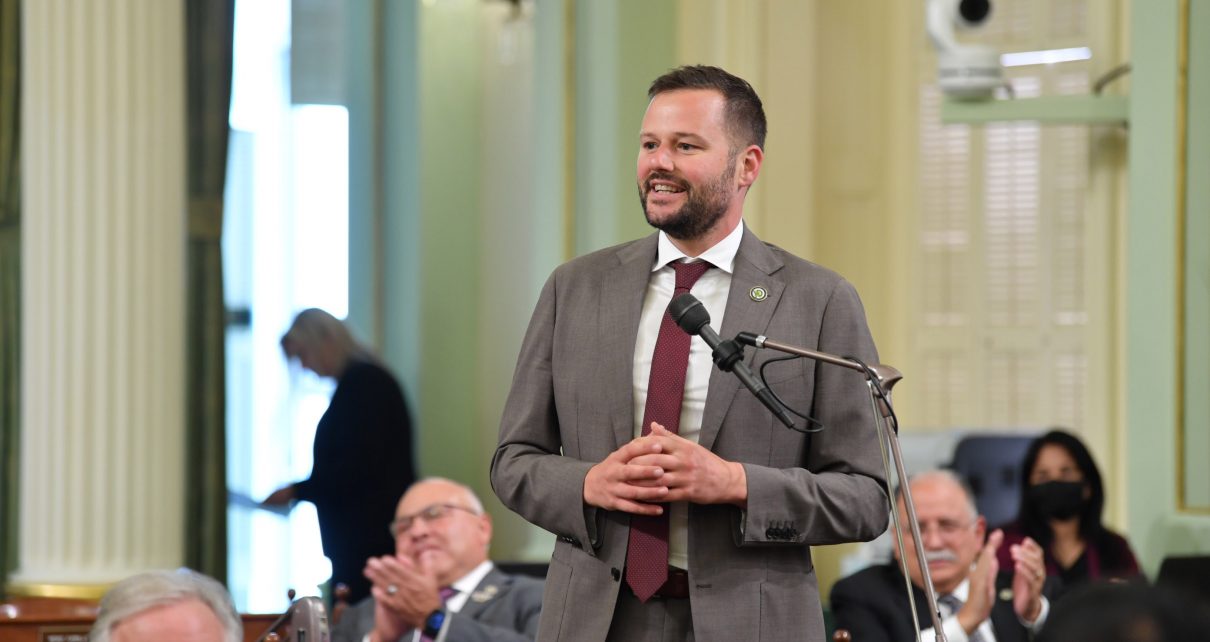
Assemblyman Matt Haney (Photo: a17.asmdc.org)
California Bill Authorizes Public Schools to Celebrate Muslim Holy Days in Curriculum
It is selective accommodation, while Christian holidays get watered down
By Katy Grimes, July 24, 2026 1:20 pm
AB 2017 by Assemblyman Matt Haney (D-San Francisco) would add the Muslim holidays of Eid al-Fitr and Eid al-Adha to California’s list of official state holidays.
According to the bill analysis, AB 2017 authorizes K-12 public schools and community colleges to close on the first day of the month of Shawwal in the Islamic lunar calendar (Eid al-Fitr) and on the 10th day of Dhu al-Hijjah (Eid al-Adha). It establishes both as state holidays and authorizes any state employee to elect eight hours of holiday credit of each in lieu of eight hours of personal holiday credit.
The bill excludes these holidays from judicial holidays and allows public schools and community colleges to close on those days if local boards and labor unions agree. The State Board of Education may also develop a model curriculum guide.
AB 2017 passed the Assembly 64-1 in May and has already been heard in two Senate committees. Assemblymember Carl DeMaio voted no, and 15 other lawmakers did not vote on the bill.
Bill sponsors—the Council on American-Islamic Relations California (CAIR-CA), the California Commission on Asian and Pacific Islander American Affairs (CAPIAA), and the recently formed Muslim Impact Council—frame the measure as a matter of “equity” so Muslim students and workers do not have to choose between religious observance and school or work, Haney said.
AB-2017-Eid-Holiday-Fact-Sheet-1It mirrors the recent recognition of Diwali under Assembly Bill 268 by Assemblymember Ash Kalra (D-San José). That measure authorizes K-12 public schools and community colleges to close on the 15th day of Kartik in the Hindu lunar calendar (known as Diwali), establishes Diwali as a state holiday, and allows any state employee to elect eight hours of holiday credit for the occasion in lieu of personal holiday credit.
California’s official state holidays, observed by state government offices and for most state employees, per the California Secretary of State and CalHR, are:
- New Year’s Day — January 1
- Martin Luther King Jr. Day — Third Monday in January
- Presidents’ Day — Third Monday in February
- Farmworkers Day (also known as César Chávez Day) — March 31
- Memorial Day — Last Monday in May
- Independence Day — July 4
- Labor Day — First Monday in September
- Veterans Day — November 11
- Thanksgiving Day — Fourth Thursday in November
- Day after Thanksgiving
- Christmas Day — December 25
Additional optional or elective holidays for many state employees include Lunar New Year, Genocide Remembrance Day (April 24), Diwali, Juneteenth (June 19), and Native American Day (fourth Friday in September). These are not mandatory closures for all state offices, but state employees may take holiday credit in place of a personal holiday.
You will notice there are no official state Jewish holidays or Buddhist holidays.
Christians remain the largest religious group in California, with Pew reporting 55% of adults identifying as Christian, and Catholics form a large plurality within that. Muslims are a small minority – only 1%.

Preferential formal recognition plus curriculum celebration for one minority faith, while majority Christian cultural markers are often generically renamed, is not strict neutrality. It is selective accommodation. Similar optional recognition already exists or is expanding for other non-Christian observances (Diwali, Lunar New Year etc.). Pure consistency would either secularize all religious holidays uniformly or treat major faiths even-handedly without privileging celebration of one.
In a statement, Assemblyman Haney said:
“California is home to one of the largest and most vibrant Muslim communities in the country, and their traditions deserve recognition and respect. No student should have to choose between celebrating one of the holiest days of their faith and showing up to school, and no worker should feel they have to sacrifice their religious observance. AB 2017 is about making sure Muslim Californians are seen, valued, and treated with the same dignity as every other community in our state.”
Jews and Buddhists anyone?
“California has more than 500,000 Muslim residents, including students, educators, healthcare workers, engineers, small business owners, and public employees who help keep the state’s communities and economy running. Yet when Eid arrives each year, many Muslim students and workers must take extraordinary steps simply to observe one of the most sacred days of their faith.
“Students are forced to make the choice between observing one of the holiest days in their faith and missing classes, exams, or school events, while workers often feel pressure to use vacation days or request special permission to celebrate with their families.”
“Advocates say the bill would send an important message of inclusion and belonging at a time when Muslim communities continue to face discrimination and rising Islamophobia across the country.”
Christmas Day remains a federal holiday, and schools close nationwide around December 25. Thanksgiving—historically rooted in Christian tradition but now largely secularized—along with other civic holidays, continues to be observed.
While California Democrats expand recognition of religious holidays for Muslims and Hindus, they have also secularized and renamed school breaks that coincide with Christmas and Easter, now commonly called “Winter Break” and “Spring Break.”
The left has also challenged Good Friday as an official religious school holiday; it was discontinued as a national holiday by the U.S. government after 1978.
The California Family Council explains more about AB 2017:
California Family Council believes every student should be able to take time off for any religious holiday. That is not our objection here.
Our objection is to the state authorizing and promoting the celebration of specific religious holidays inside public school classrooms.
When CFC Vice President Greg Burt testified against AB 268 last year, he made this point directly: if you are teaching students to celebrate a religious holiday, that is not neutral. The state is not simply accommodating the beliefs of Muslim or Hindu families; it is directing public school teachers to lead exercises that acknowledge and celebrate the religious meaning of these observances. That is the government taking sides on religion, and it is constitutionally different from simply excusing a student’s absence.
The First Amendment prohibits government from endorsing or specially favoring one religion over others. Writing specific religious holidays into state law by name, authorizing school celebration exercises for their theological content, and commissioning State Board of Education curriculum guides to promote that content, while no comparable treatment has been extended to Christian or Jewish holidays, is the kind of selective government action that triggers Establishment Clause concern.
The Globe will continue to monitor this bill.

A California native and Navy mom, Katy lives in Sacramento, CA.
- Gov. Newsom Claims He’s Offering Utility Bill Relief as California Utilities Are Up 30% - September 22, 2026
- California Avocado Growers Warn Cartel Influence Reaches U.S. Marketplace - September 22, 2026
- Russia’s Diesel Problem is Now Ours: ‘Russia Has Lost Control of its Diesel Oil Industry due to its War with Ukraine’ - September 21, 2026
RELATED ARTICLES
-
 November 15, 2024
 -
 July 19, 2022
 -
 July 22, 2022
According to the Global Terrorism Index 2026, nine of the top ten deadliest terrorist organizations globally are Islamist groups. So course, Democrats want to celebrate this.
Spot On!!
Funny how this just happened after Newsom absorbed the education department before voters could put a rational voice in charge.
Nothing like celebrating a religion that preaches getting rid of you. How are pinheads like this given the keys to our children’s futures?
Oh for God’s sake, do you think these ridiculous wannabe commie legislators could just GROW UP and knock it off for a while? No, of course not.
Who exactly do these idiots think is buying this stuff? No one and least of all the people they think they are pandering to. Just stop it.
Underlying much of this incredible BS is the anti-American rhetoric that has been pushed on students in secondary schools and universities for the past 30 years. Many of California’s democrat legislators promote a “hate America first” agenda.
SEIU and teachers unions scamming yet again for more paid time off. Kill this bill. Consolidate this into one “multi-holiday” like they had to do with ‘President’s Day. Time to ban all ‘Christmas vacation” time off too – no reason they get two weeks or more off to celebrate something they admit revulses them.
Government employees have six ways to Sunday, to keep addi more paid time off to the taxpayer checkbook. Tarting up this latest paid time off scam up with their peculiar brand of multi-cultural virtue-signaling is beyond the pale.
Get your hands out of the taxpayer cookie jar, Democrats. Enough is enough.
Opening Pandora’s Box. Is Haney pandering to islamist groups or is he being paid off? Out of 38-39 million people, only 500k muslims and two state holidays coming in. So there will be two muslim holidays, one Christian holiday, zero Jewish holidays, zero Buddhist holidays and the state got rid of Columbus Day (an insult to millions of Californians of Italian descent that helped build California and rebuild SF after the 1906 quake). Notice they are not applying this to the judicial branch? Is Sharia law the reason? Now, the state should add Chanukah, Passover, Purim, Ash Wednesday, Good Friday. I am not familiar with Buddhist holidays. Are the atheists speaking out? They usually do on anything involving Christianity.
Students in CA public schools learn little enough as it is. Why add more holidays to accommodate 1% of the population, and a part of the population hostile to the USA at that? Like so many things in CA, follow the money…
Do not need another state holiday. The state is not preventing this group from celebrating their holiday. The cost of a state holiday alone should say enough. Career politicians like Haney need to experience the real world before they decide to use government for their never ending pandering to little special interest groups. Every nationality and religion has days that are important to them. America is about assimilating. Freedom of religion allows you to celebrate your religion it does not require the state to shut down for you to celebrate. But it seems for many democrats, It’s their mantra to divide and conquer. Mr. Haney do something about the waste and fraud in California before you create more waste.