California Gas Prices and Taxes Still Highest Even With Price Drop
Over 90% of all vehicles in California rely on liquid fuels
By Katy Grimes, November 23, 2026 10:00 am
U.S. gasoline prices have fallen significantly since Election Day, November 3, 2026, when AAA reported the national average for regular gas at $4.15 per gallon, the highest on record for an Election Day.
Yet as of November 22, 2026, AAA’s national average is $3.64 per gallon.
That’s a drop of $0.51 per gallon since Election Day.
Gas prices just dropped to their lowest level in eight months, and drivers in 39 states are now paying under $4.00 a gallon.
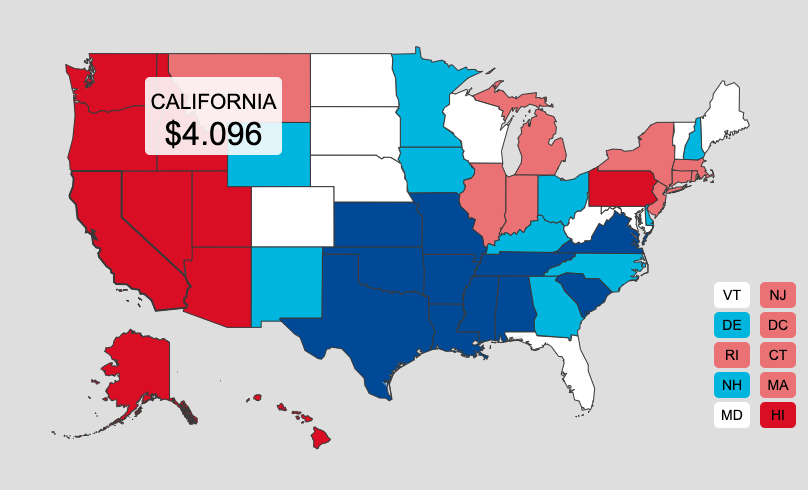
California is as dramatic, with gasoline averages on Election Day at approximately $5.89 per gallon.
The current gas prices in California are $5.47 per gallon.
This is a drop of roughly $o.42 per gallon in California in the three weeks since Election Day.

Clay Travis asked on X:
Gas prices were $4.49 a gallon in late September, now they are $3.68 a gallon, down nearly a dollar since voting started, the biggest drop in a generation, and still falling. The top election issue? Gas prices. Feels like prices were clearly manipulated here.
— Clay Travis (@ClayTravis) November 20, 2026
I replied asking on X who manipulated gas prices? This was an interesting reply:
“Best speculation I’ve heard is the London-based exchange that sets futures prices for benchmark Brent crude. They use an opaque electronic exchange that could hide algorithms similar to voting machines. But there’s probably something deeper going on. investopedia.com/terms/i/intern.”
California’s gas prices are still the highest in the lower 48: $5.47 per gallon, according to AAA. Hawaii inched higher than California at $5.59. But Hawaii has to import all of its oil/gas by oil tanker. In California, we grow enough to supply the entire state and the Western US.
Democrats who run the state have been regulating oil and gas out of the state and forced refinery closures, so California is importing gas via oil tankers from India via Russia, China, and Iraq.
California’s refining capacity has declined sharply, with dozens of refineries closed over decades. Recent and ongoing closures include Phillips 66 in Los Angeles and Valero in Benicia. In-state crude production has also fallen. The state has no major crude pipelines from the rest of the U.S., relies heavily on seaborne imports (60–75% of refining feedstock in recent years), and requires a unique low-emissions gasoline blend (CARBOB) that few refineries produce.
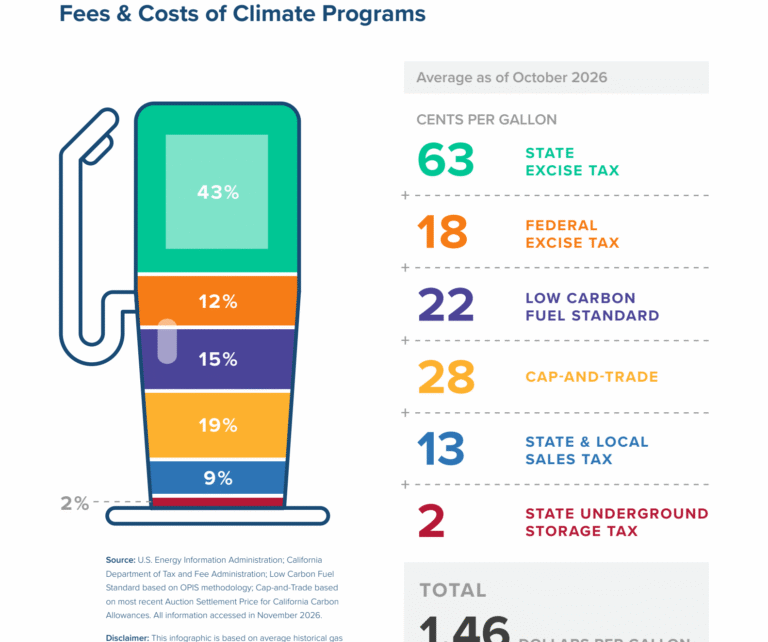
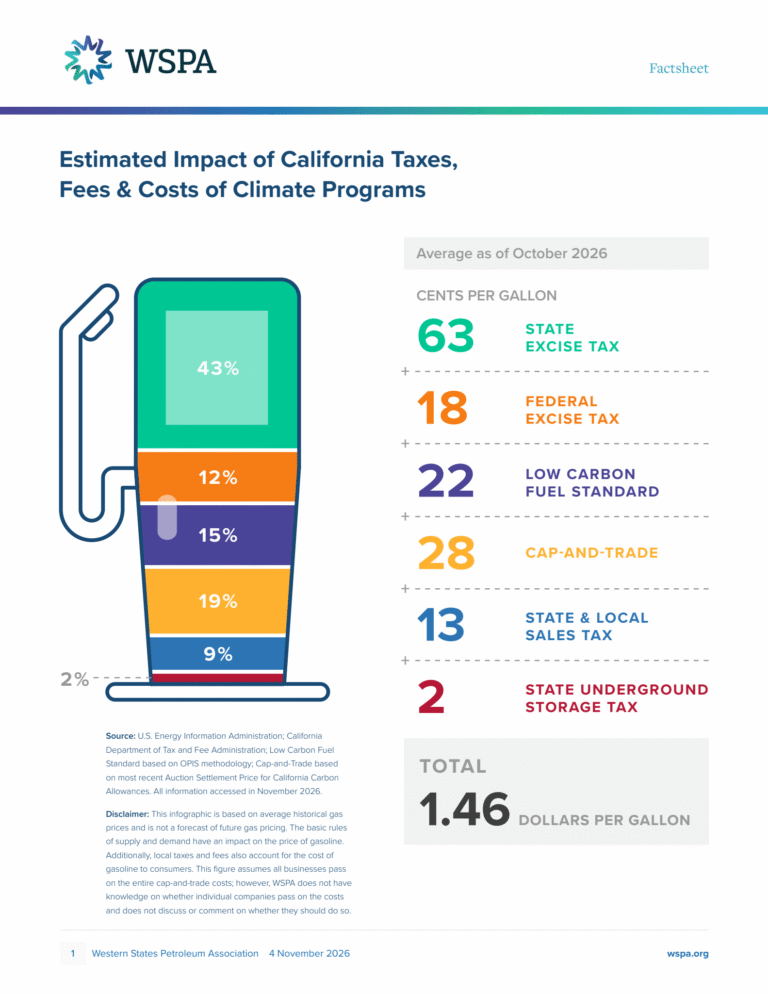
According to the Western States Petroleum Association, California’s gasoline taxes, fees, and add-ons, as of late 2026, total roughly $1.40–$1.50+ per gallon when including climate program costs, depending on location and current carbon prices.
“California politicians are choosing foreign oil and fuels over local jobs and lower costs. Nearly 25% of your gas money goes to state taxes and fees,” Chevron gas stations in California displayed banners on their pumps to help consumers better understand gasoline prices:

Percentage-based taxes
- State sales tax on gasoline: 2.25% (special reduced rate for motor vehicle fuel).This is applied to the price (including excise taxes), so it effectively taxes the tax. Local district taxes are added on top and vary by city/county (can add several more cents).
- Sales tax is prepaid at the wholesale level at 8¢/gal (July 2026–June 2027 rate).
Climate program costs paid by consumers
These are not traditional taxes but regulatory costs that refiners and suppliers pass on:
- Cap-and-Trade: 25–28¢/gal (based on carbon allowance auction prices)
- Low Carbon Fuel Standard (LCFS): 17–23¢/gal (based on credit prices)
And, while Governor-Elect Becerra is preparing to tax you a fee on every mile you drive, he appears to be more realistic toward the oil and gas industry, recognizing that most people still drive gas-powered cars.
CA has the highest gasoline prices in the U.S.
CA has the highest state excise tax on gasoline in the U.S.
CA has the highest diesel prices in the U.S.
CA has the highest jet fuel prices in the U.S. (48 contiguous states)
CA has the highest residential electricity rates in the lower 48 of the U.S.
CA has the greatest dependency on foreign oil suppliers in the U.S.
Refinery production for gasoline has fallen 22% in six years.
CA crude oil production has dropped 75% since 1991.
CA has the 5th largest crude oil reserves in the U.S.
CA crude oil imports from foreign sources have increased 866% since 1981.
The number of CA-based refineries has dropped 84% from 43 to 7 today.
Branded gasolines are different from unbranded…the data on this is established.
CA policymakers, legislators, and the Governor were warned about the potential of historically high prices in May 2025 and failed to prevent them.
Over 90% of all vehicles in California rely on liquid fuels.
Oil and gas experts USC Prof. Michael Mische and Mike Umbro reported for the Globe in May.
As noted in several news articles following the ending of the COP31 climate summit in Turkey, “COP Climate Talks Collapse as Nations Fail to Reach Agreement on Fossil Fuels:”
International divisions over fossil fuel reliance and climate financing derailed negotiations at the COP31 climate summit Sunday in Turkey, leaving participating countries without an agreed outcome for the first time since 2009.
The breakdown came after two weeks of negotiations, which extended two days beyond the scheduled Friday conclusion.
“The failure exposed disagreements over how quickly countries should transition away from fossil fuels and who should shoulder the financial burden of climate change policies,” NTD reported.
“The omission of language calling for a transition away from fossil fuels became a sticking point for the United Kingdom, Norway, and several Latin American and island nations” – oil producing nations.
Even with the pressure of the United Nations, countries are realizing moving away from oil and gas is disastrous for their economies.


A California native and Navy mom, Katy lives in Sacramento, CA.
- California Gas Prices and Taxes Still Highest Even With Price Drop - November 23, 2026
- 2025 Palisades Fire Retrial: Federal Jury Convicts Jonathan Rinderknecht - November 23, 2026
- US Senate Passes Bipartisan Permitting Reform Bill to Boost Much Needed Energy Projects - November 22, 2026