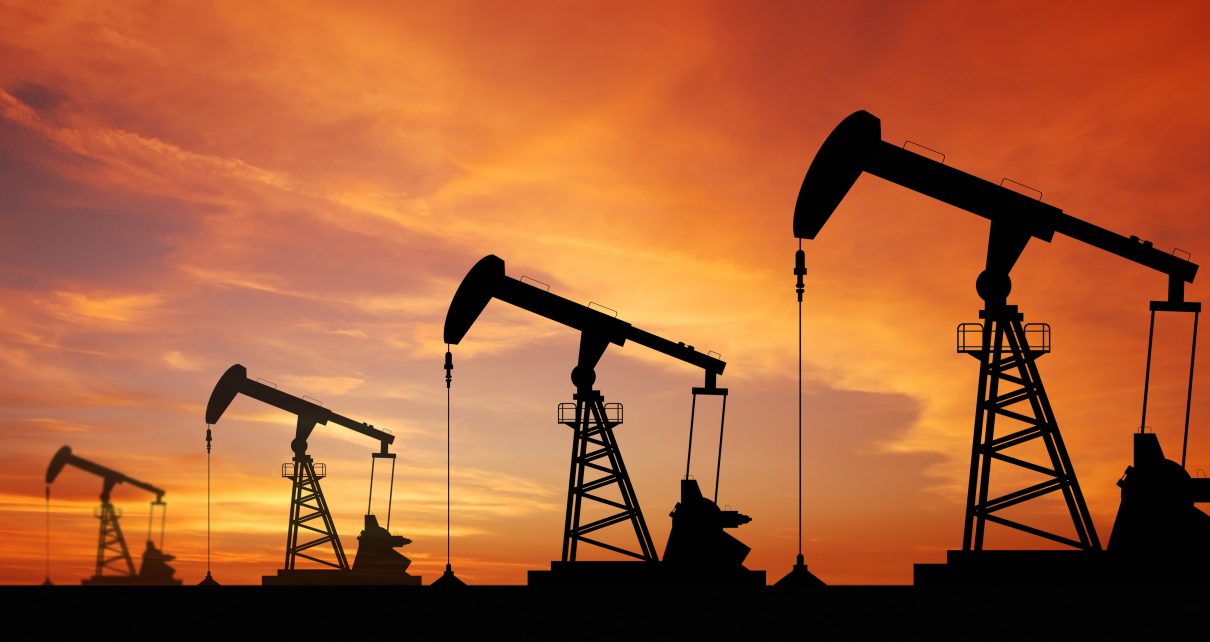
Oil rigs in the sunset. (Photo: Thaiview/Shutterstock)
US Senate Passes Bipartisan Permitting Reform Bill to Boost Much Needed Energy Projects
BAAJA will speed up energy and infrastructure projects including pipelines, power plants, transmission lines, mines, data centers, and renewables
By Katy Grimes, November 22, 2026 10:00 am
The U.S. Senate passed S. 5653, the Bipartisan American Affordability and Jobs Act (BAAJA) by a 62–33 vote Thursday, to speed federal permitting for energy and infrastructure projects.
According to the President, BAAJA aims to accelerate $2 trillion worth of energy projects, which are held up by a labyrinth of government permitting.
“It’s one of the biggest things that you will see. It’s a big deal… It’s projected to put at least $1,300 a year back in the pockets of hardworking Americans,” said President Donald J. Trump.
So naturally, the Washington Post headline had this to say: “Senate votes to weaken environmental laws to speed up energy projects.”
Infrastructure and energy capital expenditures currently stuck in the federal permitting pipeline, have unrealized economic activity estimated in the $1.7–2.4+ trillion range. The bill is intended to move many of those projects forward more quickly.
“By modernizing the federal permitting system, this legislation would make it easier to build critical energy projects, roads, ports and other much-needed infrastructure. The benefits would flow to Americans in the form of lower utility bills, new good-paying jobs and more private-sector investment in communities across the country,” Business Roundtable CEO Joshua Bolten summarized.
BAAJA is a major bipartisan overhaul of federal permitting aimed at speeding up energy and infrastructure projects including pipelines, power plants, transmission lines, mines, data centers, and renewables.
BAAJA amends core laws including the National Environmental Policy Act (NEPA), Clean Water Act, Endangered Species Act, National Historic Preservation Act, and Federal Power Act.
Major provisions include:
- Faster reviews and tighter deadlines for environmental analyses and agency decisions (targeting roughly 2 years for major projects in many cases).
- Shorter litigation windows (often 150 days) for challenges to NEPA reviews, certain Clean Water Act actions, ESA biological opinions, and other authorizations.
- Limits on remedies — preference for remanding deficient reviews for fixes rather than vacating/approving projects.
- Permit certainty — makes it much harder for agencies to revoke, suspend, or arbitrarily alter already-issued permits (with remedies for developers if they do).
- Stronger FERC backstop authority for interstate transmission lines (easier to approve major lines when states delay or reject them).
- Data center cost allocation — large new loads (commonly referenced around 20 MW+) must bear more of the transmission and infrastructure costs they impose, protecting other ratepayers.
- Technology-neutral treatment covering renewables, fossil fuels, nuclear, geothermal, mining, pipelines, storage, and related infrastructure, plus some categorical exclusions and process streamlining.
Supporters argue delays in permitting power plants, transmission lines and other infrastructure raise costs for consumers and businesses. The White House Council of Economic Advisers estimated the bill could increase annual economic output by $82 billion to $164 billion and reduce average household electric bills by roughly $178 to $251 per year, Reuters reports.
The bill would lower costs and significantly expand transmission capacity, as well as generating an estimated $350 billion in savings through 2050.
President Trump’s Executive Order 14154 from January 2025, “Unleashing American Energy,” underscores the national interest in maximizing the use of affordable, reliable domestic energy. The order establishes U.S. policy to “encourage energy exploration and production on federal lands and waters, including the Outer Continental Shelf, to meet the needs of our citizens and solidify the United States as a global energy leader long into the future.”
President Trump’s order was done not only to eliminate the “electric vehicle mandate” and promote true consumer choice, but to “protect the United States’s economic and national security and military preparedness by ensuring that an abundant supply of reliable energy is readily accessible in every State and territory of the Nation.”
The order continues:
“America is blessed with an abundance of energy and natural resources that have historically powered our Nation’s economic prosperity. In recent years, burdensome and ideologically motivated regulations have impeded the development of these resources, limited the generation of reliable and affordable electricity, reduced job creation, and inflicted high energy costs upon our citizens. These high energy costs devastate American consumers by driving up the cost of transportation, heating, utilities, farming, and manufacturing, while weakening our national security.
“It is thus in the national interest to unleash America’s affordable and reliable energy and natural resources. This will restore American prosperity—including for those men and women who have been forgotten by our economy in recent years. It will also rebuild our Nation’s economic and military security, which will deliver peace through strength.”
The bill still needs House approval before it goes to President Trump, but industry leaders in oil and gas, mining, homebuilders, electricity producers, and railroads all expressed support, and acknowledged the “generational opportunity to cut through permitting delays and lower costs across America.”


A California native and Navy mom, Katy lives in Sacramento, CA.
- US Senate Passes Bipartisan Permitting Reform Bill to Boost Much Needed Energy Projects - November 22, 2026
- Protecting American Innovation: When Patent Rights Are Not Enough - November 21, 2026
- Federal Judge Blocks California’s Entire ‘No Secret Police Act’ in Huge Loss for Gov. Newsom - November 20, 2026
RELATED ARTICLES
-
-
 June 26, 2020
-