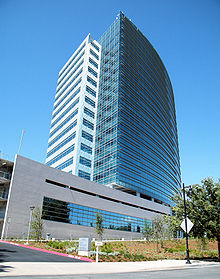
CalSTRS headquarters in West Sacramento, California. (Photo: calstrs.com)
Teachers Need Returns, Not Another Subcommittee
CalSTRS has the authority it needs – what it owes teachers is a comfortable retirement
By Jay Rogers, October 4, 2026 4:00 pm
CalSTRS is rethinking how its board oversees private market investments, and a new fiduciary subcommittee will focus on human-capital management, Pensions & Investments reported on September 24. Members of the fund should hold that panel to one measure: net return. Nothing publicly says the subcommittee will improve it, and running it will cost money. A pension board earns its keep by picking good managers and paying them fairly for performance above a benchmark. CalSTRS already has the tools for both.
I’ve spent more than 30 years in institutional investment management, and the lesson repeats itself across large asset pools. Pension investment staff hold three powers – They pick the manager, negotiate the terms, and decide whether to write the next check. CalSTRS already holds all three today, with no subcommittee required.
The stakes are large. CalSTRS reports $421.5 billion in assets as of August 31, 2026, including $57.8 billion, or 13.7%, in private equity investments, and it disclosed more than $9 billion in new private markets investments for the first half of 2026.
The subcommittee’s reach looks narrow. No charter, membership list, or budget has been made public, so its authority is unknown. A limited partner can’t run a general partner’s portfolio companies, set their pay, or rewrite an existing partnership agreement. It can withhold the next commitment until the manager supplies the data or performance it wants. That’s a negotiating position, and CalSTRS has always had it.
Legitimate workforce risk deserves a fair hearing. Turnover and workplace injuries can dent a portfolio company’s earnings, and CalSTRS’s Corporate Governance Principles call human capital “an intangible asset of particular importance given that effective management can create a competitive advantage.” That same document, written for company boards, defines the term broadly, from health and safety and retention to a “commitment to diversity, equity and inclusion” and pay equality. The first group moves earnings. The second is a social mandate. If the subcommittee sticks to items a manager can price, it will earn its place. If it adopts the full list, teachers will be paying for something other than returns.
Let’s look at the returns. CalSTRS’s August 4 release reports a 13.9% net return for fiscal 2025-26. Global equity returned 25.1%. Private equity returned 7.5%, matching its policy benchmark of 7.5% exactly. (Matching your benchmark is the investment equivalent of showing up.) The longer record looks better. CalSTRS’s private equity performance page shows a 13.16% return since inception as of June 30, 2025, though that is a dollar-weighted internal rate of return and can’t be compared directly with time-weighted returns on public stocks. The comparison that would settle the question is the ten-year private equity return, net of fees, against public equity plus a fair premium for locking money up. The release breaks out ten-year results only for the whole fund: 9.4% against a 7.0% assumption. That leaves a data gap. The consultant’s semi-annual private equity report was on the board’s September agenda, and California law has required public funds to report alternative-investment fees, carried interest, and returns at an open meeting every year since 2017. Members can request those reports and set them beside the public equity line.
Every dollar of overhead comes off gross returns. One basis point on $421.5 billion is about $42 million a year (my arithmetic, not a CalSTRS figure). Teachers and school districts feel that math. The total CalSTRS contribution rate reached 37.7% of covered payroll in 2025-26, up from 18.3% in 2014, with districts paying 19.1%. The fund was only 79.3% funded at its last valuation, with full funding not projected until 2046, twenty years from now. A plan on that climb can’t treat another layer of staff as free. Article XVI, Section 17 of the California Constitution directs the board to act “solely in the interest of, and for the exclusive purposes of providing benefits to, participants and their beneficiaries, minimizing employer contributions thereto, and defraying reasonable expenses.” The word that matters here is reasonable. I don’t claim a breach. The open question is who has to prove the expense is reasonable, and that burden sits with the board.
A new committee is visible, signals diligence, and its cost disappears into a budget line, while weak returns stay hidden until the actuary reports. Trustees collect credit for the first and rarely answer for the second. Teachers and districts absorb the gap.
Five steps would fix this – Publish the subcommittee’s charter, staffing plan, and budget before its first meeting. Put human-capital data requests into manager underwriting and side letters, which is what those documents are for. Report private equity returns net of fees against a public-market benchmark over three, five, and ten years, in plain English, to every member each year. Expand co-investment, which made up 24.6% of the private equity portfolio on September 30, 2025 against a 33% target and carries little or no management fee or carried interest. Then sunset the subcommittee after two years unless it can show its work in net return.
Epictetus told his students to sort the world into what is up to them and what is not. A limited partner controls whom it hires, what it pays, and when it walks away. It does not control a portfolio company’s payroll. CalSTRS has the authority it needs. What it owes teachers is a comfortable retirement. If the committee can’t show positive results it doesn’t belong on the org chart.


- Teachers Need Returns, Not Another Subcommittee - October 4, 2026
- CalPERS Can’t Show Its Work - October 1, 2026
- Birth Tourism Is Now Legal and You’re Picking Up the Tab - September 28, 2026
RELATED ARTICLES
-
 November 21, 2023
 -
 June 11, 2021
 -