
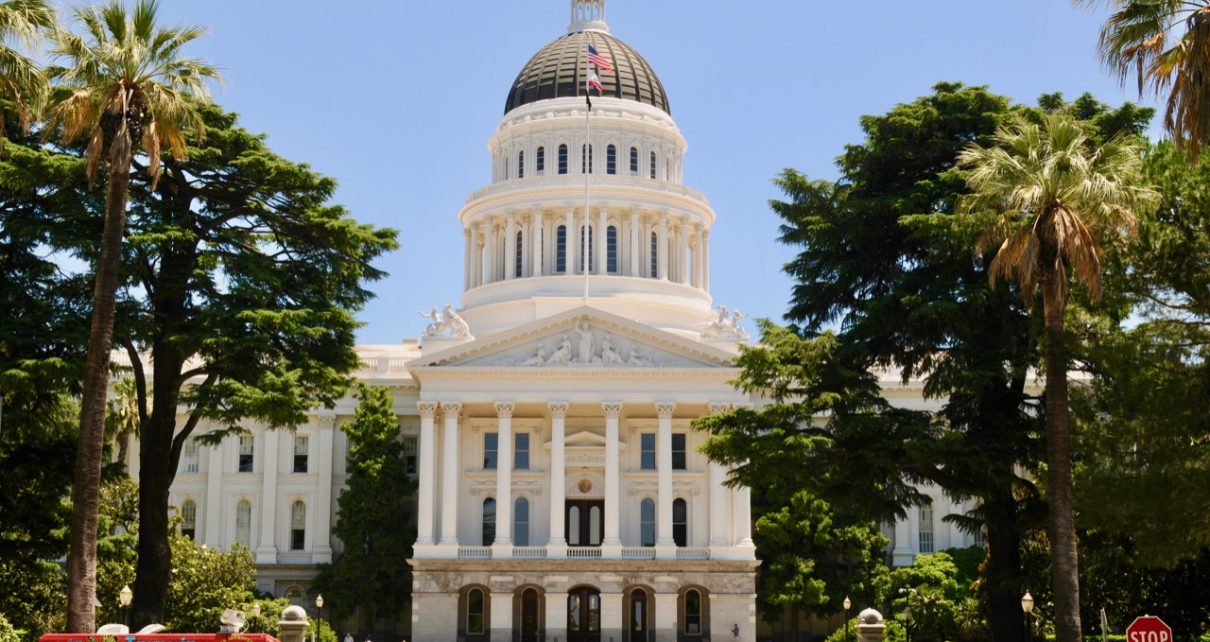
California State Capitol. (Photo: Kevin Sanders for California Globe)
Tension Between Legislative and Judicial Branches on Statutory Interpretation
Why?
By Chris Micheli, October 11, 2026 2:30 am
Is there a natural tension between the legislative and judicial branches of state government on statutory interpretation? I suggest that there is an inherent tension between the two separate, but co-equal branches. Why?
Recently I came across the following provision in a bill from the 2026 California Legislative Session:
This paragraph shall not be interpreted to require coverage as provided in Division 7 (commencing with Section 16000) of the Vehicle Code.
While the Legislature occasionally puts in state statute these types of provisions (another common one requires a statute “to be liberally construed”), as a practical matter, the legislative branch cannot tell the judicial branch how to interpret the law (because the role of the judiciary is tell us what the law means).
As a result the tension is that the legislative branch of California government (under Article IV, Section 1) is the lawmaking branch, but it cannot tell the judicial branch (pursuant to Article VI, Section 1) and the separation of powers doctrine set forth in Article III, Section 3 how to interpret the laws.
Nonetheless, the Legislature continues to put this type of language into statute. Because the legislative branch cannot really tell the judicial branch how to interpret a statute (this type of directory language can be considered but is not determinative of the outcome by the courts), and because executive branch agencies should be directed to do or not to do something, I think the Legislature should re-phrase this provision to try and make it binding:
This paragraph does not require coverage as provided in Division 7 (commencing with Section 16000) of the Vehicle Code.
While both versions try to convey to all audiences (executive branch, judicial branch, and the public) what the Legislature intends the law to be, the second version is clearer and avoids any suggestion that the Legislature is telling the judiciary how to interpret a law. It is also an explicit, affirmative statement that is unambiguous and its plain meaning should be clear to the other two branches of government.
Hence, the tension is that, on the one hand, the Legislature is given the lawmaking power. Therefore, they believe that they should be able to say in statute not only here is the statutory language, but also here is the way we want the courts and executive branch agencies to interpret the statutory language.
On the other hand, the judiciary understands its role as telling everyone what the law means (i.e., how to interpret an ambiguous law). And, from their standpoint, there is a difference in statutory language that directs the judiciary to do something and language that tells them how to interpret language.
For example, when a statute specifies an appellate court’s jurisdiction by adding or taking away something from the court’s discretionary docket, or that an appeal must be heard within a statutory period of time, the judicial branch complies to these types of laws. But the judiciary views these types of statutes different than those instructing them how to construe a statute.
In other words, it is one thing to tell the judiciary to comply with certain statutes themselves. But that type of statute is different than telling the judiciary how to interpret or construe statutory language.
And that is why the judiciary is not bound by statements of legislative intent, or language that requires a statute to be liberally construed to effectuate its purpose. Those types of statutes tell the judiciary how to do its job (i.e. how to interpret a statute) and that power is left to the judicial branch under our separation of powers doctrine.


- Tension Between Legislative and Judicial Branches on Statutory Interpretation - October 11, 2026
- Job Listing Services - October 10, 2026
- Commentary on Federal Constitutional Judicial Branch Provisions - October 10, 2026
RELATED ARTICLES
-
 November 25, 2024
 -
 October 12, 2020
 -
 November 4, 2025