
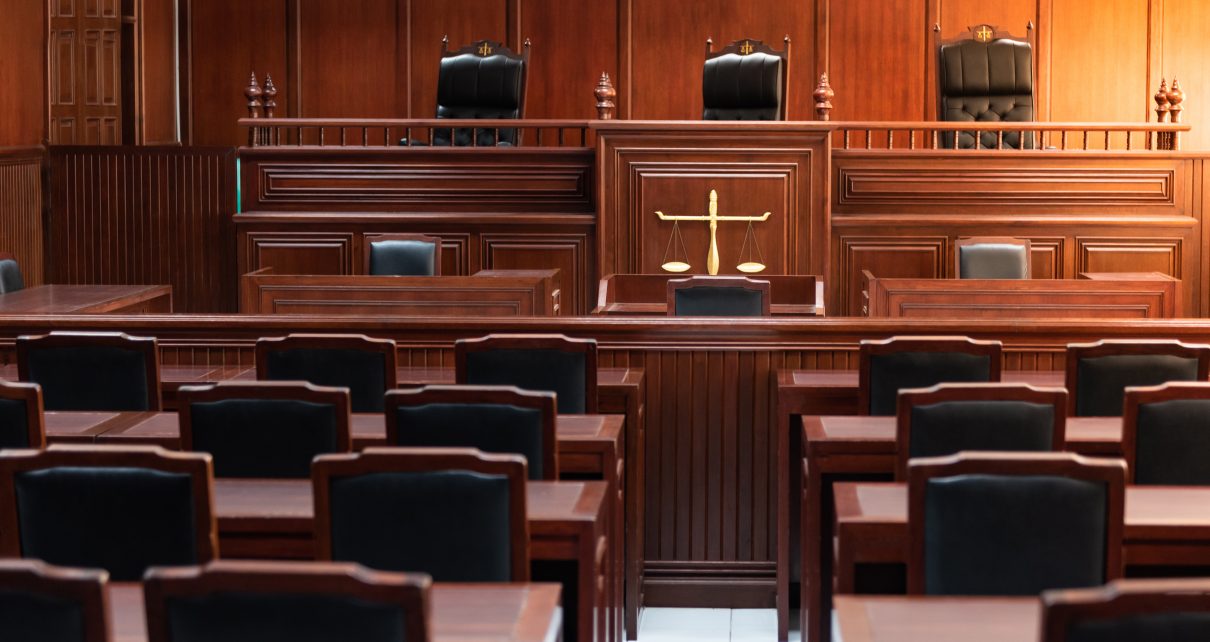
Justice Court. (Photo: Nirat.pix/Shutterstock)
Commentary on Federal Constitutional Judicial Branch Provisions
Both the United States and California Constitutions set forth these three branches of government
By Chris Micheli, October 10, 2026 8:23 am
California’s state government, with its three branches, is based upon the federal government and its three separate, but co-equal branches. Both the United States and California Constitutions set forth these three branches of government.
The following provides commentary regarding the specific provisions of Article III of the United States Constitution, which deal with the judicial branch of the federal government.
Section 1
The judicial Power of the United States, shall be vested in one supreme Court, and in such inferior Courts as the Congress may from time to time ordain and establish. The Judges, both of the supreme and inferior Courts, shall hold their Offices during good Behaviour, and shall, at stated Times, receive for their Services, a Compensation, which shall not be diminished during their Continuance in Office.
Commentary: The judicial power is vested in all the federal courts. The Supreme Court is the only one specified by name. The “inferior courts” include the courts of appeals and the district courts. All of the federal judges may serve for their lifetime and their compensation cannot be reduced while they are in office.
Section 2
The judicial Power shall extend to all Cases, in Law and Equity, arising under this Constitution, the Laws of the United States, and Treaties made, or which shall be made, under their Authority;–to all Cases affecting Ambassadors, other public Ministers and Consuls;–to all Cases of admiralty and maritime Jurisdiction;–to Controversies to which the United States shall be a Party;–to Controversies between two or more States;–between a State and Citizens of another State;–between Citizens of different States;–between Citizens of the same State claiming Lands under Grants of different States, and between a State, or the Citizens thereof, and foreign States, Citizens or Subjects.
In all Cases affecting Ambassadors, other public Ministers and Consuls, and those in which a State shall be Party, the supreme Court shall have original Jurisdiction. In all the other Cases before mentioned, the supreme Court shall have appellate Jurisdiction, both as to Law and Fact, with such Exceptions, and under such Regulations as the Congress shall make.
The Trial of all Crimes, except in Cases of Impeachment; shall be by Jury; and such Trial shall be held in the State where the said Crimes shall have been committed; but when not committed within any State, the Trial shall be at such Place or Places as the Congress may by Law have directed.
Commentary: The judicial power of the federal courts involves cases under the federal constitution, federal statutes, federal regulations, and treaties with foreign countries, as well as those in the foreign service. The jurisdiction includes admiralty, maritime, cases where the U.S. is a party, cases where two or more states are parties, citizen suits of different states, as well as cases involving foreign countries and citizens. The Supreme Court’s original jurisdiction is established, and its appellate jurisdiction is based upon federal statutes enacted. Criminal cases in federal court are by jury and held in the state where the alleged federal crime occurred.
Section 3
Treason against the United States, shall consist only in levying War against them, or in adhering to their Enemies, giving them Aid and Comfort. No Person shall be convicted of Treason unless on the Testimony of two Witnesses to the same overt Act, or on Confession in open Court.
The Congress shall have Power to declare the Punishment of Treason, but no Attainder of Treason shall work Corruption of Blood, or Forfeiture except during the Life of the Person attainted.
Commentary: Treason against the U.S. consists of levying war or giving aid or comfort to enemies of the U.S. A person can be convicted of treason by confession in court or the testimony of at least two person who witnesses the treasonous act.


- Commentary on Federal Constitutional Judicial Branch Provisions - October 10, 2026
- Prudent Management of Institutional Funds - October 10, 2026
- Aquatic Invasive Species - October 9, 2026
RELATED ARTICLES
-
 October 8, 2026
 -
 July 29, 2024
 -
 September 29, 2026