
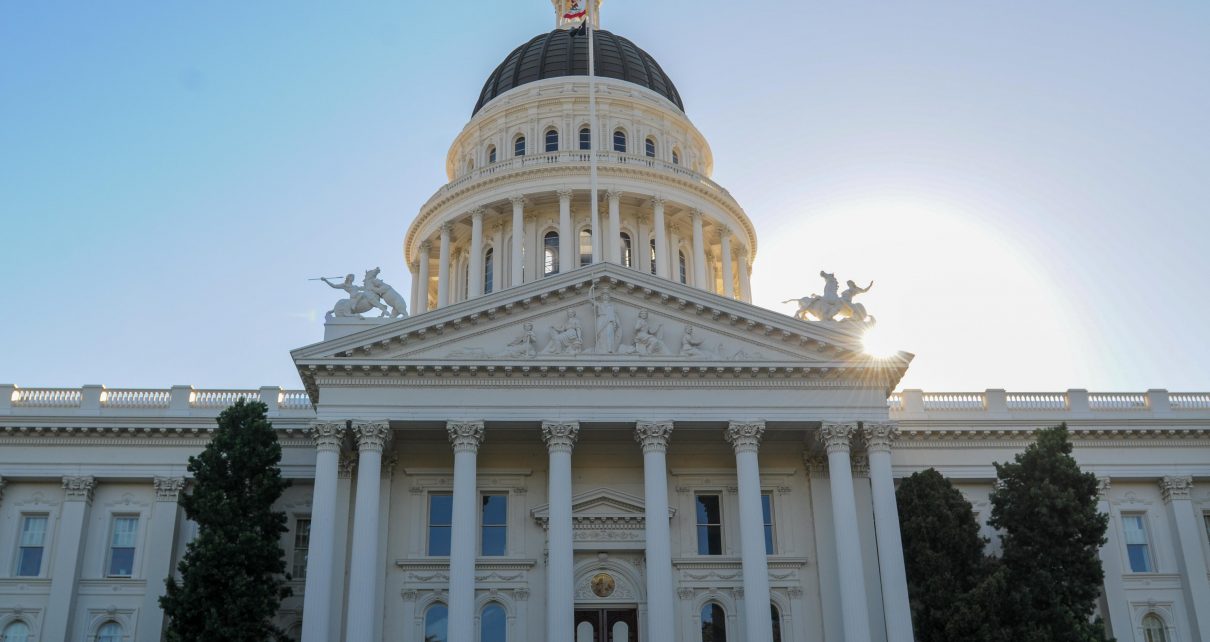
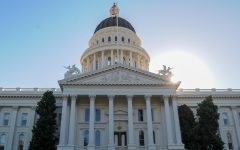
California State Capitol. (Photo: Kevin Sanders for California Globe)
Another California Labor Law Struck Down by Federal Court
This is the third time in just the past few years that a California labor law has been struck down by the federal courts
By Chris Micheli, October 29, 2026 4:00 pm
Two times in recent years, the federal courts have invalidated California labor and employment laws, in line with the state’s business community’s arguments while the bills were pending in the Legislature. And, just this week, it happened a third time when a recent statute was struck down by the federal judiciary.
Earlier this week, the Ninth Circuit Court of Appeals invalidated SB 399 – the so-called ban on captive audience meetings. The law was enacted in 2024, but has not gone into effect because the federal district court issued an injunction prohibiting its enforcement. SB 399 was intended to prohibit employers from penalizing or firing workers who skip mandatory workplace meetings addressing politics or religion.
SB 399 faced an immediate legal challenge. While a federal district court initially blocked the new law on First Amendment grounds, the Ninth Circuit considered the legal challenge and it was argued in July of this year. On Thursday of this week, the Ninth Circuit issued a 3-0 decision striking it down on a First Amendment basis.
Before the law went into effect, three industry groups—the California Chamber of Commerce, the California Restaurant Association, and the Western Growers Association—sued the California Attorney General, the California Labor Commissioner, and the Division of Labor Standards of the California Department of Industrial Relations to enjoin enforcement.
The law would have prohibited an employer from subjecting, or threatening to subject, an employee to adverse action if the employee chooses not to attend an employer-sponsored meeting or receive communications from the employer, “the purpose of which is to communicate the employer’s opinion about religious or political matters.” Cal. Lab. Code § 1137(c).
According to the 3-judge panel, SB 399 is facially content-based because it applies only when the employer has discussed certain topics: politics and religion. The law is also speaker-based because it is triggered only by speech communicating the employer’s opinion about religious or political matters.
The appellate panel rejected California’s assertion that SB 399 is constitutional as a protection of a “captive audience.” The panel explained that both the Supreme Court and 9th Circuit Court have referred to “captive audiences” only when the government acts as a proprietor or in the context of content-neutral time, place, and manner restrictions.
Because the panel concluded that the industry groups are likely to succeed on the merits of their First Amendment claim, and California does not challenge the district court’s determination that the remaining preliminary injunction factors are met, the district court did not abuse its discretion by granting the preliminary injunction. The panel did not reach the industry groups’ preemption claim.
This is the third time in just the past few years that a California labor law has been struck down by the federal courts. The other two are:
AB 288, which was signed in October 2025, sought to empower the California Public Employment Relations Board (PERB) to handle private-sector labor disputes. In December 2025, a federal district court issued a preliminary injunction blocking most of the law, ruling that federal labor law (the National Labor Relations Act) preempts transferring NLRB authority to the state.
The mandatory labor arbitration ban (AB 51) was invalidated. In Chamber of Commerce v. Bonta (2023), the U.S. Court of Appeals for the Ninth Circuit struck down AB 51, a California law that sought to bar employers from requiring workers to sign arbitration agreements as a condition of employment. The court ruled that the measure is preempted by the federal Arbitration Act (FAA). The state had to pay over $800,000 in legal fees after it lost the appeal.

- Another California Labor Law Struck Down by Federal Court - October 29, 2026
- Medical-Legal Expenses - October 29, 2026
- Legal Grounds for a California Statute Being Struck Down - October 29, 2026
RELATED ARTICLES
-
 May 31, 2025
-
 November 5, 2024
-
 May 19, 2023