

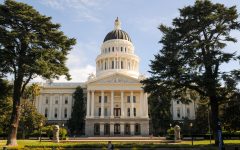
California State Capitol. (Photo: Katy Grimes for California Globe)
Legal Grounds for a California Statute Being Struck Down
There are several key legal reasons which are rooted in both the U.S. Constitution and the California Constitution
By Chris Micheli, October 29, 2026 6:26 am
Why might a statute in California be declared unconstitutional by state or federal courts? There are several key legal reasons which are rooted in both the U.S. Constitution and the California Constitution. What are some of the common legal grounds for a California statute to be struck down by a court?
- Vagueness and clarity – If a law is deemed by a court to be “unconstitutionally vague”, then the law will be struck down. As a general rule, require statutes to be written with a reasonable degree of certainty so that those regulated by the law understand the parameters of that regulation. In addition, a law that lacks clarity can be struck down when a court determines the law to be “nearly unintelligible” and so it could adversely impact an ordinary citizen’s daily life or a police officer’s ability to enforce the law fairly.
- Equal protection – The Equal Protection Clause of the 14th Amendment (and similar guarantees in the California Constitution) restrict how lawmakers write bills because it is generally not legally permissible for a state law to treat different groups of people differently. The courts will strike down a statute that crosses the line into unconstitutional discrimination.
- Improper Delegation of Authority – There is a separation of powers between the California Legislature and executive branch agencies pursuant to Article III, Section 3 of the California Constitution. Essentially, the courts have ruled that it is considered unconstitutional for the Legislature to grant overly broad or unchecked power to an administrative agency instead of making the policy determinations itself.
- Federal Preemption and Constitutional Rights – A California statute cannot directly conflict with the U.S. Constitution, federal law, or the California Constitution (such as First Amendment or due process protections). The federal courts have the final say when a state law conflicts with federal authority.
Of course, there are other bases for California statues to be struck down, but these are the common ones that state officials should keep in mind.


Chris Micheli is an attorney and lobbyist with Snodgrass & Micheli, LLC, as well as an Adjunct Professor at McGeorge School of Law.
Latest posts by Chris Micheli (see all)
- Legal Grounds for a California Statute Being Struck Down - October 29, 2026
- Income Tax Deductions - October 29, 2026
- Comparing California and Other State Governments - October 28, 2026
RELATED ARTICLES
-
 March 14, 2026
-
 March 15, 2026
-
 March 21, 2022