

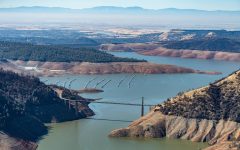
An aerial view of the Delta. (Photo: water.ca.gov)
Ringside: Water Abundance Means Thinking Big Again
Water super-abundance would open up spectacular options to restore and enhance the environment on a similarly transformative scale
By Edward Ring, November 11, 2026 1:42 pm
 “The problem we faced in the 1970s was that we were building too much and too heedlessly. The problem we face in the 2020s is that we are building too little and we are too often paralyzed by process.”
This quote from the book “Abundance” by Ezra Klein and Derek Thompson perfectly encapsulates what has happened in California. We have stopped thinking big.
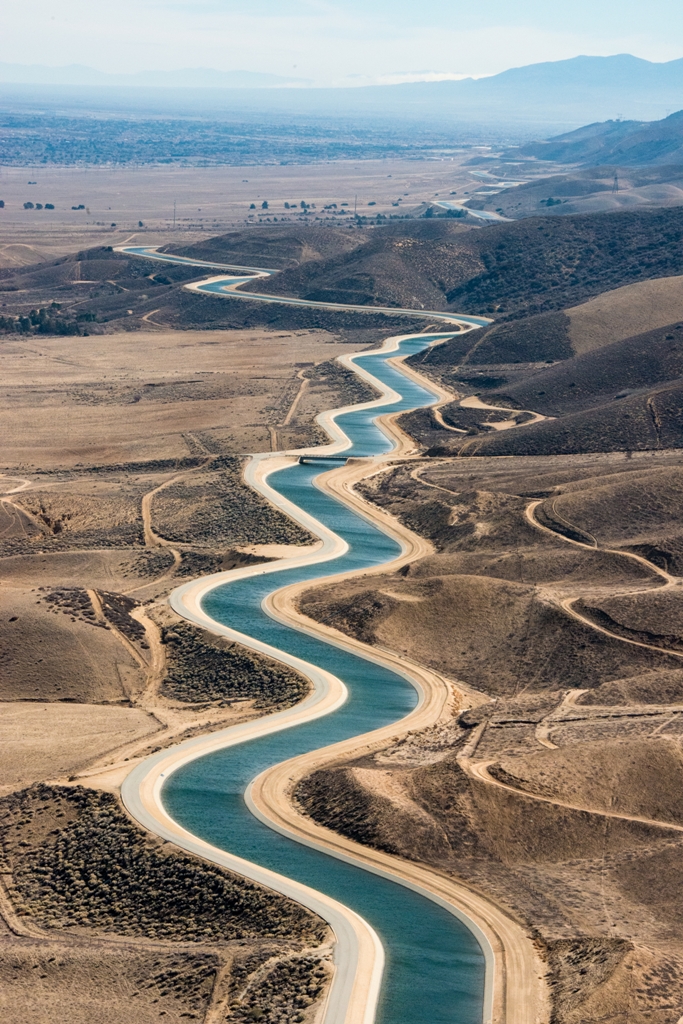
An example of how much everything has changed is how California has managed water projects over time. In less than sixty years, from 1910 through 1970, we built the most impressive system of interbasin transfers in the world. Along with reservoirs that can cumulatively store over 40 million acre feet, we built the Los Angeles Aqueduct, Hetch Hetchy Aqueduct, Colorado River Aqueduct, Delta Mendota Canal, Friant-Kern Canal, and California Aqueduct. Altogether these conveyances are over 1,500 miles in length and every year they move millions of acre feet from where water is found to where water is needed.
It would be impossible to build such ambitious projects today. For more than a half-century, almost nothing big has been completed. The only big water project even being contemplated today is the proposed Delta Conveyance – a 45 mile long tunnel under the Sacramento-San Joaquin Delta, with an internal diameter of 36 feet. If it were built and ran at maximum capacity without a break, it could move just over four million acre feet per year.
But the delta tunnel, regardless of its virtues or detriments, has been mired in controversy. Expressions of support, or opposition, both attract condemnation. The debate over the tunnel has polarized, and, worse, has paralyzed California’s water community. Even necessary and relatively noncontroversial water projects are often condemned by tunnel supporters not based on their merits, but by how their realization may affect the physical need, political support, or available funding for the tunnel.
One thing is certain. With or without a tunnel, how the Sacramento-San Joaquin Delta is managed needs an upgrade. There is no single variable affecting how much water is available to Californians than this vast network of islands and channels that drain the 44,000 square mile Sacramento and San Joaquin river watershed into the San Francisco Bay.
Again, to quote from Klein and Thompson’s book, “What is often missing from both sides is a clearly articulated vision of the future and how it differs from the present.”
Well here goes. The opportunity is huge. In 2023, a very wet year, 5.2 MAF was pumped south from the Delta via the California Aqueduct and the Delta Mendota Canal, while 27.2 MAF flowed to sea. The delta pumps (state and federal) only operated at half their capacity in that year. There are safe ways to divert more water from the delta.
Here are possible examples, each of which deserve serious evaluation. An assortment of them combined and implemented would restore water abundance to California.
Starting upstream, improved weather forecasting could mean less water would need to be released from major reservoirs to leave vacancy for unexpected late spring runoff. At the same time, California’s aging major reservoirs could be dredged, with the rich silt made available for habitat restoration and levee upgrades. Completing off-site reservoirs like the embattled Sites project, or an off-stream reservoir on the Cosumnes River, would also add storage for release later in the summer, as would upstream aquifer recharging. Extending the 26 mile Folsom South Canal another 30 miles to the aqueduct pumps on the Clifton Court Forebay could be another way to store and manage delta bound runoff from the American, Cosumnes, Mokelumne, and Calaveras rivers.
Millions of acre feet of upstream diversions and storage would be feasible by taking these steps, but the ability to rapidly and safely withdraw water from the delta requires additional projects. Of immediate urgency is to dredge about 85 miles of channels in the south delta in close proximity to the pumps. With five decades of silt accumulation that gets worse every year, if these channels aren’t deepened to historical depths, the pumps will have to be shut off even more frequently in order to prevent channels in the south delta from drying up. If they are deepened, it is likely the pumps could be operated more often, moving more water south. At the same time, the delta levees need to be upgraded and elevated to protect against earthquakes and storm-driven tidal surges.
To address the challenge of fish getting trapped in the pumps, there are prime locations in the delta that have been identified for fish friendly diversion projects, infiltration beds where perforated pipes buried in gravel collect gravity fed water at a velocity of one inch per minute. Such a facility would not entrain fish, and could be located in the central delta only a few miles from the Clifton Court Forebay with a collection pool and connecting aqueduct about five miles long.
Downstream from the delta in the San Francisco Bay and its estuaries, major cities, most notably including San Francisco, need to upgrade their wastewater treatment plants to remove nitrogen and other pollutants from the effluent. Doing this would reduce the volume of delta flow required to maintain ecosystem health in the estuaries and in the bay, and reduce another significant constraint on pumping water into the aqueducts.
Projects to better manage the greater Sacramento-San Joaquin watershed, from the upstream tributaries to the estuaries flowing into the San Francisco Bay, may be the biggest variable affecting California’s water supply, but there are other major solutions. Optimize the harvest of urban storm runoff and recycle 100 percent of urban wastewater. Develop large-scale desalination plants along the California coast.
These are nonpartisan ideas, and unlike every other state in the American southwest, California is blessed with natural prerequisites for water abundance – a dense urban population which makes wastewater reuse more economically feasible, a coastline with a strong offshore current that enables environmentally responsible seawater desalination, and the ramparts of the Sierra that force winter storms to dump tens of millions of acre feet into the Central Valley every year.
These are gifts that should inspire us, not to build heedlessly, but to nonetheless build on the same transformative scale that characterizes the work of previous generations.
If we thought big again, and actually implemented the most promising products of our imagination, we would achieve not just water abundance, but water super-abundance. And if that were done, it would open up spectacular options to restore and enhance the environment on a similarly transformative scale. Those prospects will be examined next week.


- Ringside: Water Abundance Means Thinking Big Again - November 11, 2026
- Ringside – Calculating the Extreme Cost of Floating Offshore Wind - November 5, 2026
- Ringside: Practical Steps to Climate Resilience - October 28, 2026
RELATED ARTICLES
-
 October 16, 2025
-
 August 8, 2024
-
 April 23, 2026