

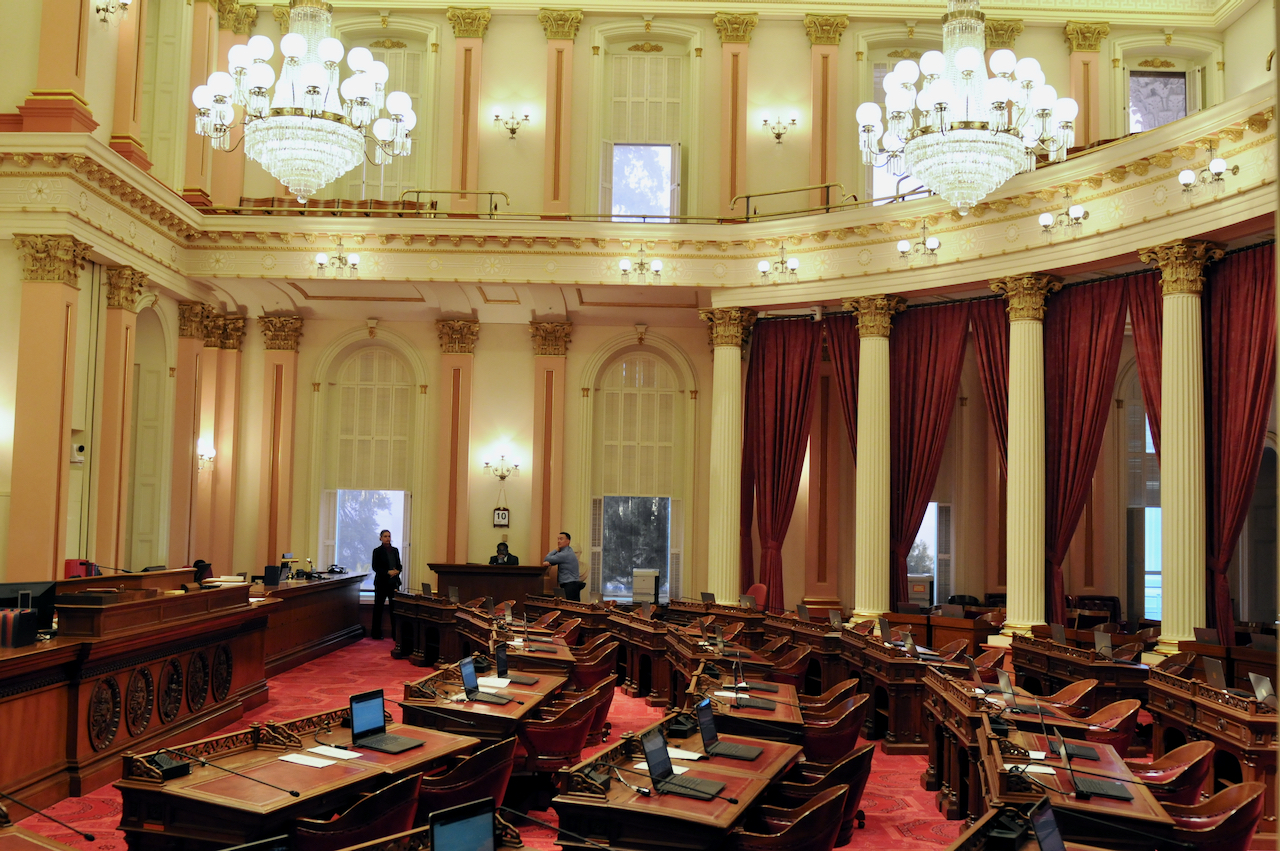
California State Capitol. (Photo: Katy Grimes for California Globe)
Exception to Canon to Avoid Interpretations That Render Language Superfluous
California jurisprudence firmly establishes that the rule against surplusage is not absolute
By Chris Micheli, November 14, 2026 10:19 am
In California courts, the rule that instructs courts to give effect to every word and avoid interpretations that render statutory or contractual language superfluous is known as the Rule Against Surplusage (or the canon against surplusage).
However, California jurisprudence firmly establishes that the rule against surplusage is not absolute. It is a discretionary guide to help ascertain intent, not an inflexible command to the courts. There are exceptions where California courts will reject the canon and permit an interpretation that renders certain words superfluous.
The most paramount rule of statutory construction in California is to ascertain and effectuate the intent of the Legislature. If applying the rule against surplusage would result in a construction that subverts or defeats the obvious legislative purpose, the canon must yield. Canons of construction are subservient to legislative intent as a general matter; they cannot be used to force a meaning that the Legislature clearly did not intend.
California courts will not apply the rule against surplusage if doing so forces an interpretation that creates an absurdity, an injustice, or an unworkable outcome. As stated in People v. Watts, the rule against surplusage “will be applied only if it results in a reasonable reading of the legislation.” If a non-surplusage reading leads to a bizarre or illogical statutory result, courts will opt for a reasonable interpretation even if it leaves some words redundant.
Courts recognize that legislative drafters occasionally insert repetitive terms out of an abundance of caution or to provide extra emphasis. In cases like In re J.W. (2002), the California Supreme Court noted that the rule against surplusage is not so rigid that it ignores the reality of drafting. When a word or phrase is included merely to clarify or underscore a point, rather than introduce a brand-new legal category, courts will tolerate the technical redundancy.
When the plain, ordinary meaning of a dominant clause or the core structure of a text is completely unambiguous, a court will not mangle that plain meaning just to satisfy the rule against surplusage. The “plain meaning” rule remains the cardinal rule of construction. If giving an unambiguous phrase its natural effect naturally overlaps or swallows another minor word, the plain text controls over the semantic rule against surplusage.
California courts accept that legislative drafters make structural errors, particularly in large, complex statutory schemes or fast-moving emergency legislation. If a technical surplusage arises due to an obvious oversight or flawed assembly of different bill provisions, the court will treat the language as a harmless redundancy, rather than inventing a far-fetched meaning just to give the word independent work to do.
In California statutory construction, the rule against surplusage is a guide, not a command, and must always bow to clear legislative intent as recently set forth in Almond Alliance of Cal. v. Fish and Game Com. (2022).


- Exception to Canon to Avoid Interpretations That Render Language Superfluous - November 14, 2026
- Does Statutory Text Trump Statements of the Law’s Author? - November 14, 2026
- How Do California Courts View Legislative Amendments to Ballot Measures? - November 13, 2026
RELATED ARTICLES
-
 October 12, 2020
-
 September 22, 2026
-
 October 30, 2022